Singapore has tightened up its public bus rules, with new regulations in force since 23 September 2026 that attach real fines to behaviours many commuters treat as harmless. The most serious offences now carry penalties of up to $5,000, so it's worth knowing the dos and don'ts before you hop on a bus there.
Here's the interesting part: most of these rules aren't actually new. Many already existed under the Conditions of Carriage for Public Buses — what's changed is enforcement, backed by formal fines. The Land Transport Authority is targeting everything from minor annoyances to genuinely dangerous behaviour.
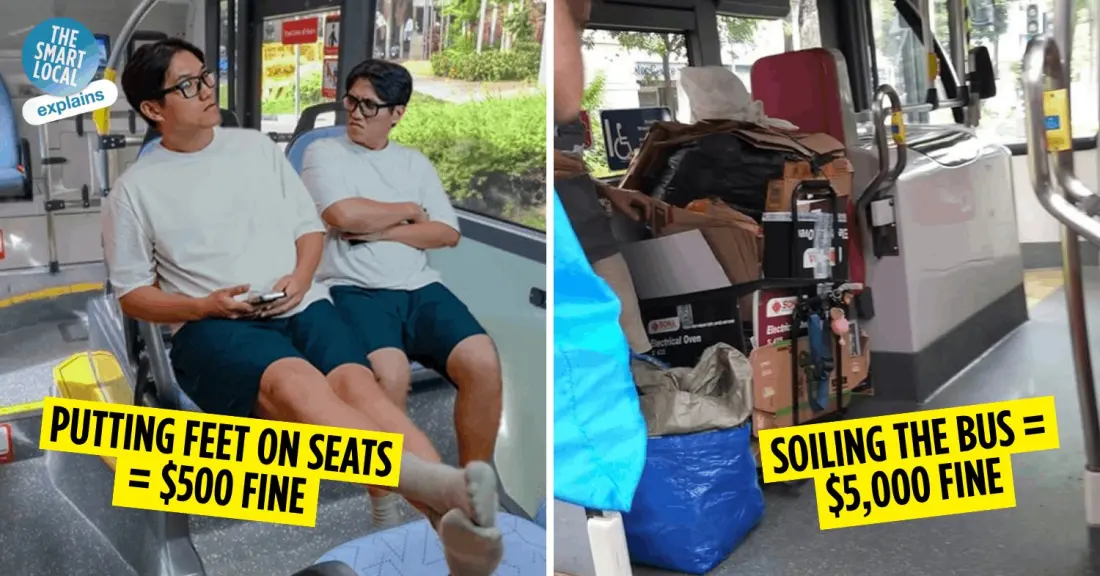
The entry-level offences each cost up to $500. Putting your feet on seats is one. Eating or drinking on board is another, and yes, that technically includes sipping plain water. Playing music or videos out loud on your phone also falls into this bracket, so pack headphones.
Smoking is a step up at up to $1,000, and the ban covers bus stops and terminals too, not just the vehicle itself. Dirtying buses or bus facilities is where the big money comes in: while minor littering might cost $500, soiling a bus, stop or terminal can hit you with a $5,000 fine. Bus captains can even refuse entry to passengers carrying items likely to make a mess.
Some rules skip fines entirely. Chatting with the bus captain while they're driving can get you removed from the bus — greet them, but let them drive. Fare evasion carries a $50 penalty, which is easy to trigger by accident if you forget to tap in or out or use different payment methods for each tap. Always tap with the same card or device, and ask the captain if the reader isn't working.
A few points are more etiquette than law. Strollers are allowed on the lower deck, ideally folded and parked in the priority bay, which should be given up to wheelchair or mobility device users. Don't take strollers upstairs on double-deckers. And hogging more than one seat with your bags might not cost you money, but it will cost you goodwill on a crowded bus.
One rule visitors will find charmingly local: durians. The famously pungent fruit is allowed on board, but only if it's vacuum-sealed or packaged tightly enough that the smell can't escape. Unsealed durians can get you kicked off or asked to bin the fruit.
For travellers, the practical takeaway is simple. Singapore's buses are cheap, air-conditioned and efficient, and riding them is one of the best ways to see the city beyond the tourist circuit. The rules mostly boil down to common courtesy — no snacking, keep the noise down, feet off the seats, tap properly. Follow those and you'll blend in with the locals, avoid fines that range from $50 to $5,000, and enjoy one of the smoothest public transport systems anywhere.