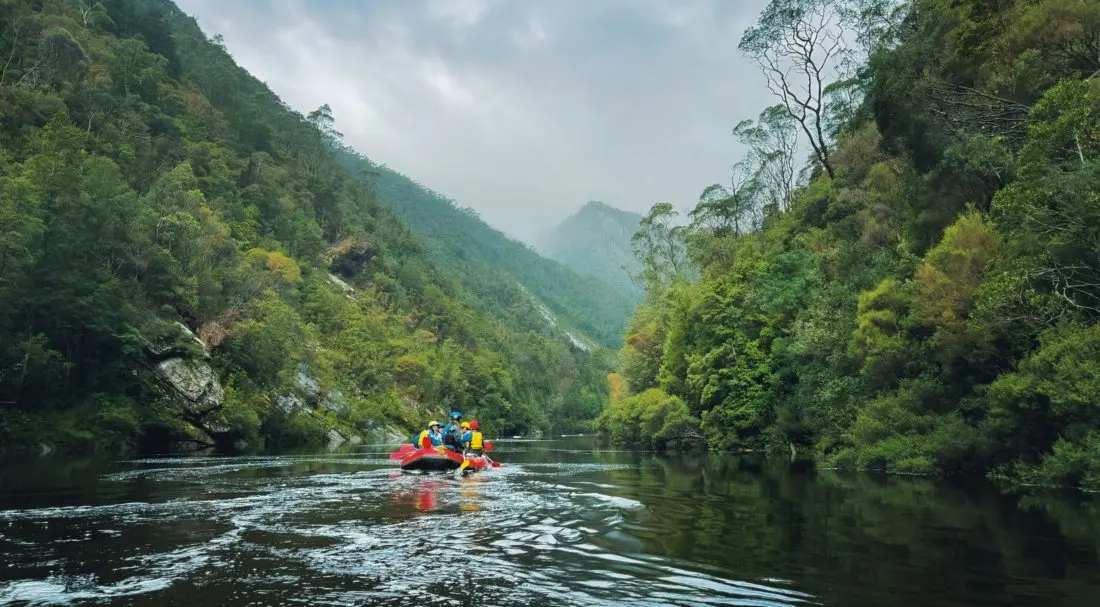
In 1976, a small group of Tasmanians — sixteen people meeting at Bob Brown's house in Liffey — formed what became The Wilderness Society to stop the Franklin River being dammed. Seven years later, the campaign won, the river stayed free, and the fight even rewrote federal environmental law. This spring, eight members of the society's Tassie team marked the organisation's fiftieth birthday the fitting way: eight days rafting the Franklin itself.
The Franklin is Tasmania's last major free-flowing river — every other big one was dammed by the Hydro-Electric Commission. Getting down it is a game of water levels. The trip writer spent a fortnight glued to Hydro Tasmania's river gauge data before getting the all-clear text. At the put-in below the Lyell Highway bridge on the Collingwood, a meter on the bridge pillar gives the verdict: above 1.6m is dangerous, below 0.5m means dragging rafts over rocks. They scored 1.4m — near-perfect. It was one of the wettest springs in fifty years in Lutruwita/Tasmania.
What follows is classic Franklin: Southwest mist, myrtle and eucalypt forest giving way to buttongrass plains, thousand-year-old Huon pines at the water's edge, platypus surfacing beside the rafts, and the roar of the Coruscades echoing off cliffs before you even see them. Guides with twenty-plus Franklin seasons recite rapids and campsites from memory. The lower Franklin's limestone caves hold Aboriginal records stretching back tens of thousands of years — which would have been drowned had the proposed dams at the Gordon-Franklin confluence, Propsting Gorge and Irenabyss gone ahead.
The piece also carries the melancholy counterweight: Lake Pedder, the pink-sanded glacial lake flooded in 1972 despite national protest, is the loss that lit the fire for the Franklin win. And it's a good reminder of how the campaign worked — the old Davey Street office would literally lend you a rubber dinghy, a paddle and a guidebook so you could experience the river yourself, then come back an advocate. Bob Brown credited his own 1976 rafting trip (the first ever done in an inflatable raft there) with sparking his activism; before it, he said his activist background was "none, zero, zilch."
For travellers, this is a rare case where a wild place survived because people went and saw it. Commercial Franklin rafting trips run today with the same logics — water levels dictate everything, trips typically take about eight to ten days through the World Heritage wilderness, and the experience suits fit beginners with good guides. If paddling a dam-free river lined with Gondwanan pines sounds like your kind of fiftieth birthday, the Franklin is still there, flowing exactly as it always has.