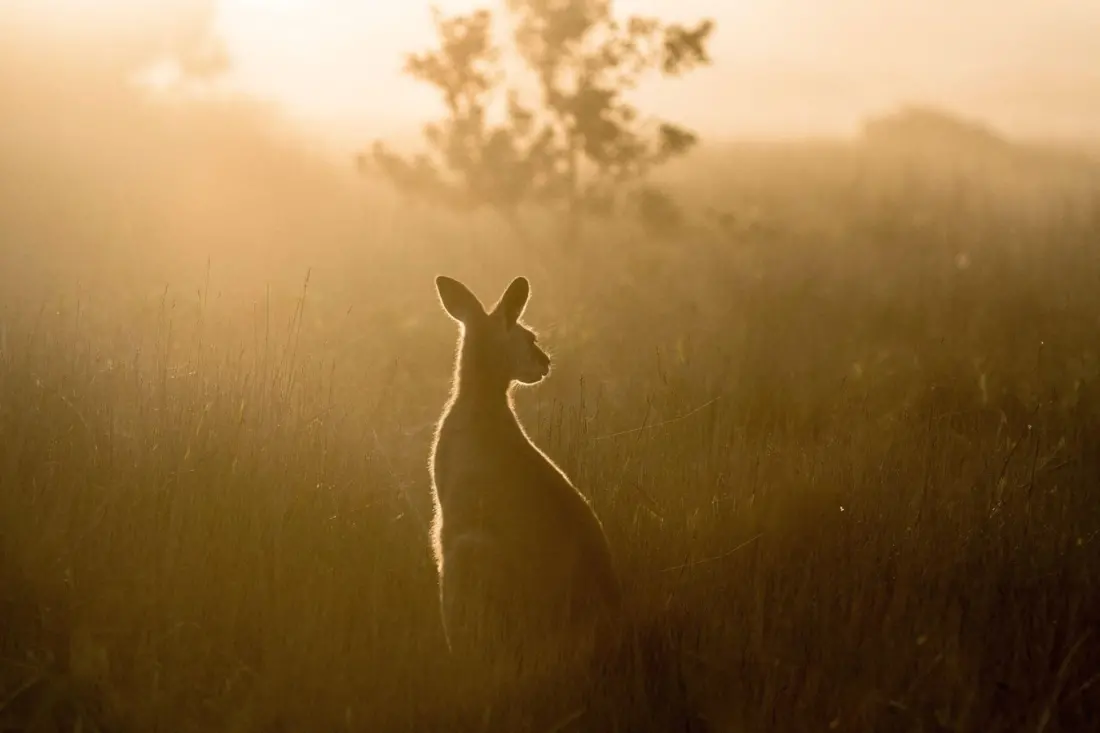
A five-second video started it all: a wallaroo sitting quietly on a rocky ridge in drifting fog, high on Mt Kaputar, the extinct volcano near Narrabri in northern New South Wales. The clip, shared in a piece for Australian Geographic, left the writer wondering why a wallaroo would perch 1,500 metres up in the mist. The answer he landed on is a useful one for anyone who travels in the Australian bush: sometimes an animal just needs a pause, and fog is where that happens.
Days later, on a morning walk in the bush west of Melbourne, the author got his own fog experience. A grey wall of mist rolled across a paddock and swallowed the track, the distant eucalypts and eventually him. Sound dropped away, colour drained to grey, and birds went quiet. So he did the counterintuitive thing — he sat down on a tree stump and let it happen.
What followed is the kind of wildlife encounter most travellers chase and rarely get. Roughly ten minutes in, muffled cockatoo calls signalled something stirring, then hundreds of corellas burst through the fog so close he could feel their wingbeats. Next came soft thuds: a mother eastern grey kangaroo and her joey, watching him from under three metres away. After a minute they hopped off, replaced by an old male black wallaby that thumped past, apparently disoriented by the mist and completely unbothered by his audience. When the fog finally lifted, the bush returned in full colour — a yellow-faced honeyeater singing, the gravel road reappearing in sunlight.
The takeaway isn't really about fog at all. It's about the rewards of stopping. Moving slowly and sitting still in one spot — especially in low-visibility conditions when wildlife feels less exposed — can produce closer encounters than any dawn dash along a trail. Fog muffles sound and scent, and animals seem to relax their guard, which is exactly why you should give them extra room when you find one resting.
For travellers, Mt Kaputar itself is worth knowing. It's the centrepiece of Kaputar National Park, a sky-island of volcanic peaks rising out of the NSW northwest, home to wallaroos, wallabies and the famous bright pink and green Kaputar slug. Narrabri is the nearest town, and the mountain road climbs to lookouts and campsites where morning fog is a regular event. Combine that with the author's patch of bush west of Melbourne and you have two very different Australian landscapes where the same trick applies: pick a seat, keep quiet, and let the bush come to you.
Just remember the etiquette the story asks for. If you spot a creature sitting still — a wallaroo on a ridge, a roo in a clearing — don't approach for a photo. It may be mid-recovery from foraging, heat or a long climb. Give it space, keep your voice down, and treat the pause as part of the experience rather than an interruption to it. That's when the bush shows you its best moments.