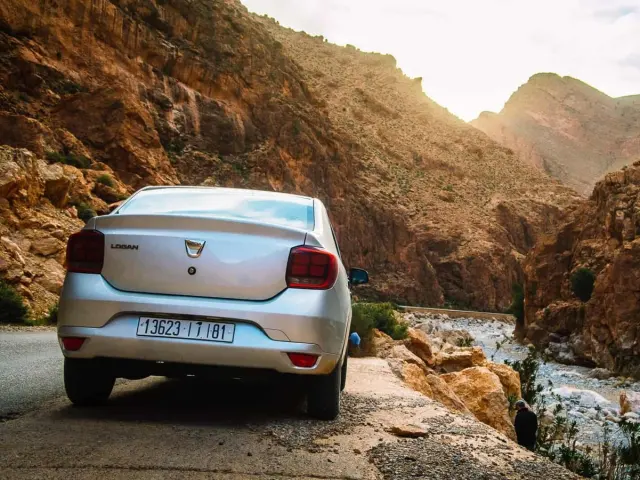
Landing in Morocco usually means one of two things: queuing at an airport SIM counter with passport in hand, or gambling on airport WiFi while your offline maps load at a snail's pace. A travel writer at Journal of Nomads recently skipped both by testing Simify's Morocco eSIM on a road trip with her toddler, and her verdict is useful reading for anyone planning a trip there.
Setup happened at home, before departure: the eSIM arrived by email, and installing it via QR code took under five minutes. Once she landed, activation took roughly five minutes too — a slightly nervous wait, she admits — before a strong, stable connection kicked in while she was still in the passport control queue. No shop hunting, no registration paperwork, no swapping out her home SIM.
Over the following days she drove through Rabat, Marrakech and Essaouira, using data mainly for Google Maps navigation, booking rooms on the go, messaging riad hosts, and checking opening hours inside the medinas — where a live connection genuinely matters, since getting lost in Marrakech is charming right up until you're exhausted and hungry. She also used the eSIM as a laptop hotspot for light work, which handled email and research fine, though she wouldn't push it to heavy file uploads.
Out in smaller villages and remote stretches, the signal dipped or dropped occasionally, but she notes this happens with local SIM cards too — coverage in rural Morocco is simply patchy, whatever you're using. The connection came back quickly whenever she returned to towns.
So eSIM or local SIM? Her breakdown: local Moroccan SIMs are a bit cheaper and coverage is solid, but you'll need your passport to register, potentially wait in line, and navigate a possible language barrier after a long travel day. An eSIM costs more but removes all of that, and you stay reachable on your own number. You do need an eSIM-compatible phone. Simify offers a Morocco-specific package starting around $4.25 and backs it with a full money-back guarantee if it doesn't work.
For anyone doing a self-drive trip — where accessing a booking confirmation or rental voucher mid-journey can matter a lot — or travelling with kids who make every errand harder, the convenience case is strong. On a short city break, it's arguably the easiest way to arrive connected. Just download offline maps as a backup for the truly remote bits.