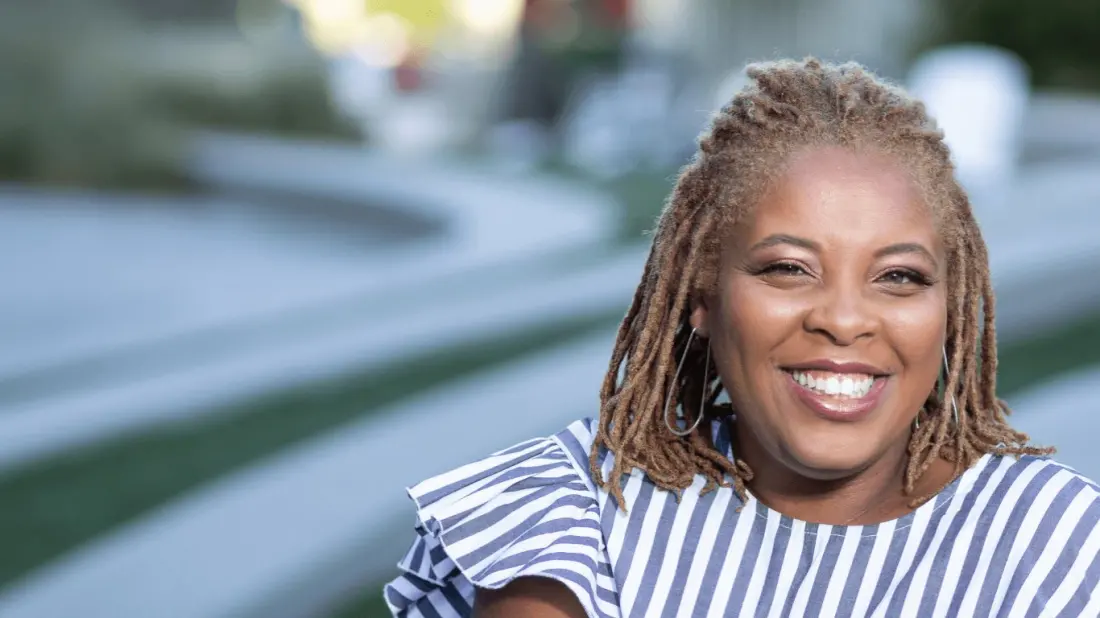
Kim Williams knew she wanted to write at eight years old. What she couldn't have known then is where that instinct would eventually lead her: to a boutique guesthouse in Johannesburg called GenKati House, and to a broader mission of reshaping who gets to own African hospitality.
Williams spent 25 years in Los Angeles as a writer and producer across television, film and digital media. After self-publishing her first novel in 2004, she founded her own company, InkSpot Entertainment, in 2012 — a pattern of not waiting for permission that runs through everything she's done since. A trip to South Africa in 2008, taken after her mother's death as a way of working through her bucket list, turned into a lasting pull toward the continent. By 2017 she was teaching practical storytelling workshops across Africa, and in 2019 Johannesburg became home.
The guesthouse came from something she felt was missing. Johannesburg has no shortage of hotels and restaurants, but Williams noticed few Black-owned boutique spaces that reflected her experience as a Black woman. A 2018 stay at Jnane Tamsna in Marrakech — a property where design, food, music and art all work together as narrative — showed her what hospitality could be. For her, a guesthouse isn't just accommodation; it's a story guests physically step inside.
GenKati House is one part of a wider ecosystem. The Wander Experience brings Black women from the diaspora to Africa beyond standard tourism: eating at locally owned restaurants, meeting entrepreneurs, learning history, and directing money into local businesses rather than international chains. Williams sources from local artists, chefs, makers and small businesses wherever she can, and she measures impact in quieter moments too — women arriving alone and leaving with new connections around a shared table.
Her take on African entrepreneurship is refreshingly blunt. She argues we've romanticised resilience, celebrating what people build "despite everything" without asking why everything was against them in the first place. What Black-owned, women-owned and locally owned tourism businesses actually need, she says, is patient capital, established tourism networks, and platforms that send real customers through their doors — plus, in the creative industries, ownership of the intellectual property behind Africa's globally demanded stories. Resilience, in her words, should be something an entrepreneur brings to the table, not the infrastructure holding the table up.
Why should travellers care? Because where you stay is a choice about where your money goes. Williams is part of a growing movement of owner-run boutique spaces across African cities that channel tourism income directly into local economies — and offer a more personal, story-rich stay than any international brand. GenKati House is also expanding into a cultural venue with workshops, retreats and gatherings, so even a short stay can become something more participatory. If you're heading to Johannesburg and want accommodation with a point of view — and a host thinking hard about who tourism actually serves — this is the kind of place to put on your list.
Story via Nomad Africa.