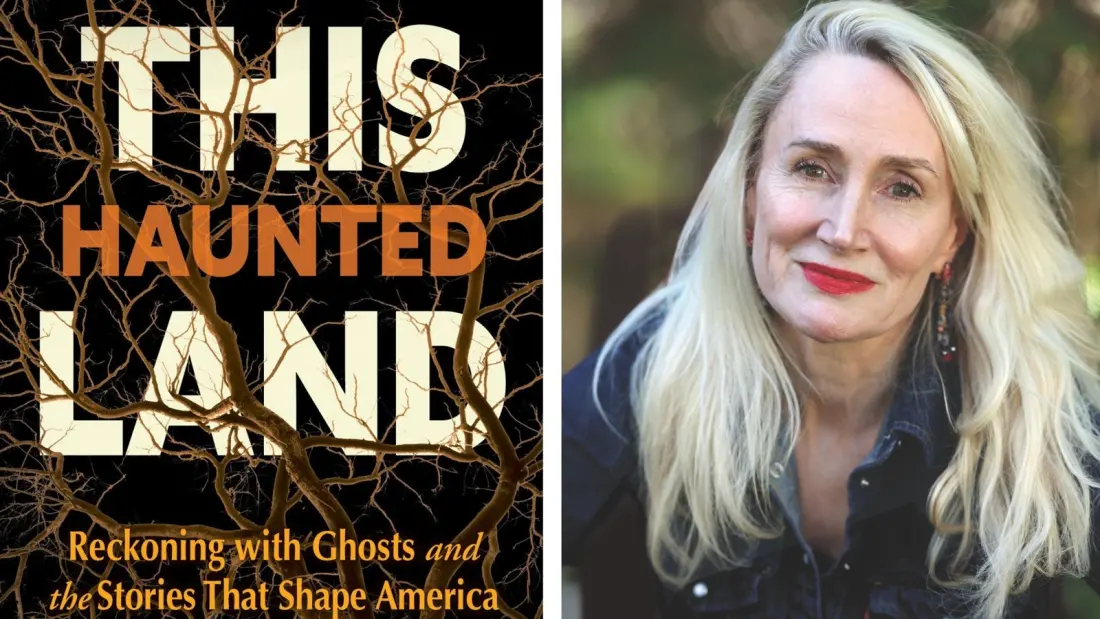
A new book is asking an uncomfortable question about one of travel's most popular niches: when we book a ghost tour, whose tragedy are we drinking a cocktail to?
This Haunted Land: Reckoning with Ghosts and the Stories That Shape America, published by Torrey House Press in September 2026, grew out of author Betsy Gaines Quammen's plan for a light-hearted follow-up to her previous books on extremism. It didn't stay light. Collecting hauntings across the United States — a ghost bird in Arkansas, spirits tied to Underground Railroad travellers at a Cincinnati bed and breakfast, a haunted theatre in Telluride, Colorado — she found the same pattern again and again: America's ghost stories cluster around history the country has never properly resolved.
Her central argument for travellers is a challenge to the paranormal-tourism boom. Investigators and tourists increasingly turn up at Indigenous sites hunting for spooky experiences without any awareness of the genocide, stolen land, forced assimilation and boarding-school legacy behind them, she says — and treating those places as pure entertainment doesn't just miss the point, it compounds the original harm. She makes a similar case about ghost tours in the American South, where the suffering of enslaved Black women is routinely repackaged as atmospheric fun. The fix, in her view, isn't to stop visiting these places; it's to learn the actual history first and engage with it as more than a thrill.
Quammen also stretches the idea of haunting beyond spirits. She writes about extinction as a haunting — the wildlife that once filled Western landscapes — and cites author Marc Reisner on how water scarcity in the American West is its own kind of ghost, one travellers to the region's national parks are seeing play out in real time. She grew up hiking those public lands and argues that white conservation history has long erased the fact they were homelands for countless generations before they became scenic playgrounds.
None of this requires believing in ghosts, she insists — she's a historian with a science background and welcomes sceptics. Her own conviction started early, though: a childhood encounter in rural Ohio she still can't explain, and a college house in Colorado Springs shared with a spirit she and her roommates named Florence, whose tragic story she eventually came to know well enough to be at peace with. That arc — curiosity, then understanding, then respect — is basically the book's advice for travellers compressed into one anecdote.
Why should holidaymakers care? Ghost tours are a multi-million-dollar industry and a staple of trips to New Orleans, Savannah, Gettysburg and countless small towns. Quammen isn't calling for a boycott, but she is asking visitors to do a little homework before they buy the ticket: know whose trauma the story is built on, and treat the place — and the people connected to it — accordingly. Read that way, the spookiest thing about America's haunted sites isn't the ghosts. It's what they're still waiting for the living to acknowledge.