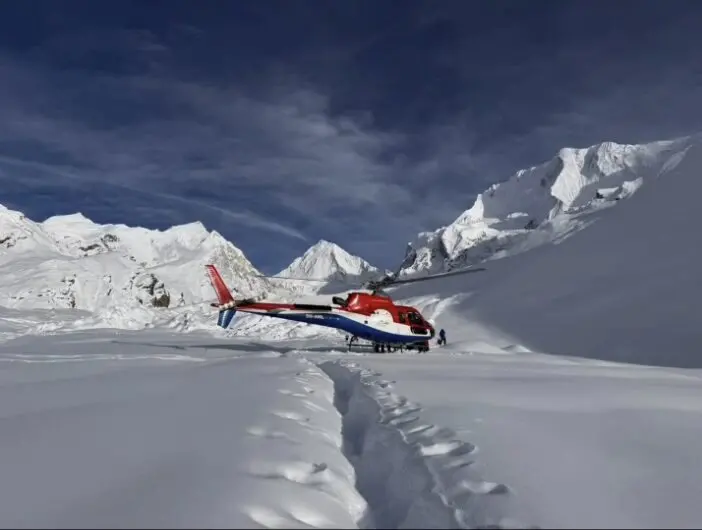
Fourteen people are dead after an avalanche buried Himlung Himal base camp in western Nepal, and the way it happened is prompting hard questions about who gets protected when storms hit the Himalaya.
Mingma Gyaljen Sherpa, who led the rescue operation, has called off the search for 12 kitchen staff still missing — they are buried under more than four metres of snow, and teams armed only with shovels cannot reach them. Four bodies have been recovered. The remains of the others will be retrieved once the snow melts.
The core problem: the weather front was forecast days in advance. Warnings went out across Nepal's mountain regions, foreign climbers were pulled off the mountain, and yet local base camp staff stayed in camp. There were no foreign climbers on Himlung at the time of the disaster.
It was not an isolated pattern. On Manaslu, where outfitters cancelled the rest of their autumn season, workers also remained at base camp while clients were airlifted or walked down the valley. Alexander Abramov of the Seven Summits Club filmed a large group of these workers eventually retreating to Samagaon village in the middle of the gale — badly equipped, without crampons, hauling themselves over frozen ground while helping each other along.
Outfitters argue that Himlung base camp was considered safe — no one expected an avalanche of that scale at such a low, sheltered site. Manaslu's base camp, big enough for 1,000 people, is also simply too large to dismantle quickly. But Mingma G's point stands: if 'safety first' justifies cancelling expeditions and evacuating paying clients, the same logic should apply to the Nepali staff who keep those expeditions running.
For anyone booking a Himalayan trek or peak expedition, this matters more than it might seem. Your operator's safety culture shows at moments exactly like this — who gets the helicopter seat, and who gets left to hold the camp. Before you commit to an outfitter, ask directly how they treat local staff during weather events, whether they have evacuation plans for base camp crews, and how they acted in past emergencies. The answer will tell you more than any brochure.