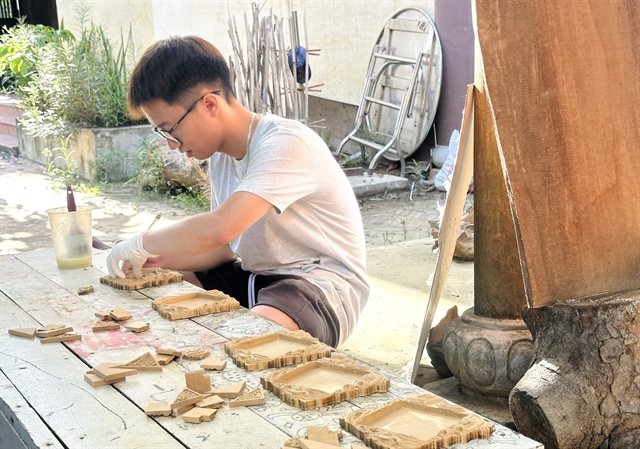
Around Hội An in central Việt Nam, a new generation of craftspeople is proving that heritage crafts don't have to end up as museum exhibits. In the historic villages of Kim Bồng and Thanh Hà, twenty-somethings are pairing skills passed down through generations with graphic design degrees, visitor workshops and resort partnerships — and travellers can get hands-on with the results.
In Kim Bồng, a carpentry village famed since the late 16th century for craftsmen who built royal palaces in Huế, 22-year-old Huỳnh Tấn Quốc is the 14th generation of a celebrated woodworking family. His grandfather was People's Artisan Huỳnh Ri; his father, Huỳnh Sướng, holds the Meritorious Artisan title. Rather than following the old apprenticeship-only path, Quốc studied Graphic Design at Văn Lang University in HCM City, then came home to apply modern design thinking to ancestral joinery. His philosophy: tradition shouldn't repeat the past endlessly, but give old techniques a purpose in contemporary aesthetics — so his family workshop now turns out interior pieces built for modern homes.
Across the Thu Bồn River, Thanh Hà pottery village has been shaping terracotta for some 500 years. At the Gốm Vân workshop, Phan Duy and his wife Xuân Hương, both in their twenties, are the fifth generation at the wheel — Duy is the great-grandson of master potter Nguyễn Thị Được. Instead of keeping the craft behind closed doors, they guide visitors through sculpting and painting clay by hand, favouring patience and technique over mass production.
Mindful tourism is accelerating the revival. At NHAAN Resort & Spa Hoi An, the Meet the Artisan initiative brings these craftspeople directly to guests through workshops led by the artisans themselves — including a chance to try the pottery kick-wheel with Hương. The resort's kitchen continues the theme: Executive Chef Dương Danh Linh, a central-region native with two decades of experience, bakes fresh local fish wrapped in clay and roasted over charcoal, borrowing directly from Thanh Hà's pottery traditions so the dish connects diners to the soil of the old Quảng Nam Province.
Why it matters for travellers: this is a chance to meet working artisans rather than watch a staged show. Both villages are an easy side trip from Hội An's lantern-lit old town, and visitor sessions at Gốm Vân or the resort workshops put you at the wheel or workbench yourself. Buying a piece here supports a genuine family lineage — and you'll often have made part of it yourself. For anyone bored of passive sightseeing, central Việt Nam's craft villages are quietly becoming one of the region's best reasons to linger.