
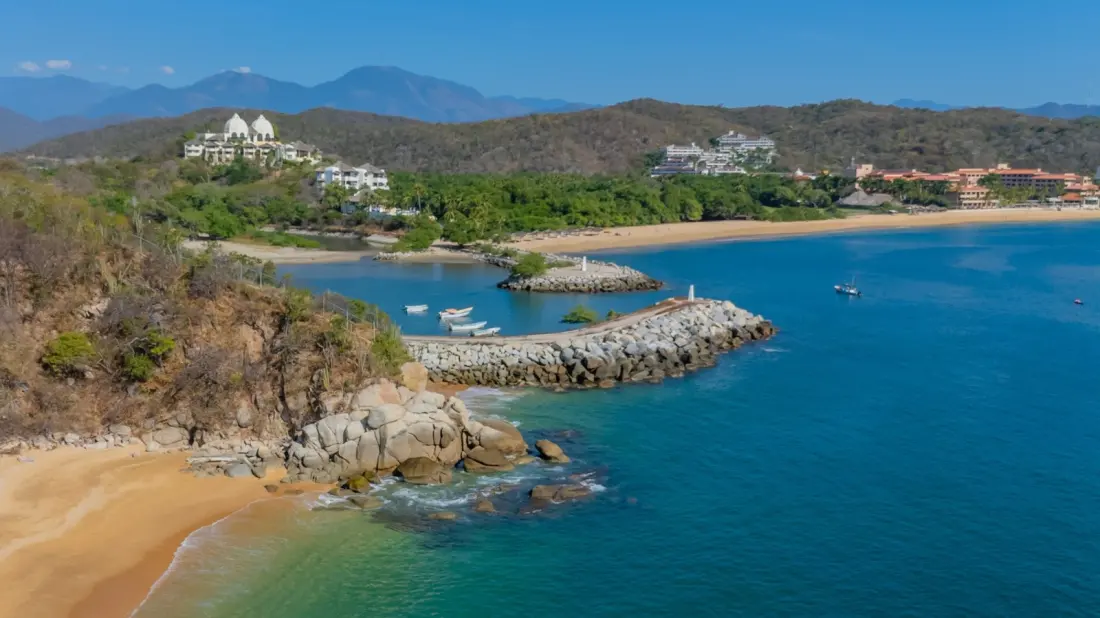
A two-bedroom condo for $400 a month, dinners out for two under $25, and sunshine roughly 330 days a year. That's the pitch for Huatulco, a 23-mile stretch of Pacific coastline in Oaxaca state that's quietly winning over North American retirees who might otherwise have defaulted to Florida.
What sets Huatulco apart from Mexico's better-known beach resorts is deliberate restraint. Where Cancun grew into a wall of high-rises, Huatulco's development was planned around sustainability and local character. The result is nine bays and 30 beaches — a phrase International Living has used when describing it as a near-perfect coastal escape — without the crush of mass tourism.
The climate does a lot of the selling. There are just two seasons: dry from October to April, rainy from May to September. Hurricanes are rare, unlike in Florida, and the sunshine count comfortably beats Key West's 259 sunny days. US passport holders can stay up to 180 days without a visa, which makes the classic snowbird winter easy. Summer brings green hills and good surf; winter brings the retiree crowd.
Daily life is where the numbers get persuasive. Many expats settle in the Paseo Chahué neighborhood, where modern condos rent from around $400 for two bedrooms — Florida's average is over $2,000. Groceries are cheap, but plenty of transplants barely cook at all because eating out costs so little. Taxis are affordable enough that many retirees skip car ownership entirely. Healthcare is another draw: Mexico's system is inexpensive and well-regarded, Huatulco has a solid reputation for basic care, and a new Canadian-backed medical facility aimed at medical tourism is in the works.
It's not all hammocks, though there are plenty of those. Retirees report a full social calendar of pickleball, cycling to the beach, fishing, and afternoon card games. The town of La Crucecita is the main hub for shopping and dining, built around a central park marketplace. The local cathedral holds a genuine curiosity: a 65-foot ceiling mural by José Ángel Del Signo, said to be the world's largest painting of the Virgin of Guadalupe, in a vivid psychedelic style. Local artists sell murals and teach painting classes if the Oaxacan color palette rubs off on you.
On the water, Santa Cruz harbor is the jumping-off point — hire a panga boat to hop between coves for swimming, snorkeling, and fishing, or browse the seafood stalls and handicraft market. For a beach you can reach on foot, Tejon requires a short, steep hike but rewards you with a sheltered cove, a palapa-roofed beach bar, and hammocks strung between the palms.
For anyone weighing a retirement abroad against a condo in the Sunshine State, Huatulco makes a simple case: the same active, outdoorsy lifestyle — beaches, sports, friends, long lunches — at a fraction of the cost, with more sun and fewer hurricanes. It suits independent-minded retirees who want community and nature without the resort-strip atmosphere, and who are happy with a smaller town that has just enough culture, healthcare, and infrastructure to make it stick.