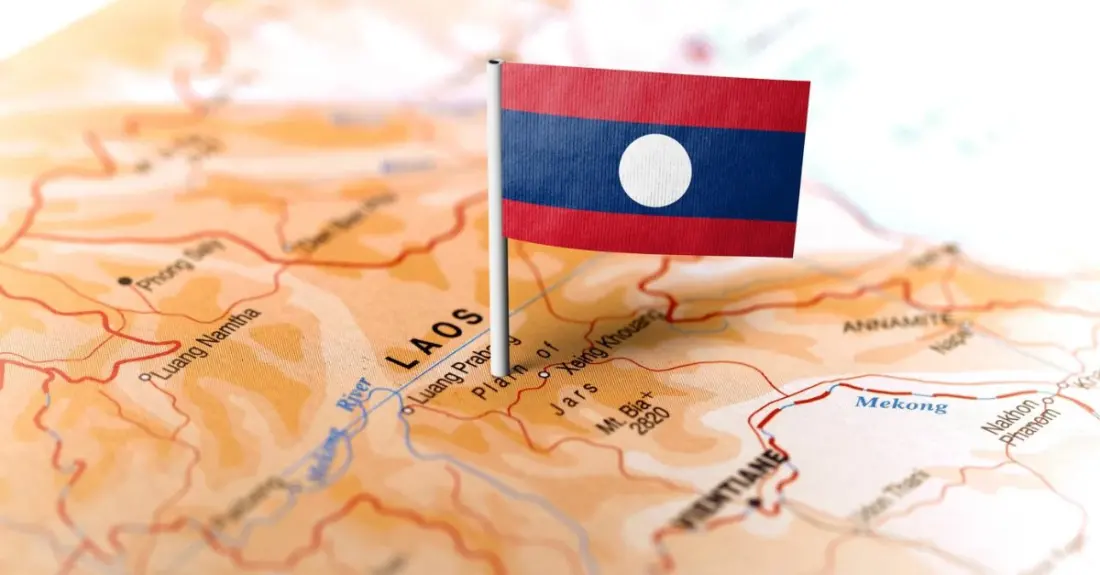
After 55 years on the United Nations' list of Least Developed Countries, Laos officially left the category on 24 November 2026. It joined in 1971, first hit the graduation thresholds in 2018, and cleared all three criteria — income, human assets, and economic and environmental vulnerability — in 2021. COVID pushed the UN General Assembly to grant a five-year preparation window instead of the usual three.
That makes Laos the first Southeast Asian country ever to graduate and only the ninth worldwide. Unlike Singapore, Thailand and Vietnam — which were never on the list — Laos spent over five decades climbing out. Cambodia, Myanmar and Timor-Leste are now the only ASEAN members still classified as least developed.
The numbers behind the milestone are striking. National poverty fell from 46 percent to 15 percent, electricity access expanded dramatically since 1993, and the economy averaged 5.6 percent annual growth from 2015 to 2025. Inflation eased to an average of 7.7 percent last year, though the World Bank expects it to rise again in 2026 alongside continued growth. Deputy Foreign Minister Anouparb Vongnorkeo and UN Resident Coordinator Bakhodir Burkhanov set the next target in a joint op-ed: upper-middle-income status by 2055.
It's not all smooth sailing. Graduation means some trade perks, financing and technical assistance move onto tougher terms, with most changes phasing in through 2029. Exports to ASEAN partners should keep duty-free access, but Lao farm goods sold to China and garments heading to the EU may need adjustments. High public debt — around 87 percent of GDP in 2025, per the World Bank — limits how much the government can spend its way through the transition. The government has already ordered twelve mitigation measures, including a push to qualify by 2029 for an EU scheme offering low or zero tariffs.
Why should travellers care? For visitors, Laos has quietly become one of Southeast Asia's most rewarding stops: Luang Prabang's temples, the slow boats down the Mekong, Vang Vieng's karst scenery, and the new Laos-China Railway that has made overland travel far easier. Graduation signals long-term stability and investment in infrastructure — think better roads, power reliability and services — which tends to make trips smoother over time. Trade frictions could nudge some prices up, but for now the country remains notably cheaper than Thailand or Vietnam in many categories, and it still sees a fraction of their tourist crowds. If you've been waiting for a sign to visit before the guidebooks catch up, this is a decent one.