Archaeologists working on the western slopes of the Sierra Nevada de Santa Marta in Colombia are steadily uncovering Betoma, an extensive network of Indigenous settlements that may rank among the most significant archaeological finds of the century in the country. What started as surveys with local farmers has grown into a mapped area covering more than 18 square kilometres, with the latest excavation stage revealing monumental plazas buried under dense vegetation.
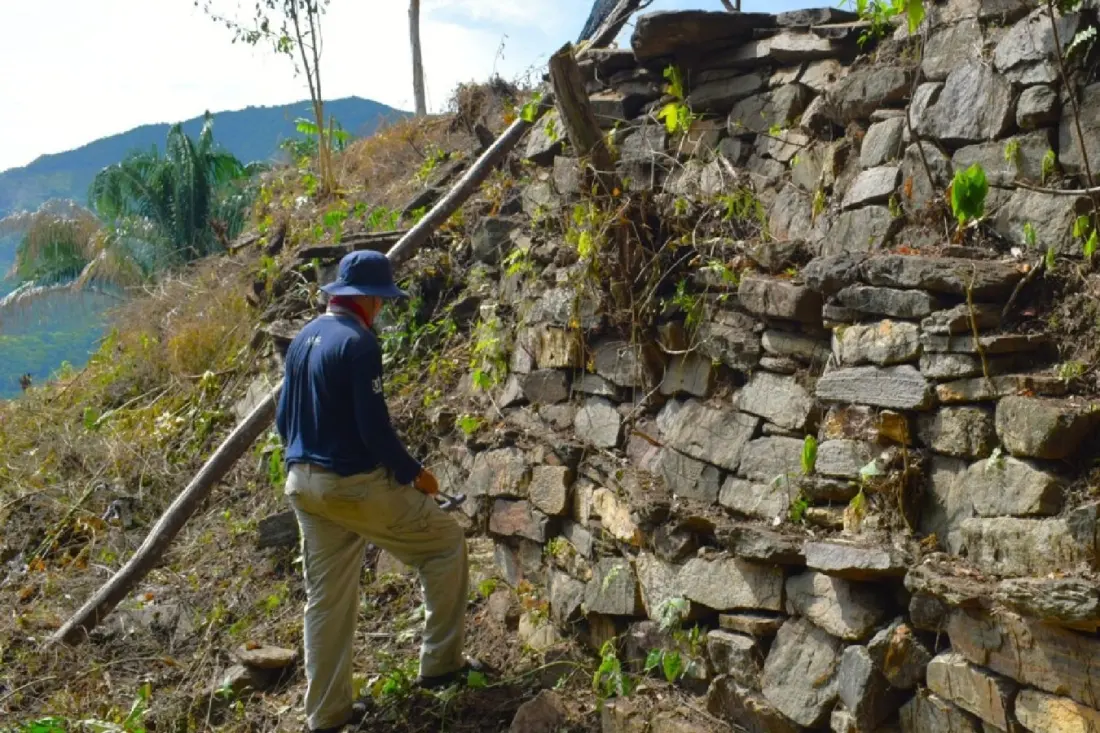
Since 2019, archaeologist Daniel Rodriguez Osorio, a PhD graduate of the University of Texas at San Antonio who teaches at Universidad del Norte in Barranquilla, has documented stone terraces across the upper basins of La Aguja Creek and the Frio River. Early ground surveys logged 1,272 terraces in the La Aguja basin and 678 more along the Frio. But the real leap came from technology: since 2024, LiDAR sensors — supplied by Dr. Steve Kosiba and the University of Texas at San Antonio, the Wenner Gren Foundation and Common Good Labs — have mapped the terrain in 3D through the forest canopy, revealing over 8,334 stone terraces. The structures span two eras: the Neguanje period (200-1000 AD) and the Tairona period (1000-1500 AD).
The most striking recent finds are plazas. The team has documented 27 in the La Aguja basin alone, all large, carefully built and connected to the surrounding settlements by multiple access points. One monumental plaza measures 700 square metres, ringed today by cedars, cherry trees, mango trees and bitter palms, with smaller terraces arranged around its edges. Their abundance is pushing researchers to rethink how pre-Hispanic communities organised these mountains — the evidence suggests a more decentralised pattern than traditional models assume, rather than a single dominant centre.
There is also a cultural twist to the excavation itself. On some terraces, older structures were deliberately buried rather than demolished for building material, with new construction layered on top. As Rodriguez puts it, for the Indigenous communities of the Sierra Nevada the past is not behind them — it lives in the mountain itself. That worldview contrasts sharply with the present day: four centuries ago these slopes supported a population large enough to fill 27 monumental plazas, while today a child from the nearby village of Nueva Union walks two hours to reach school.
For travellers, this is a compelling reason to look beyond Colombia's Caribbean coast. The Sierra Nevada de Santa Marta is already popular for treks to the 'Lost City' (Ciudad Perdida), the region's famous Tairona site, and Betoma adds a new chapter — and a reminder that much more remains hidden under the forest. The excavations are ongoing and not a tourist attraction yet, but the area sits within reach of Santa Marta, where hikes, Indigenous community visits and coffee-farm stays are well established. Anyone planning a trip in the next few years is effectively watching a major discovery unfold in real time.