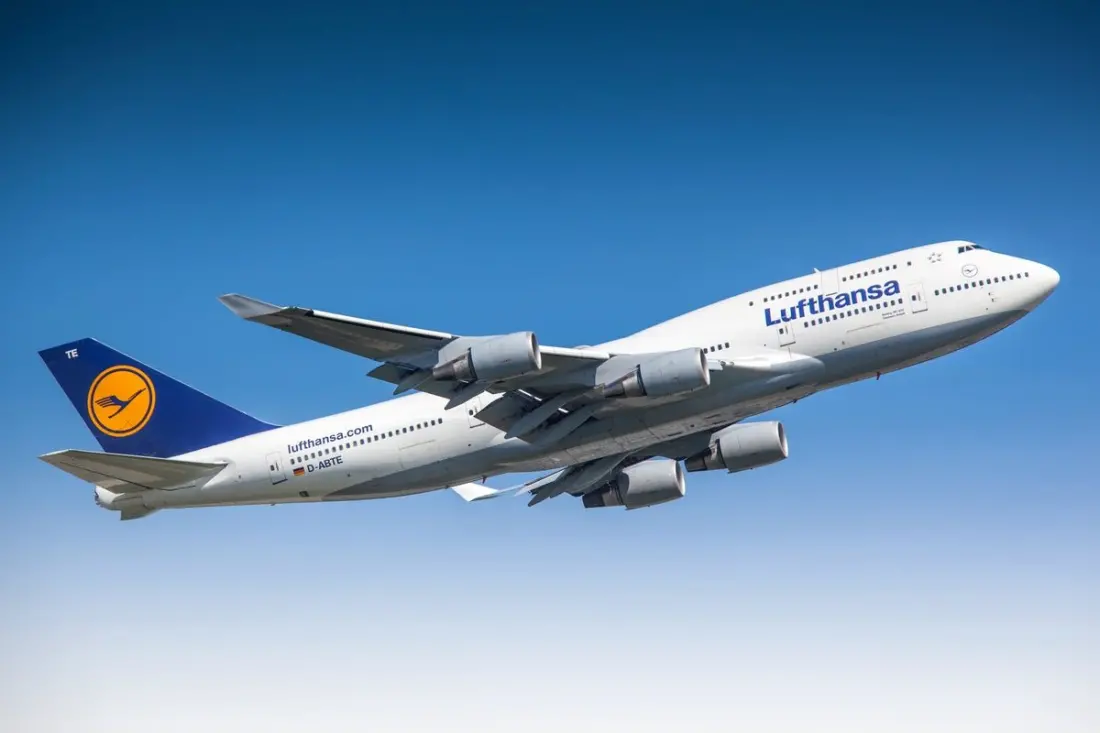
A transatlantic Lufthansa flight ended up in Manchester rather than Toronto this week, after crew detected an unexplained odour in the cabin and decided safety came first.
Flight LH470 left Frankfurt at 3pm local time on 26 September for what should have been an eight-hour hop to Toronto. About 90 minutes in, while cruising over Loch Lomond in Scotland, the Boeing 747 swung round and headed south with 371 people on board. An emergency was declared — not because the situation was critical, but to secure priority landing rights — and the aircraft touched down in Manchester safely at 4.20pm.
Because it had landed still heavy with fuel, the plane was met and inspected by the fire service as a precaution before passengers disembarked normally. Lufthansa put everyone up in local hotels for the night and laid on a replacement aircraft, which finally departed Manchester for Toronto at 5.40pm the next day, arriving just before midnight local time.
So what caused it? The airline says its maintenance team found and fixed the source of the smell during inspections in Manchester, but it hasn't revealed what it actually was. The 747 itself flew back to Frankfurt empty of passengers on the evening of 28 September. Lufthansa apologised for the disruption and reiterated that passenger and crew safety is its top priority.
It's a useful reminder of how these diversions play out. A strange smell is one of the more common reasons for an unscheduled landing — Swiss International Air Lines once grounded a plane in Brussels overnight over an odour traced to the forward galley. And smells don't always mean a diversion: on a British Airways flight from Hong Kong to London in March, passengers complained of a foul odour after a woman in her 60s died shortly after take-off and the body was stored in a heated rear galley. That flight continued as planned, since it wasn't deemed an emergency. IATA guidelines say a deceased passenger should be moved to an isolated seat or another area that doesn't block an aisle or exit, at the crew's discretion.
For holidaymakers, the Lufthansa case shows the system largely working as intended: a precautionary turn-back, a fast priority landing, fire crews on standby, hotel rooms and a replacement flight within 24 hours. If you're ever on a diverted long-haul, expect the airline to cover accommodation and rebooking when the cause is operational — though it's worth keeping essentials like medication and chargers in your hand luggage, since you may spend an unplanned night away from your checked bags.