
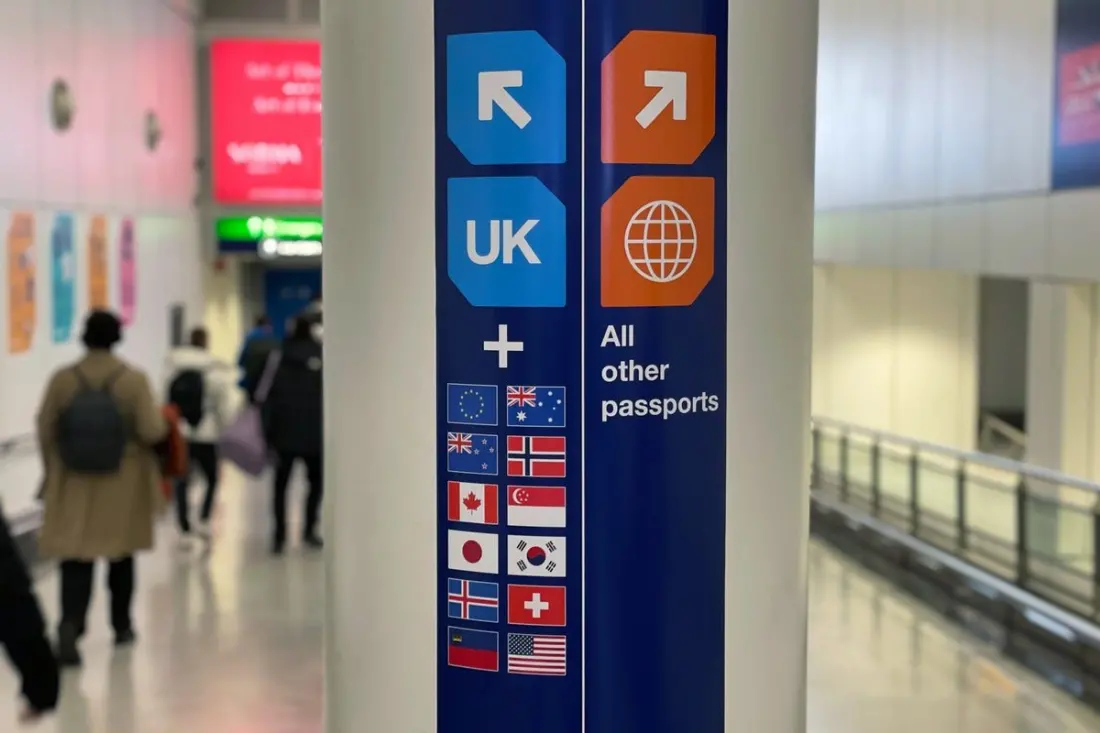
If you've flown into Europe recently, you've probably met the EU's new entry-exit system (EES): the fingerprint and facial scan ritual that replaced passport stamps for British and other non-EU travellers across the Schengen area. It launched last October and was meant to be fully enforced by April. Instead, at least nine countries have quietly pressed pause.
France, Belgium, the Netherlands, Germany, Greece, Malta, Portugal, Italy and Switzerland have all reportedly told the European Commission they won't enforce the full biometric checks until the technology actually works – with Brussels, informally at least, letting them do so. The official reason is "maintaining border fluidity", which is diplomatic-speak for: the queues were getting out of hand.
Here's the timeline. The scheme rolled out from October last year, and countries got a 150-day grace period during the summer during which they could skip the checks to avoid holiday chaos. That grace period expired on 6 September. Rather than switch the full system back on, the nine countries simply informed the Commission they'd hold off until the systems were reliable. The European Commission, for its part, declined to comment.
Not everyone is waiting patiently. Ryanair has been vocal, urging the Commission to extend the exemption until at least April 2027 so airports and border authorities can hire enough staff and iron out the software. The airline's chief operational officer Neal McMahon didn't mince words, calling the EU's handling of EES "a shambles from start to finish" and arguing that airlines and airports had warned Brussels the rollout wasn't ready – warnings he says were ignored, with passengers paying the price in longer processing times and queues.
The UK government, meanwhile, has been spending money to keep things moving on its side of the Channel. It has put £10.5 million into infrastructure at the Port of Dover, Eurotunnel and Eurostar, plus a further £20 million to boost passport-checking and vehicle-holding capacity at Dover. There are also traffic management measures and welfare sites stocked with food, water and facilities in case of severe disruption. A government spokesperson credited French authorities for collaborating closely and boosting border staffing over the summer.
So what does this mean if you're heading to Europe? Practically, the answer is: it depends where and how you cross. At airports in the nine delaying countries, you may well breeze through with a simple passport check rather than a full biometric enrolment. But borders run by countries enforcing EES properly – and land crossings like Dover, the Channel Tunnel and the EU's external frontiers – can still involve the full scans, and queues there remain the main risk to your plans.
The sensible move is to build in extra time for any border crossing into the Schengen area, keep an eye on guidance from your airline or ferry operator, and remember that the rules could tighten at short notice once the nine holdouts switch the system back on. For now, though, the full EES experience is on hold in some of the continent's most-visited countries – a rare bit of good news for holiday queues.
Reporting: The Independent Travel