
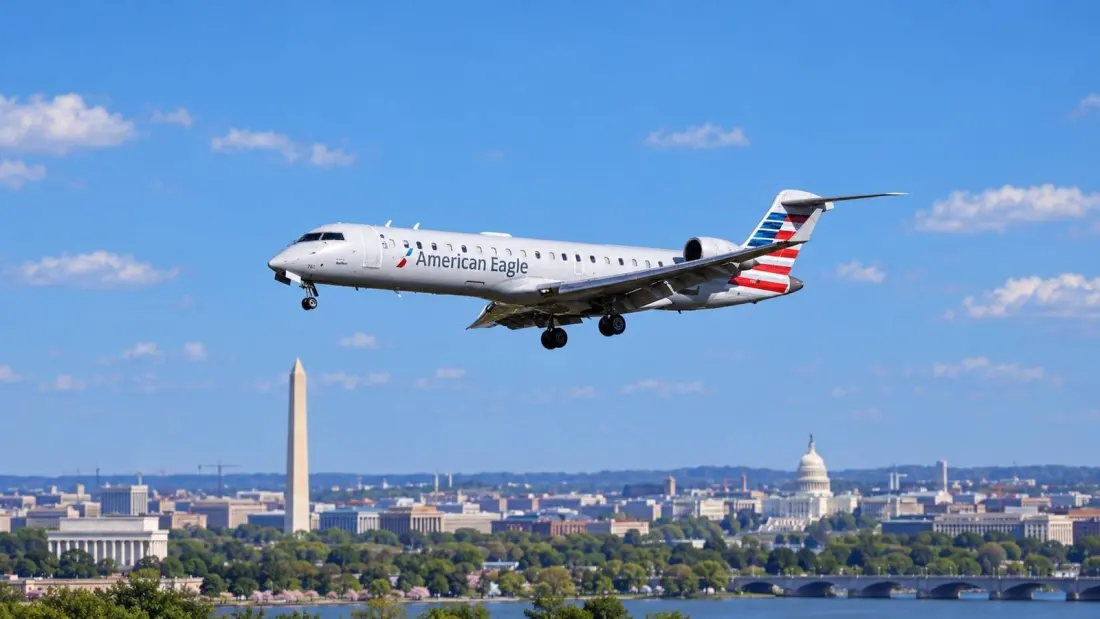
More than 19 months after American Eagle Flight 5342 collided with a US Army Black Hawk near Ronald Reagan Washington National Airport, killing all 67 people aboard, the agencies responsible for fixing what went wrong are still at odds. The NTSB has labelled 11 of its 33 safety recommendations to the FAA as receiving an "unacceptable" response — meaning the regulator either rejected them, offered weak alternatives, or is moving too slowly.
The sticking point is cockpit collision-warning technology. The NTSB wants the FAA to mandate ADS-B In on aircraft that already must carry ADS-B Out, giving pilots a live traffic display with audible alerts. Investigators calculated that such a system could have warned the Flight 5342 crew 59 seconds before impact; the Black Hawk crew might have had 48 seconds. The plane's existing TCAS gave a traffic advisory, but too late, and low-altitude limits blocked the stronger alert that commands an evasive climb or descent. NTSB Chair Jennifer Homendy's exasperation is blunt: the board has pushed for better ADS-B-based warnings since 2006, and she's asking Congress how many more decades of tragedy it will take.
The data behind the push is sobering. Between January 2018 and February 2025, FAA records showed 4,067 encounters between airplanes and helicopters on the routes involved where separation dropped to 0.19 miles or less — and in 348 cases, under 150 metres. The final report blamed systemic failures in FAA airspace design and risk management, alongside Army and crew errors.
It's not that nothing has changed at DCA. The helicopter route segment where the collision happened is permanently closed, routine mixed helicopter-airline operations near the airport are restricted, helicopter routes were pushed away from airline flight paths, and controllers no longer rely on visual separation between helicopters and planes. Tower staffing and oversight have increased, and ADS-B Out broadcasting around the airport is now required. For anyone flying into Washington, the airspace around DCA is measurably tighter than it was on 29 January 2025.
The unresolved fight is about exporting those lessons nationwide. Congress is split: the Senate unanimously passed the ROTOR Act with a strong ADS-B In requirement, but it fell one vote short in the House, which instead approved a broader ALERT Act that the NTSB says waters down key provisions. Victim families have returned to Capitol Hill alongside Homendy to keep the pressure on. The FAA insists most recommendations will be addressed by end-2026, though some require years-long rulemaking.
Why should a traveller care? Because the outcome shapes how safely congested US airspace — especially corridors mixing airliners, helicopters and military traffic — operates for years to come. If you're booking flights through Washington National, one of the busiest and most constrained airports in the country, the DCA reforms are already in force. The open question is whether the same protections get extended everywhere else before the next close encounter becomes the next catastrophe. Simple Flying reported the details.