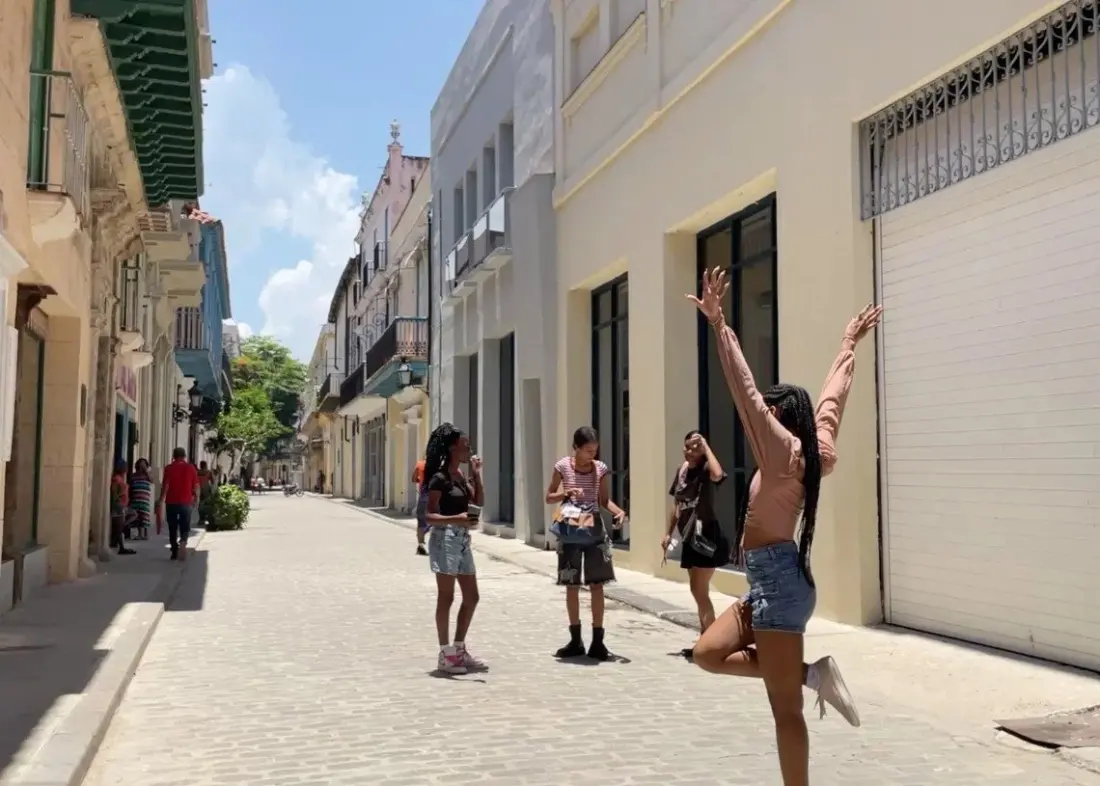
Obispo Street used to be the beating heart of Havana tourism — souvenir hawkers, guitar players, card readers outside the Cathedral. Today, vendors at the Cuban Association of Artisan Artists fair on the same street report making one sale a day, sometimes two, often none at all. The reason: visitor numbers to Cuba fell 58% between January and May this year, a collapse driven by the pandemic's long aftermath and tightened US sanctions imposed since the start of the year.
The human cost is easy to see in the characters who define the old city. Adelaida Borges, an 84-year-old fortune teller who has worked by Havana Cathedral for 37 years and is nicknamed Señora Habana, calls this the lowest point she has ever witnessed. Lissete Pérez, a peanut vendor whose calls have appeared in documentaries and a Los Van Van music video, says there was essentially no high season at all this year — a season that normally runs from October through May. José Orlando García, a street musician who has played for tourists since he was nine, says at 69 he has never seen it this bad.
It is not only foreigners who have disappeared. Old Havana was traditionally a summer playground for Cuban families, and that crowd has thinned too. Venues are closed or dark because of supply shortages and rolling blackouts — one mother described a family outing cut short when the power went out at the Aquarium, and again at a museum. Many remaining businesses price in foreign currency, putting them out of reach for local families. The private sector keeps a handful of spots busy, but mostly people come to walk and admire the colonial architecture.
Artisans at the Obispo fair — wood carvers, ceramicists, papier-mâché artists — say sales now come mainly from locals, embassy staff and the odd airline worker rather than tourists. Over at the San José Warehouses on Avenida del Puerto, the picture is similar: stocked tables, few customers, and vendors keeping at it out of stubbornness more than profit.
Why should a traveller care? Partly because this is a rare moment when Havana's old city is uncrowded — you can photograph the plazas, hear live guitar without jostling, and talk at length with the craftspeople and performers who make the district what it is. Your money goes further for them than at any time in decades. But go prepared: blackouts are frequent, some state-run attractions close without warning, and a private casa particular or paladar is often a more reliable bet than older state venues. If you have been putting off Cuba, the locals quoted here would tell you the same thing they told the reporter: they are holding on for better times. Visitors arriving now are part of what those better times look like.