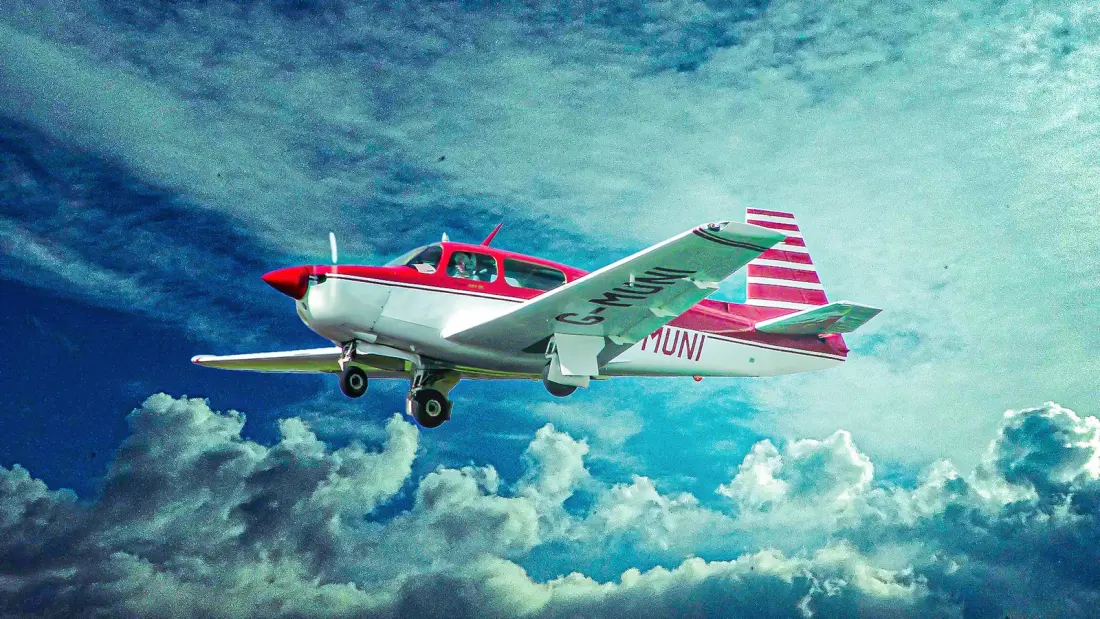
The Mooney M20 has been a favourite of private pilots since it first flew in 1955, and more than 11,000 have been built across three production runs. If you've ever wondered what it actually costs to keep one of these sleek four-seaters flying, the 2026 numbers are in — and they range from manageable to eye-watering.
Start with the purchase. A used M20J 201, one of the most popular variants, averages around $145,000, with the wider market running anywhere from $90,000 to $235,000 depending on age, condition and negotiating room. Go modern and the price climbs sharply: the M20U Ovation Ultra starts at $698,000 new and can nudge $1 million once options are added. What you get for that is bragging rights — the M20V Acclaim Ultra is the fastest certified single-engine piston four-seater in the world, hitting 278 mph thanks to its turbocharged 280 hp Continental engine, and it can carry up to 100 gallons of fuel for a range of 1,275 nautical miles.
Running costs are where the maths gets interesting. Budgeting for an M20J flying 100 hours a year — with fuel at $6.50 a gallon — comes to roughly $27,600 annually. Double the hours and the bill rises to about $39,100; triple it and you're near $50,500. The catch is the split between fixed and variable costs: insurance ($2,400–$4,850), hangar space ($5,350–$13,375) and the annual inspection ($2,500) get paid whether you fly or not. The upside is that flying more actually makes each mile cheaper — the cost per mile drops from $1.43 at 100 hours a year to $0.87 at 300 hours. None of this includes depreciation.
For pilots who love the idea but not the maintenance reserve, chartering is an alternative. A basic M20A rents for around $400–$900 per hour, comfortably within the typical $500–$1,500 piston charter range — though newer, better-equipped variants cost more.
The M20 isn't for everyone, though. Its slippery aerodynamics demand precision on landing; novices often find the aircraft floats down the runway. It's also happiest on long paved strips rather than short, rough bush strips, and insurance premiums reflect its performance. Pilots who regularly fly at high altitude — mountain flying, for instance — should look at the turbocharged M20K, while fair-weather cross-country flyers can save money with an M20J or something less powerful.
Worth noting is the competition: the Cirrus SR22. Nearly 9,000 have been built, and it now accounts for roughly half the piston aircraft market, largely thanks to its whole-airframe parachute system. A pre-owned SR22 costs around $260,000, and at 200 flying hours a year the total operating bill lands near $127,400, or about $637 per hour — pricier than the Mooney, though with comparable performance and a full-glass cockpit that helped define modern light aviation.
For holiday-minded flyers, the takeaway is simple: if you charter or share a light aircraft for trips, knowing these cost structures helps you judge whether a $400-an-hour piston rental or a fractional arrangement makes sense. And if you've ever dreamed of owning your own fast cross-country machine, the Mooney remains one of the most efficient ways to do it — provided you can land it.