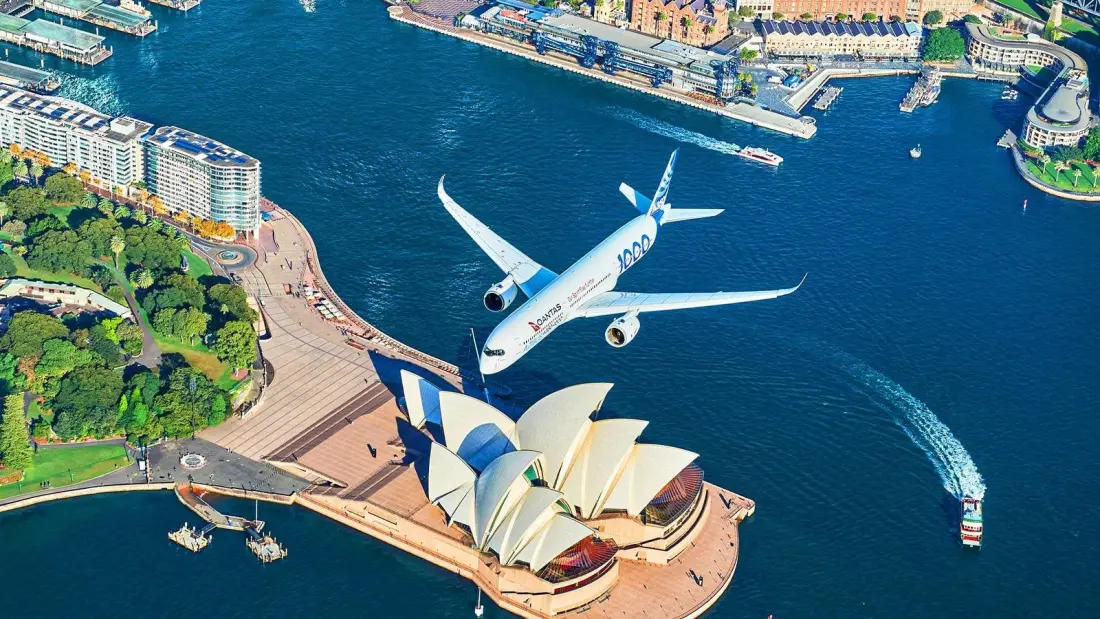
Qantas is inching closer to the longest commercial flight the world has ever seen: a nonstop hop from Sydney to London Heathrow covering 9,188 nautical miles (roughly 17,000 km) and taking more than 20 hours in the air. The catch? Almost no plane can actually fly that far with passengers on board. That's why Qantas has ordered a dozen specially modified Airbus A350-1000ULRs under its long-running "Project Sunrise", which also covers a planned Sydney-New York route.
The standard A350-1000 is a capable long-hauler, but its roughly 9,000-nautical-mile range falls just short of the London-Sydney mission. The ULR variant fixes that with structural reinforcements, a higher maximum take-off weight, and crucially an extra rear fuel tank holding 20,000 litres. That pushes total fuel capacity to around 185,000 litres and stretches the aircraft's range to about 9,800 nautical miles — enough for the job.
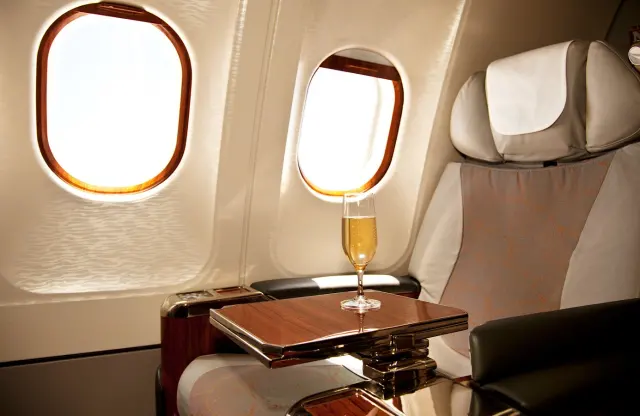
The trade-off is space. Where a regular A350-1000 might seat up to 410 passengers, Qantas is configuring its ULRs with just 238 seats across four classes: 6 first suites, 52 business suites, 40 premium economy and 140 economy seats. Fewer seats means less weight, and Qantas expects to charge a premium for the time saved. Singapore Airlines has made the same calculation with its A350-900ULRs on the current world's-longest route between Singapore and New York — no basic economy there either.
Boeing simply has no rival for this mission. The delayed 777X tops out at 8,745 nautical miles in the 777-8 version, and the 787 Dreamliner family — which made Qantas' Perth-London route possible back in 2018 — maxes out around 7,865 nautical miles, well short of Australia's east coast from London.
As for timing, the first aircraft delivery has slipped to April 2027, with the inaugural Sydney-London service now expected towards the end of 2027. The first jet was in the paint shop in Toulouse as of late May, test flights were reportedly weeks away, and pilot training is running on a new A350 simulator in Sydney. Four more aircraft follow quickly afterwards, with three needed to sustain a daily nonstop service on either route.
For travellers, this is genuinely game-changing: Qantas says passengers will save up to four hours compared with today's one-stop routings. There's also talk of an onboard "wellness zone" encouraging passengers to move around during what is essentially a full day aloft. Expect tickets to sit at the pricey end of the market — scarcity plus speed has a habit of doing that. If the idea of bypassing a transit stop in Singapore, Dubai or Doha appeals, this will be the flight to watch. Whether 20-plus hours straight in economy is bearable is another question entirely, and the answer may well decide whether other airlines follow Qantas down this ultra-long-haul path.