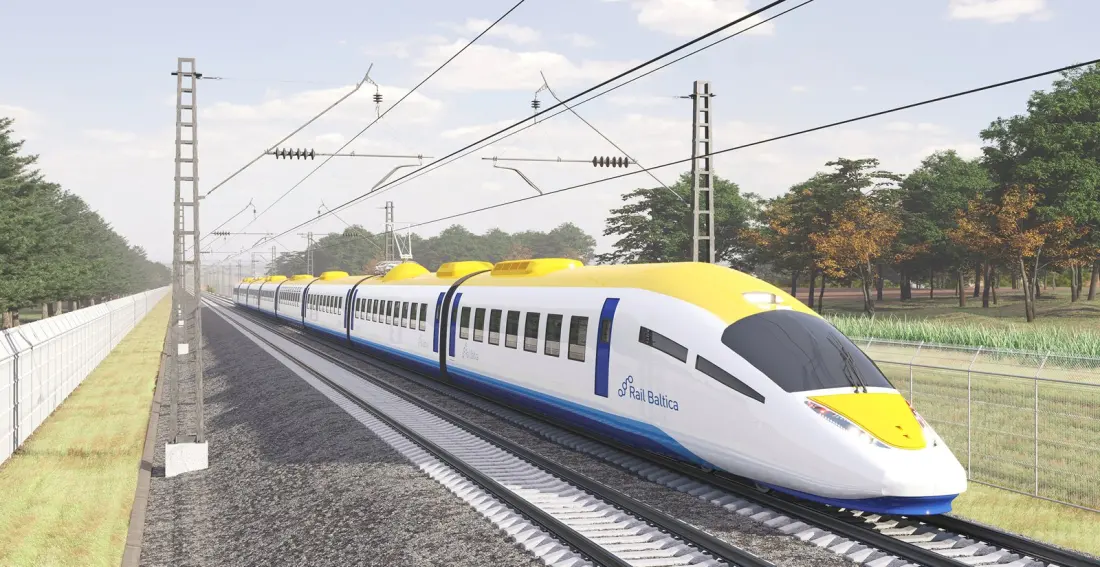
Estonia, Latvia and Lithuania have quietly pushed back the opening of Rail Baltica, the long-gestating high-speed rail line meant to link Tallinn, Riga, Vilnius and eventually Warsaw. A joint statement signed by the three prime ministers on 22 September scraps the firm 2030 deadline and replaces it with a vague promise to have the main line running sometime in the EU's next budget period, 2028 to 2034.
The reasoning is largely financial. Defence spending has ballooned across the Baltic states since Russia's invasion of Ukraine, squeezing national budgets. Estonian prime minister Kristen Michal put it bluntly in mid-September: build fast and Estonia pays more of its own bill, build slower and it can tap far more EU money. The three governments will now ask Brussels for at least €10 billion extra through the Connecting Europe Facility, while trying to keep the current 85% EU co-financing rate. They also want to cut the cost of the project's first stage by reviewing technical solutions, and to coordinate procurement so the Baltic construction market doesn't overheat.
Not everyone is accepting the delay gracefully. Work already under way continues, including the Tallinn–Pärnu section, and Estonia still plans to run domestic passenger services before the full international route is finished. But Pärnu — Estonia's summer resort town and a regional transport hub — was originally told it would have a fast rail link to Tallinn by December 2025, then 2030, and now nothing firm at all. Mayor Siim Suursild, who has spent 25 years on the issue, said local leaders invested in Pärnu Airport and dropped plans for a parallel conventional railway on the strength of state promises. A planned multimodal hub linking the port, airport and station is now off the table.
Former mayor Kristel Voltenberg went further in an open letter, pointing out that deadlines have already slipped from 2026 to 2030 to a seven-year window, that the cost of four lost years hasn't been calculated, and that EU money isn't secured yet. Several hotel projects, including a conference centre due in 2027, are banking on better transport links. Residents, she noted, bought homes on the assumption they could commute to Tallinn.
For travellers, the takeaway is simple: don't build a Baltic rail itinerary around Rail Baltica this decade. If you're heading to Estonia's coast in the next few years, Pärnu remains a drive or bus trip from Tallinn — pleasant, but nothing like the sub-hour high-speed hop once promised. The bigger picture still matters, though: once complete, the line will transform how visitors move between Tallinn, Riga and Vilnius, replacing slow, bus-heavy connections with proper rail travel across the region.