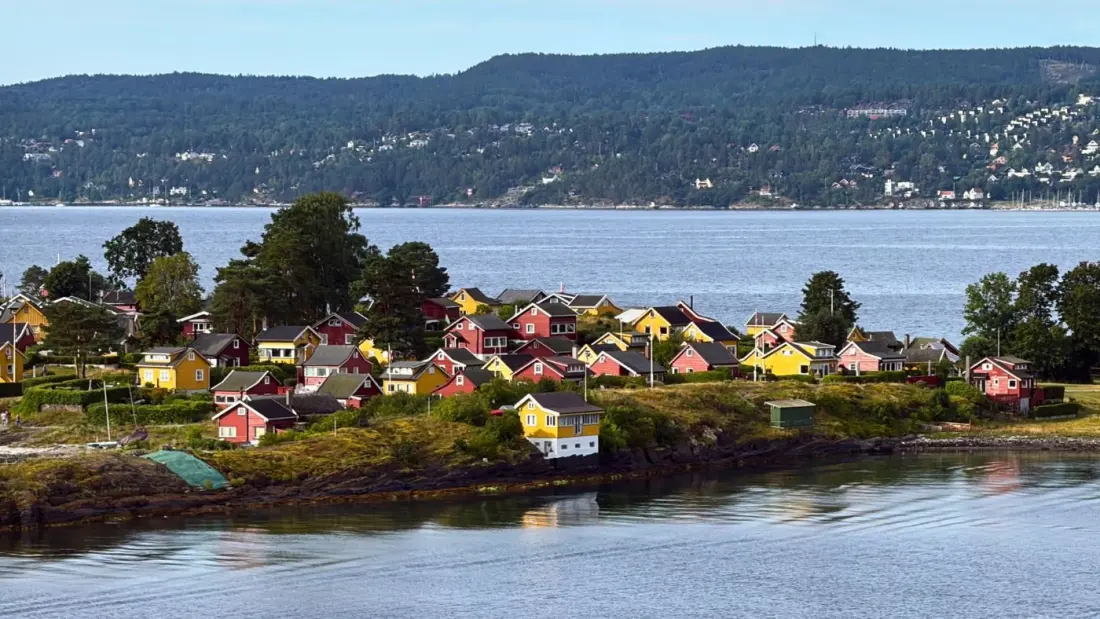
Travel through Norway and a pattern emerges: red barns, warm yellow farmhouses, and rows of white timber homes along the southern coast. The palette looks charmingly random, but it's actually a record of centuries of economics — the colour of a building once signalled exactly what it was for, and how much money its owner had.
Before around 1700, most Norwegian wooden buildings weren't painted at all. They were left untreated or coated in tar, giving them the dark, weathered look you still see on very old farm structures. When panelling and painting became fashionable in the 18th century, paint served two purposes: it protected timber from Norway's harsh sun and moisture, and it let owners say something to the neighbours.
Red was the budget option. Iron oxide earth pigments were cheap and widely available, which is why red ended up on barns, storehouses, boathouses and the rorbuer fishing cabins of the northern coast. In coastal areas, paint was sometimes bound with tran — fish oil — mixed with inexpensive red or yellow pigments. And no, not every red Norwegian building owes its shade to Sweden's famous Falu red from the Falun copper mine; Norwegian sources also mention local earth pigments and imported 'English red'.
Yellow came from the same trick: yellow ochre, another affordable earth pigment, common on wooden homes through the 18th and 19th centuries. Fashion shifted too — some shades were chosen to imitate the stone and brick buildings of continental Europe, letting timber owners fake prestige on a budget.
White was the flex. Strong white pigment was genuinely expensive, especially the lead-based paint imported from England. Sailors and merchants in Southern Norway brought the fashion home, and white became the signature of prosperous coastal towns — Risør, Grimstad, Lillesand and parts of Kristiansand, where whitewashed streets remain a draw today. But those 'white towns' weren't always so uniform: research has found buildings where only the street-facing façade got the costly light paint, while rear walls were brushed in cheap red or ochre. Restored courtyards in older towns still reveal these hidden colours.
The economics also created a code that survives: main farmhouse white or yellow, outbuildings red; town houses white, working boathouses red. Colour told you where people lived versus where they worked. Even though pigment is no longer the constraint, the tradition stuck — though modern Norwegian neighbourhoods now run to blues, greens, greys and the currently fashionable dark black and grey.
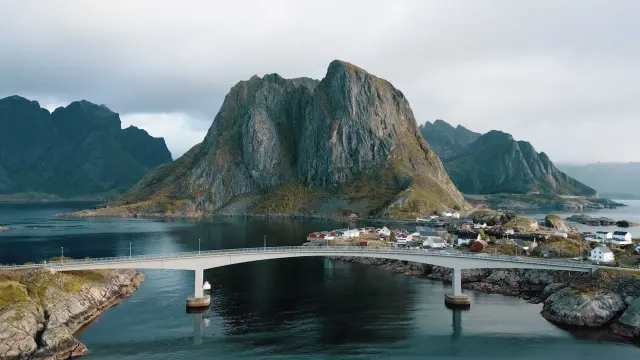
For travellers, this is more than trivia. It tells you where to look: the white timber towns of the south for elegance, Lofoten for red waterfront cabins under dramatic mountains, and rural valleys for the classic farmhouse-plus-red-barn combo. In protected historic areas, colour schemes are still regulated to preserve street character — so those postcard views aren't going anywhere.
Life in Norway