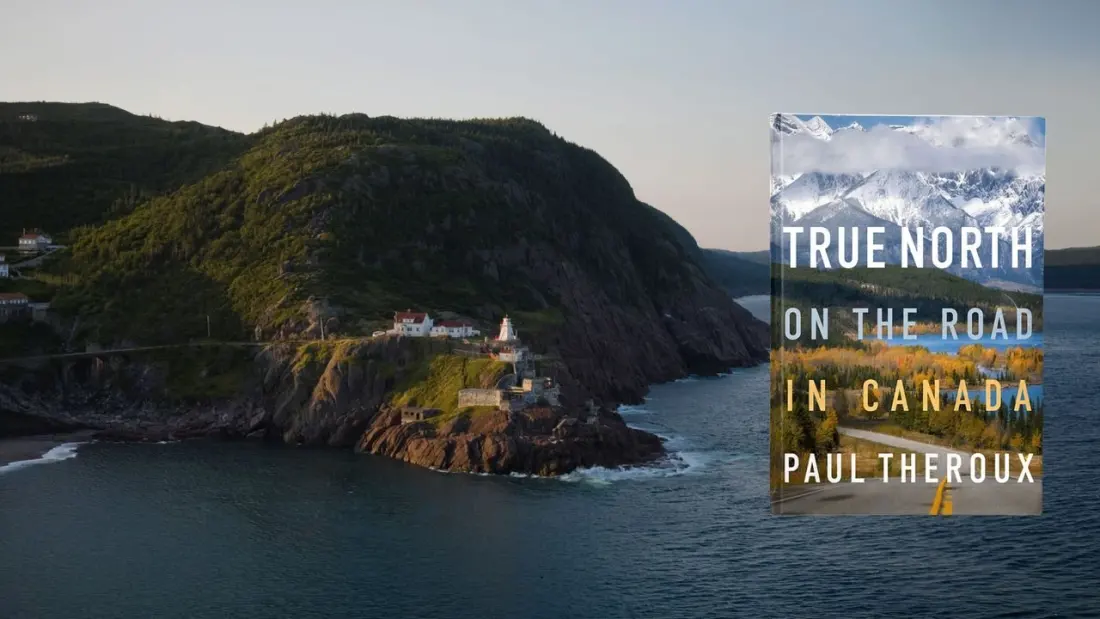
Paul Theroux's new travelogue opens with a crossing most Canadian travellers have never bothered to make: the overnight Marine Atlantic ferry from North Sydney, Nova Scotia, to Port-aux-Basques on Newfoundland's southwest coast. His account, excerpted in Condé Nast Traveler from the book True North, doubles as an honest preview of what that journey actually feels like.
The boat is the Ala'suinu — Mi'kmaw for "Traveler" — a ten-deck car ferry that runs daily across the roughly 110-mile channel at the mouth of the Saint Lawrence. There are no cabins on the crossing. Theroux paid $23 for a reclining seat and spent eight hours in a sealed saloon full of dozing truckers, students, nurses and families with dogs, sailing through a pitch-black sea lit only by the ship's running lights. This is commuter travel as much as tourism: many vehicles below deck are freight rigs and workmen's vans, which explains why plenty of Nova Scotians told him they'd never made the trip — often the same people who'd been to Florida dozens of times.
The practicalities are straightforward but slow. The ferry departs around 11:15 pm, check-in opens late, and most would-be passengers kill the wait the local way — a corner table at a Tim Hortons in North Sydney. Boarding is efficient, and you drive off into grey morning daylight in Port-aux-Basques, ready for breakfast.
The town itself bears scars worth knowing about. Hurricane Fiona, the worst tropical storm on record in Canada, hit in September 2022 and destroyed 130 houses there. Hotelier Cathy Lomond, whose Hotel Port aux Basques serves slow-cooked moose in gravy — Theroux compares it, via Thoreau, to tender, flavourful veal — sums up the local attitude: bad storm, but the community knows how to rebuild.
What makes Newfoundland worth the hassle, Theroux argues, is how un-Canada-like it is. The island joined the confederation only in 1949, having been a British colony before that, and it retains its own folklore, cooking and famously district-specific accents. Its wildlife is odd, too: no deer, no raccoons, skunks or porcupines, and no snakes beyond the harmless garter snake. L'Anse aux Meadows, the thousand-year-old Viking settlement at the northern tip, remains the headline reason to drive the island's full length.
For travellers who like arrivals that feel earned — a road trip island with glacially gouged granite coastlines, ghost stories and strong opinions — the ferry isn't an obstacle, it's the intro. Just book a recliner, bring a blanket and lower your expectations of a good night's sleep.