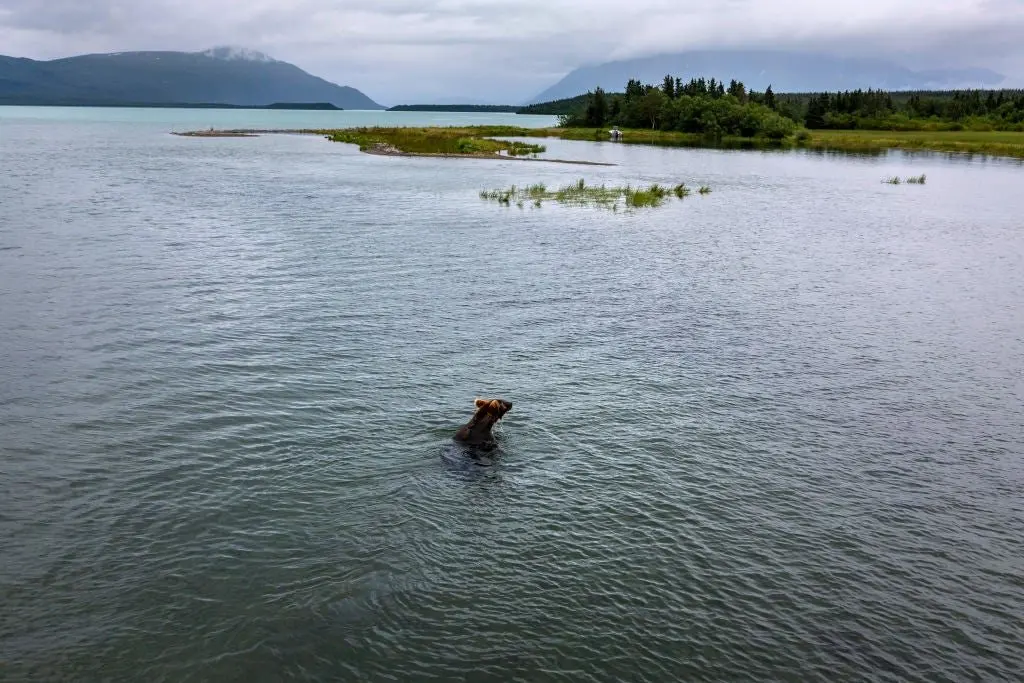
As Katmai National Park launches Fat Bear Week 2026 — its much-loved online bracket for the chunkiest brown bear — a less cheerful story is unfolding about 100 miles away in neighbouring Lake Clark National Park and Preserve.
A proposed mining operation known as the Johnson Tract is moving forward there, and conservationists warn it could ripple far beyond Lake Clark, threatening the same bears, salmon runs and waterways that make this corner of Alaska a magnet for travellers.
The site covers roughly 21,000 acres of private land inside Lake Clark, owned by Cook Inlet Region Inc. (CIRI) since a 1976 land exchange, with rights locked in by the landmark 1980 Alaska National Interest Lands Conservation Act. CIRI has hired Fairbanks-based Contango Ore to run the project, which it hopes to start digging in 2029. The mine itself sits on private land, but the catch is access: a road would need to cross public parkland, plus a shipping port in Tuxedni Bay and expanded use of an existing airstrip.
That access question is now central. In 2025 the Center for Biological Diversity sued, arguing the Army Corps of Engineers had failed to properly weigh risks to endangered Cook Inlet beluga whales and the danger of acid mine drainage. Last week the US District Court for the District of Alaska dismissed the case, clearing Contango to build its access road and upgrade the airstrip. The company has also adopted a truck-and-ship model — hauling raw ore off-site for processing — which it says avoids building mills or power plants at the mine. CEO Rick Van Nieuwenhuyse has said permitting for the roads and mine plan could still take years.
The National Parks Conservation Association calls the existing environmental review "seriously lacking" and argues the project sets a worrying precedent: if industrial development can push into one national park via access roads and ports, others like Katmai could be next. Local businesses are worried too. Dorien Coray, whose family runs a bear-photography and fishing operation 12 miles downriver from the site, fears for the Johnson River's water quality — turbidity, trucks and industrial activity are her stated concerns.
Why should travellers care? Katmai's bear-watching economy, and Lake Clark's reputation as one of Alaska's wildest, least-visited parks, depend on intact habitat and clean rivers. The same landscape that fattens Katmai's famous bears each summer would share its watershed with an industrial corridor if the project proceeds. Anyone dreaming of remote bear viewing, fishing lodges or flightseeing in Lake Clark should watch how the permitting fight develops — the next round will likely shape access routes across public land.
Reporting via Backpacker.