An actual lift from an Ang Mo Kio HDB block now sits inside the National Museum of Singapore. It is one of the standout pieces in the revamped Singapore History Gallery, which reopened on 10th October 2026 after closing in November 2025 for its first full overhaul. To mark the reopening, entry was free during opening weekend, part of the museum's 139th anniversary celebrations running 10th-18th October.
The gallery covers roughly 700 years of history across seven chronological zones, starting with a visit to Singapore Odyssea, an immersive intro in the Shaw Foundation Glass Rotunda. What has changed most is the emphasis: alongside the big political moments, the new galleries lean into ordinary people's lives, with hands-on exhibits and artefacts that have never been shown before.
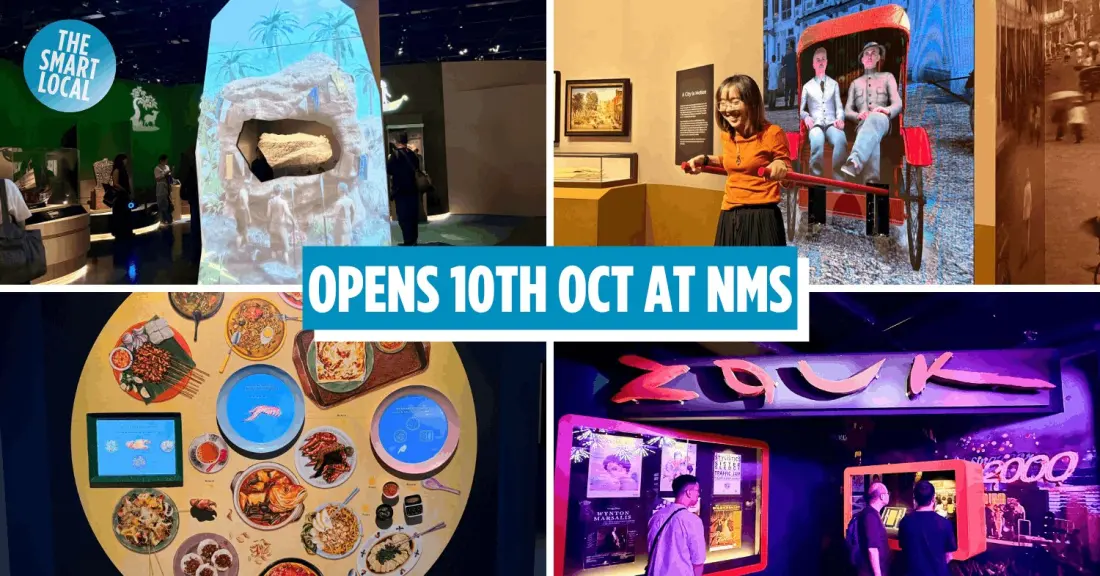
The hands-on stuff is genuinely interactive. In the Colonial City zone you can grab the poles of a recreated rickshaw and pull passengers through scenes of 19th-century Singapore — the museum's version weighs about 30kg, half of what a real single-seater rickshaw weighs. Nearby sits the first printed edition of the 1849 Hikayat Abdullah, which happens to contain the only known physical description of Stamford Raffles. In the war zone, you can tap out the message "Singapore has fallen" in Morse code as a signal operator would have on 15th February 1942, then see war hero Lim Bo Seng's actual pocket diary.
Music fans get Zubir Said's Strohmenger grand piano, displayed for the first time — the instrument on which he composed Majulah Singapura. Then comes the nostalgia run: a real 1978 HDB lift from Ang Mo Kio, in service for over 40 years until its removal in 2024; the original signboard from Zouk's Jiak Kim Street club days; an interactive hawker table; and the chance to follow along with the 1993 Great Singapore Workout, when over 26,000 people exercised at the Padang under Goh Chok Tong and set a Guinness World Record.
The story is bookended by two quiet treasures. The Singapore Stone — a fragment surviving from a boulder the British blew up in 1843, carved in Kawi script that has never been deciphered — now gets a close-up display with projections and a touchable replica. And the final zone, Looking Global, closes with Keith Loutit's timelapse compressing nearly 15 years of Singapore's changing skyline into under three minutes, plus homegrown inventions like the world's first ThumbDrive and the cPass COVID antibody kit.
For travellers, this is a far livelier take on national history than the usual glass-case affair. Every zone has a voice-recording station where your answer feeds into the final room, where visitors' words help shape a projected vision of the country's future. It works for families, history buffs and anyone who wants to understand Singapore beyond Raffles and the skyline — and it slots neatly into a day around Bras Basah, with the museum at 93 Stamford Road. The anniversary programme, free to enter, adds markets, dance performances and heritage talks through mid-October.