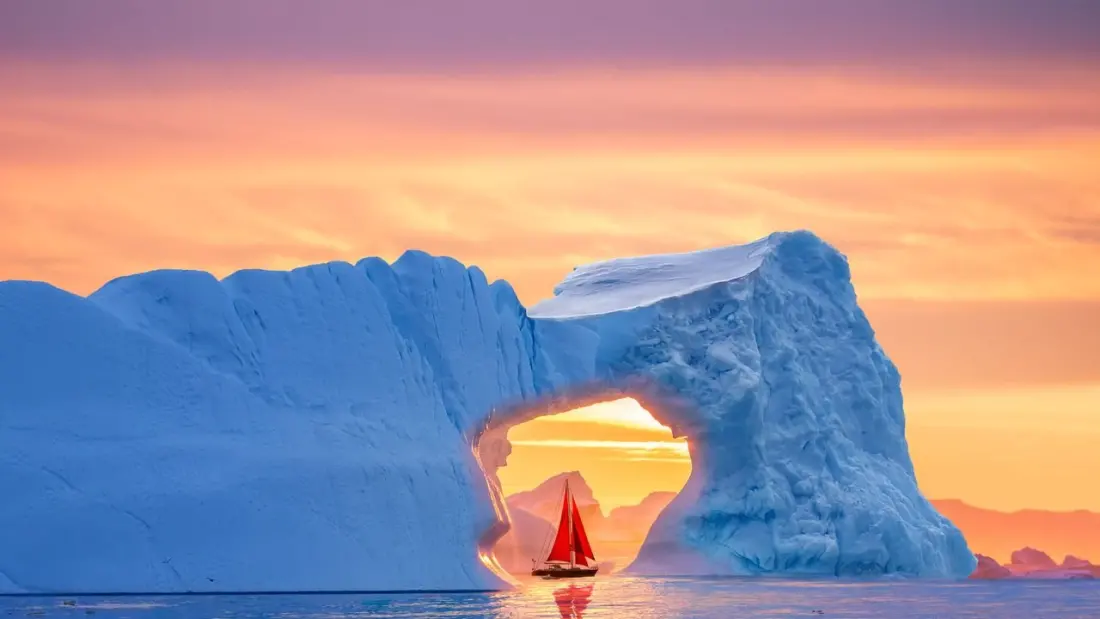
Antarctica averaged a staggering -56.7ºC in 2025, making it the coldest place on the planet by a huge margin. Behind the ice continent, the ranking of Earth's chilliest countries — compiled from 2025 data by the World Meteorological Organisation, NASA, Berkeley Earth and NOAA — reads like a map of the far north: Russia (Siberia at -5.4ºC), Canada (northern regions at -4.8ºC), Greenland (-3.6ºC across the ice sheet), Mongolia (-0.9ºC), Norway including Svalbard (1.3ºC), Kazakhstan (1.6ºC), Finland (1.9ºC), Iceland (2.0ºC) and Alaska (2.1ºC in its northern zones).
What's striking is how quickly these frozen places are changing. Polar amplification means the Arctic is heating roughly four times faster than the global average — a 2022 study in Nature Communications Earth & Environment put a hard number on it. The mechanics are simple enough: bright snow and ice reflect sunlight, but once they melt, darker land and sea absorb the heat, which speeds up further melting. Northern Canada, Greenland and Siberia are at the sharp end, with ice loss now extending through more of the year.
Counterintuitively, a warming planet doesn't guarantee milder winters. As sea ice retreats, the jet stream — the high-altitude current that normally pens polar air up north — weakens and wobbles. That lets Arctic air spill south and warm air push north, fuelling polar vortex events and wild swings. The US got a taste of it this year when Winter Storm Hernando slammed the Northeast coast, grounding thousands of flights and knocking out power.
For travellers, the practical upshot is unpredictability. In the world's coldest countries, the reliable rhythms that once shaped ice roads, snow festivals and dog-sledding seasons are shifting — freezes arriving late, thaws coming early, storms landing harder. That's a real consideration if you're planning a winter trip to Finnish Lapland, an aurora chase in Iceland, or a Svalbard expedition: the window for certain experiences is narrowing or moving. It's also a reason to book with operators who adapt to conditions rather than fixed itineraries, and to treat these fragile environments gently. The coldest places on Earth are still very much cold — but the kind of cold you'll meet there is being rewritten year by year.
First published by Condé Nast Traveller Middle East, via Condé Nast Traveller UK.