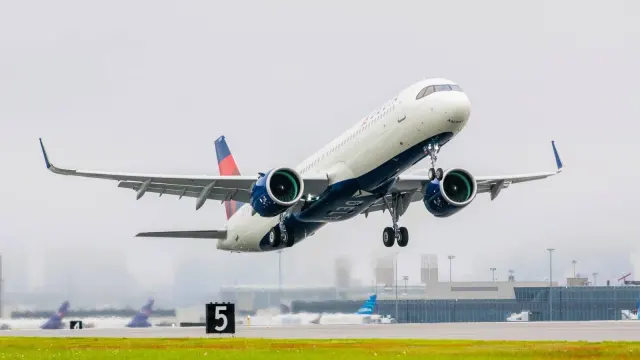
When Russia closed its airspace to dozens of Western carriers after the February 2022 invasion of Ukraine, the map of Europe-Asia flying changed almost overnight. But not everyone rerouted. Around 30 airlines still fly through Russian airspace or into Russian cities, and they're enjoying shorter flights and lower costs as a result.
The list is dominated by carriers from countries that never joined the Western sanctions. Chinese airlines such as Air China, China Eastern, China Southern and Hainan Airlines cross the country regularly, as do Air India, the Gulf giants Emirates, Etihad, Qatar Airways, flydubai and Oman Air, and Central Asian carriers including Uzbekistan Airways, Somon Air and Qanot Sharq. Turkish Airlines and Pegasus represent Europe, while Africa is covered by EgyptAir, Ethiopian, Royal Air Maroc, Air Algérie and Nouvelair. Some of these airlines fly to Moscow and St Petersburg directly; others simply overfly Russia on routes between Europe, the Middle East and Asia.
Why does it matter? Geography. Russia sits squarely on the shortest path between Europe and Asia. Avoiding it forces aircraft north over the Arctic or south around the Middle East. A London–Beijing flight that skirts Russian airspace can be nearly 1,000 miles longer, adding close to two hours, burning more fuel and requiring more crew hours. European and North American airlines say that hands carriers still using the corridor a commercial edge — Chinese and Gulf carriers can undercut them on time and price to the same Asian destinations. The detours also bump up carbon emissions.
Safety, though, is the story now. Ukrainian drones are striking ever deeper into Russia, and President Zelensky has warned that Russian airspace is becoming completely unsafe, a concern Ukraine has formally raised with ICAO. Aviation-risk firm Osprey Flight Solutions flags the danger of a civilian aircraft being misidentified as a drone or military target. The precedent is grim: MH17 was downed over eastern Ukraine in 2014 with 298 aboard, and in December 2024 an Azerbaijan Airlines plane was hit amid Russian air-defence activity near Grozny, crashing in Kazakhstan with 38 dead. Drone strikes have already caused delays, cancellations and temporary shutdowns at Russian airports, including near Moscow.
For now, the airlines involved say they keep the situation under constant review. Qatar Airways stresses its decisions are based on safety assessments, and Pegasus briefly cancelled some Russian flights in early September before resuming. Russia insists its aviation system runs normally. But if you're booking a long-haul flight with a Chinese, Gulf, Turkish or Central Asian carrier, it's worth knowing your route may still cross a zone where miscalculation is a real — if unlikely — risk, and where sudden diversions can disrupt a trip.