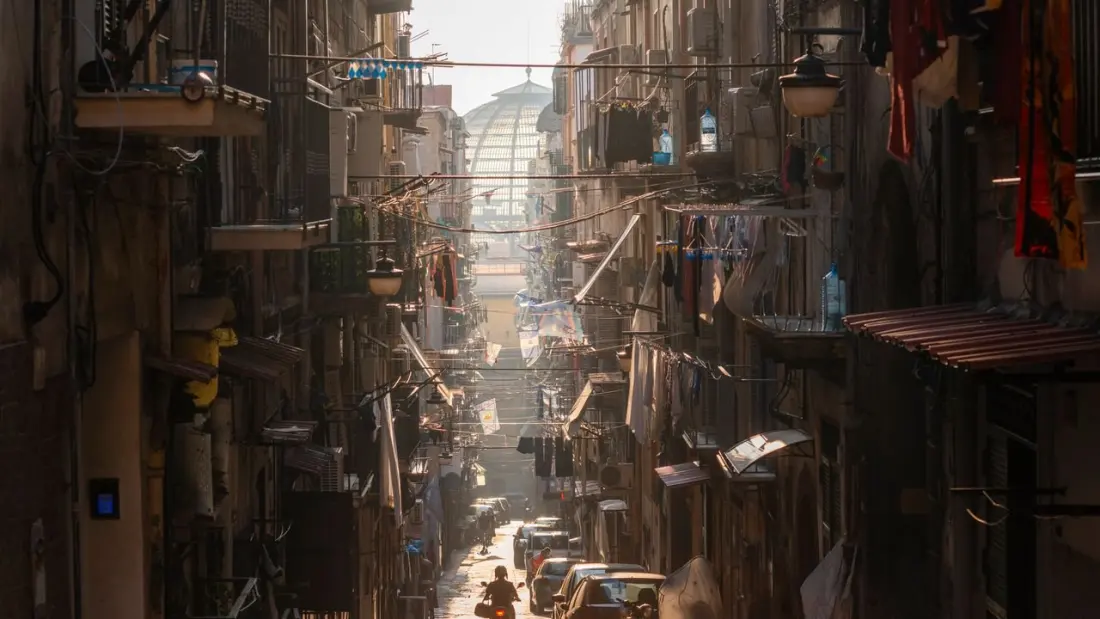
Naples has a reputation for being overwhelming, and honestly, it earns it. But a writer who has been returning to the city for more than 30 years makes a strong case that this is its moment: the city is safer and tidier than it used to be, the museums have been overhauled, the food scene keeps improving, and there's real momentum building around 2027, when both the America's Cup and a new Rocco Forte hotel arrive. The trick is having a plan, because you could easily fill two weeks here and still miss things. Here's how three days can work.
Day one covers the historic core. Start like a local at Gran Caffè Gambrinus — standing at the bar for espresso and a cornetto, not lingering on the terrace — then take in the Palazzo Reale and the Teatro San Carlo, one of Italy's great opera houses. A metro ticket (a bit over $2) doubles as admission to the Stazione d'Arte, where stations like Toledo have been turned into genuine public galleries by major contemporary artists. The afternoon follows Spaccanapoli through the old Roman street grid: the majolica-tiled cloister at Santa Chiara, the crowd-pulling Cristo Velato marble sculpture at the Cappella Sansevero, Caravaggio's Seven Acts of Mercy, a Banksy on a crumbling wall, and the excavated Greco-Roman city beneath San Lorenzo Maggiore. Lunch is cheap and rowdy at Trattoria da Nenella; dinner at Europeo di Mattozzi delivers old-school classics like pasta with potatoes and provola.
Day two belongs to the seafront. The Castel dell'Ovo marks where Greek settlers founded the city 2,500 years ago, and from there you can walk the traffic-free waterfront into Chiaia, the neighbourhood of cobbled lanes, boutiques and the legendary Marinella tie shop. Options after lunch at Pescheria Mattiucci: a beach afternoon in Posillipo, or the funicular up to Vomero for the Certosa di San Martino and its sweeping views over the Bay of Naples. Chiaia turns into the nightlife quarter come aperitivo hour — Antiquario for a Negroni, then seafood classics at Ristorante Dora, open since 1973.
Day three heads into the Sanità, a district that only recently opened up to visitors. Fuel up on sfogliatelle at Pasticceria Popella, admire the 'flying staircase' at Palazzo dello Spagnuolo, and explore the restored Ipogeo dei Cristallini, the skull-stacked Cimitero delle Fontanelle and the Catacombs of San Gaudioso. Book ahead for pizza tasting menus at Concettina ai Tre Santi, then give the rest of the afternoon to the Archaeological Museum — the Pompeii and Herculaneum mosaics, bronzes and frescoes here are among the finest anywhere. Finish with factory-price handmade gloves at Omega (trading since 1923) or the calm of the Orto Botanico, and go big on the final evening: Grand Hotel Parker's rooftop, with chef Domenico Candela's two-Michelin-star kitchen downstairs.
This is a plan for travellers who like their cities intense — full days, early starts, and food as the throughline. If you'd rather slow down, treat it as a menu and pick a neighbourhood per day. Either way, Naples rewards effort more than almost anywhere in Italy.
Story sourced from Condé Nast Traveler.