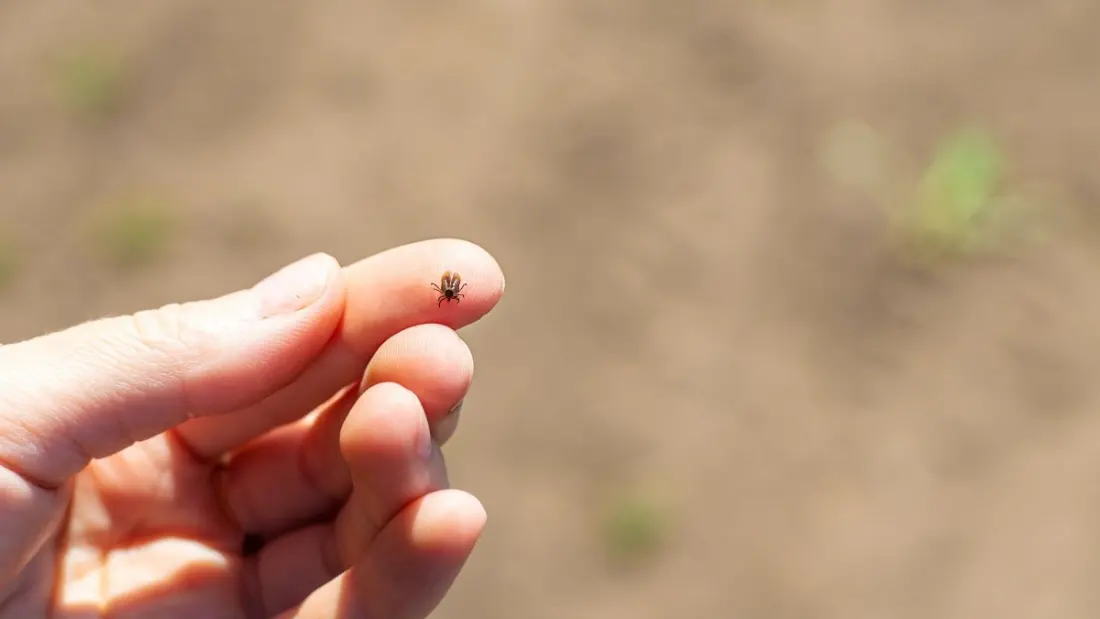
A tick bite on a hike in rural Türkiye has always meant an anxious wait — the country is a global hotspot for Crimean-Congo hemorrhagic fever (CCHF), a tick-borne disease that has caused more than 17,000 cases and hundreds of deaths there since 2002. That could soon change. Researchers at Hacettepe University, led by biologist Olcay Hekimoğlu and backed by a grant from Türkiye's Scientific and Technological Research Council (TÜBITAK), are developing a smartphone app that identifies tick species from a photo and flags whether it might be one that carries CCHF.
The three-year project starts by building a reference database of the tick species most relevant to human and animal health in Türkiye, starting with eight species. The priority target is Hyalomma marginatum, the species most associated with CCHF transmission. Every training image comes from specimens verified two ways — by physical characteristics and by DNA analysis — so the model learns exact species rather than a generic "this is a tick" answer.
The team is clearly thinking about real-world use rather than lab conditions. The app will be tested across different phone models, lighting situations and genuine field environments. It works offline, a deliberate choice for rural areas with patchy signal — exactly where tick encounters are most likely. And it is honest about its limits: if a photo is blurry or the tick is poorly angled, the app will refuse to guess and ask for a better shot or an expert opinion. It will only analyse ticks after removal, since a tick attached to skin is often partly hidden or swollen beyond recognition. Users are also told clearly that the result is preliminary information about the species, not a medical diagnosis.
Once ready, it will be aimed at farmers, livestock workers, healthcare staff and anyone spending time outdoors — which includes the growing number of travellers hiking, camping or working on farms in Anatolia's grasslands, where CCHF risk peaks in spring and summer.
Why should holidaymakers care? If you're heading into rural Türkiye between roughly April and October, tick bites are a genuine (if uncommon) hazard, and knowing quickly whether the tick you pulled off was a Hyalomma species helps you decide whether to seek medical advice fast — CCHF responds best to early attention. Until the app launches, the usual advice stands: use repellent, wear long trousers tucked into socks in grassy areas, check your skin daily, and remove ticks cleanly with fine-tipped tweezers without squeezing the body.
There's no firm launch date yet — the model must pass testing under controlled and field conditions first, with more species added over time — but it's a practical example of AI doing something genuinely useful for anyone who likes their holidays a bit wild.
Daily Sabah Travel