Climbing Uluru has been off-limits since 2019, when the Anangu Traditional Owners closed the summit route they had long considered culturally insensitive. But the Red Centre just got a compelling reason to return: the Uluru Kakararra Trail, a nearly 40-mile trek linking Uluru with the 36 rust-red domes of Kata Tjuta, and the newest member of the Great Walks of Australia collection.
The trail took far longer to build than anyone expected. Brett Godfrey, former founding CEO of Virgin Australia and co-owner of Tasmanian Walking Company, first approached the Anangu in 2015, hoping to open within three years. A decade and roughly triple the original budget later, the $18 million route was finished, shaped at every stage by a 13-person Anangu steering committee. Traditional Owners mapped 24 miles of new track that avoids culturally sensitive areas, and even the name, meaning "going east" in the western desert languages, was finalised days before the opening.
Access is deliberately limited: the trail is only walkable as part of Tasmanian Walking Company's four-night Signature Walk, running from late April to September, with around 2,000 hikers expected per season. Bookings opened two years ahead for the inaugural group this April.
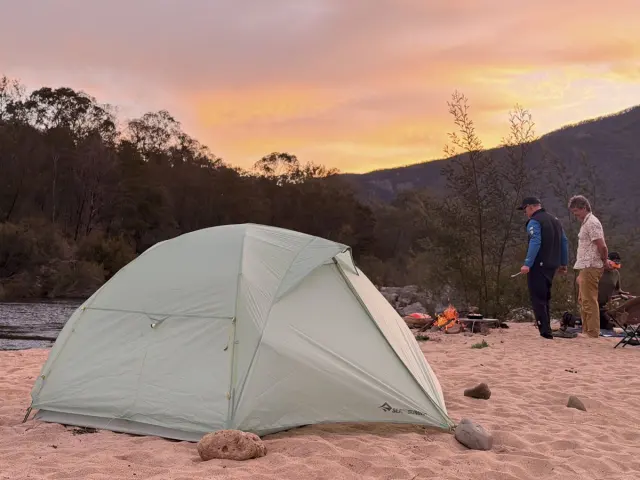
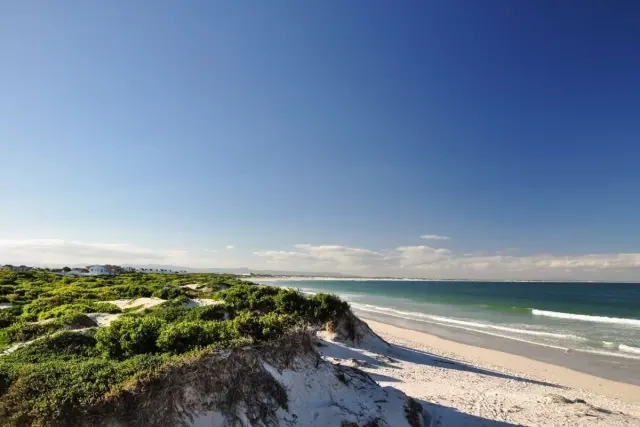
The walk itself starts among Kata Tjuta's domes, where photography is banned at the sacred men's sites, then rolls across red sandhills dotted with mulla mulla wildflowers, thorny devils and the odd feral camel. Nights are unexpectedly comfortable: safari-style tents with real beds and hot showers inside the national park, the first time sleeping there has been allowed in four decades. Day three ends at the solar-powered Mala Lodge, its 16 stilted rooms helicoptered in as 72 prefabricated modules, designed to be removed without a trace when the sublease ends. Evenings bring bonfire storytelling with Anangu knowledge-holders and, crucially, jobs: the company has committed to 33% Anangu employment over its first decade.
Why go? Because this is what respectful tourism on sacred land can look like, and it's part of a wider pattern: Hawaii's Ala Kahakai Trail, Vancouver Island's ʔapsčiik t'ašii, and Nepal's ongoing protection of Machhapuchhre all grapple with the same question. At Uluru, the answer is to walk alongside the monolith instead of conquering it. As steering committee chair Tapaya Edwards put it, this is a place for healing the spirit, where visitors feel the land as they move through it. If you want a bucket-list Outback experience with genuine cultural substance, this is the one to plan for, and plan early, given the limited permits and seasons.