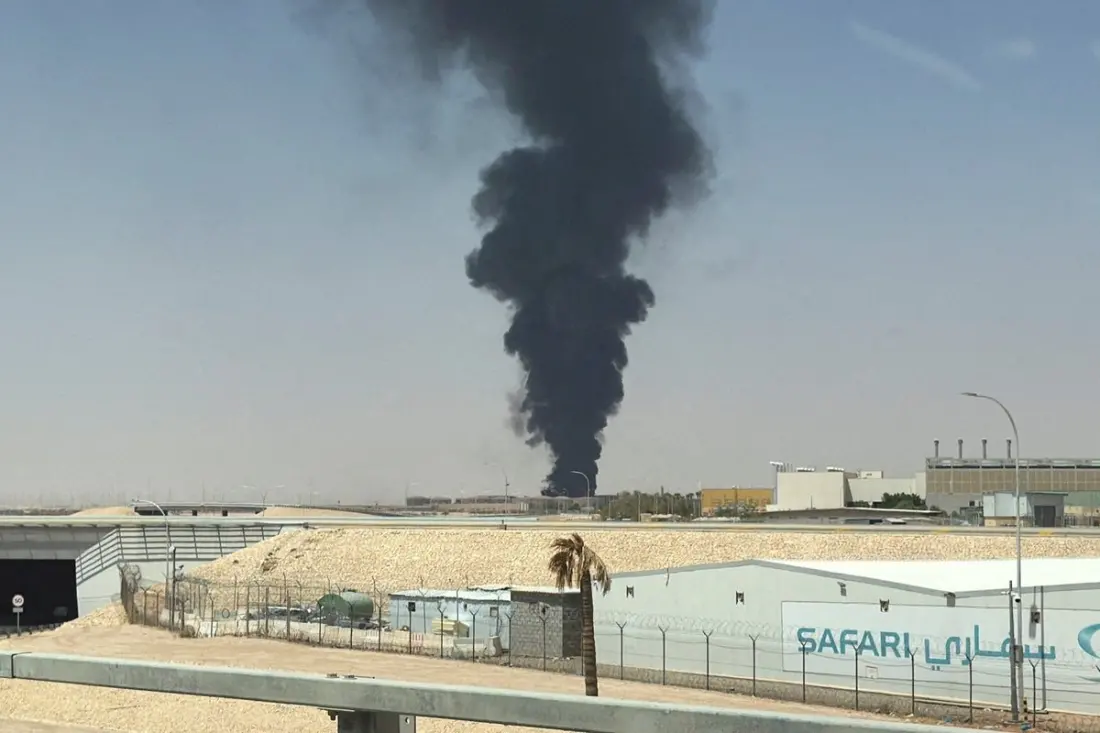
A fresh State Department advisory is telling Americans to "seriously reconsider" any travel to or through the Middle East, following a spike in hostilities between Saudi Arabia and Yemen's Iran-backed Houthi rebels. The warning came after the Houthis claimed a series of strikes on Riyadh on Saturday, hours after plumes of black smoke rose from fuel tanks near the capital's international airport, briefly knocking flights off schedule.
The group, which launched a rapid offensive around the Bab el-Mandeb strait — a chokepoint that matters hugely for Saudi oil exports — has also targeted civilian airports. In response, security alerts have gone out from 11 US embassies across the region, including in destinations many holidaymakers know well: the UAE, Qatar and Jordan among them.
The practical upshot for travellers is real, not just diplomatic hand-wringing. The State Department is telling Americans already in the region to expect possible flight cancellations, airspace closures and sudden disruption, and to keep a close eye on airline and airport operations. It also cautions that US diplomatic facilities — including ones outside the Middle East — have been targeted before, and that Iran-aligned groups may go after US-linked businesses and institutions worldwide.
The advisory ladder currently reads starkly. Iran, Iraq, Lebanon, Syria and Yemen sit at the top red level: "do not travel". One tier down, at the orange "reconsider travel" level, are Bahrain, Israel, the West Bank and Gaza, Jordan, Kuwait, Oman, Qatar, Saudi Arabia and the UAE — a list that covers most of the Gulf's mainstream tourist circuit.
The political backdrop is escalating fast. President Trump publicly repeated a threat to destroy Iran "entirely" in a Fox News interview, and Iran's military command responded on state media that any new American assault would trigger sustained retaliation against US bases and interests — and that America's regional allies would be treated as parties to the conflict. The State Department's own framing is that the security picture is "complex", with "potential for unforeseen escalation" — which is precisely what makes it hard to plan around.
If you have a trip booked to the Gulf or the Levant in the coming weeks, the sensible move is to check your Foreign Office or State Department advisories daily, confirm flights directly with airlines before heading to the airport, and know what your travel insurance actually covers in the event of conflict-related disruption — many standard policies exclude it. Travellers who aren't US citizens should still pay attention: airspace closures and airport disruptions don't discriminate by passport. For now, anyone with flexibility may want to route trips through or to other regions until the situation settles.