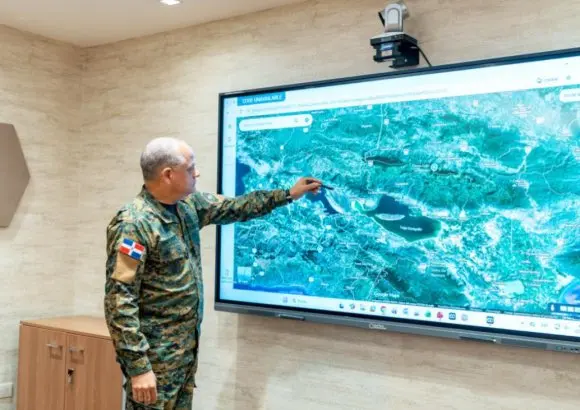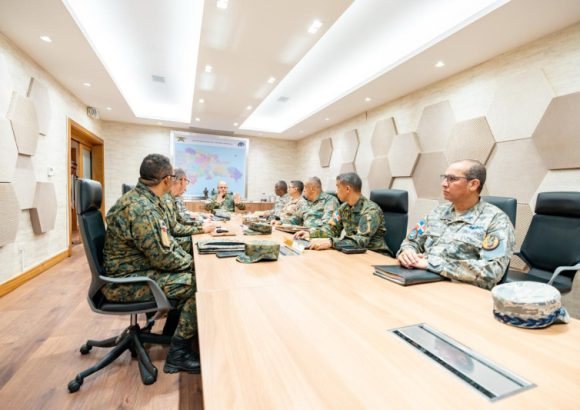
Good news if you're planning an overland crossing between the Dominican Republic and Haiti: the border stays open. Defense Minister Lieutenant General Carlos Antonio Fernández Onofre gathered the country's top military brass — the Army, Navy and Air Force commanders plus the heads of the border security corps CESFRONT and the C5i intelligence centre — to review the escalating gang violence next door. Their verdict: conditions don't justify a closure or any extraordinary measures.
What does that look like on the ground? Reports from the three southern border provinces paint a mixed but calm picture. In Pedernales and Elías Piña, there's a visible military presence, with CESFRONT troops, Army personnel and National Police running checks on people and vehicles at crossings from Macasía and Dos Bocas up to Cañada Miguel near Hondo Valle. Traffic agents have also been targeting Haitian motorbike taxis operating on the Dominican side. Jimaní, by contrast, is running on its usual routine — no special deployments, despite its proximity to Croix-des-Bouquets in Haiti, where Haitian police have been carrying out operations against armed groups.
Commerce tells the same steady story. Haitian merchants are still crossing into Dominican towns to buy goods as normal. In Jimaní, the flow of goods into Haiti briefly stalled for three days because of restrictions imposed by Haitian trade and transport groups — not by any official closure — but resumed on the Thursday after talks between sector representatives and Dominican authorities. Sellers and buyers on both sides are back to business.
One odd thread running through border-town chatter: four Salvadoran soldiers serving with the international security mission in Haiti have gone missing, and unconfirmed rumours about their fate are circulating in Comendador, Elías Piña's capital. Authorities haven't verified anything, so treat local speculation with caution.
Why should holidaymakers care? If your trip is the classic Dominican beach-and-city circuit — Punta Cana, Santo Domingo, Samaná — none of this touches you. The vigilance is concentrated on the southern land border, and life in border towns like Pedernales, Comendador and Jimaní continues normally. But if you were considering crossing into Haiti overland, know that the Dominican side is operating, controls are tighter than usual, and the security situation inside Haiti remains genuinely volatile, with gang activity and police operations ongoing near Port-au-Prince. Most governments currently advise against travel to Haiti, so flying into the Dominican Republic and staying there is the sensible play for now. Check your own foreign office guidance before attempting any binational itinerary, and expect thorough document checks if you do cross.
The bigger takeaway: the Dominican Republic is monitoring its neighbour closely with real-time intelligence sharing, but its message to residents and visitors alike is that trade, transit and daily life carry on uninterrupted.