Tajikistan rarely tops food-travel lists, but between homestay dinners and roadside kebab smoke, the country serves up some of Central Asia's most generous tables. Eating here is social by design: meals are shared, bread and green tea arrive with everything, and travellers trekking routes like the Pamir Highway are routinely invited to eat with local families.
Start with qurutob, the national dish and a Dushanbe speciality. Salted dried yoghurt balls called qurut are soaked into a tangy sauce, poured over flaky pastry and vegetables, with lamb if you want it. It arrives on a big shared platter called a tabaq and is eaten by hand — the point is the company as much as the food.
Then there's oshi palav, the rice pilaf UNESCO lists as part of Tajik cultural heritage. Onions, carrots and meat are fried in fat in a big pot called a kazan, rice goes on top, and versions range from simple family dinners to wedding-scale productions with chickpeas, raisins and fruit. Other staples worth hunting down: sambusa (savoury triangular pastries with a history stretching back to the 10th century), shurbo (a hearty mutton or beef and vegetable soup), and shakarob, a lighter tomato-and-onion salad with chakka — a sour strained yoghurt that's great news for vegetarians.
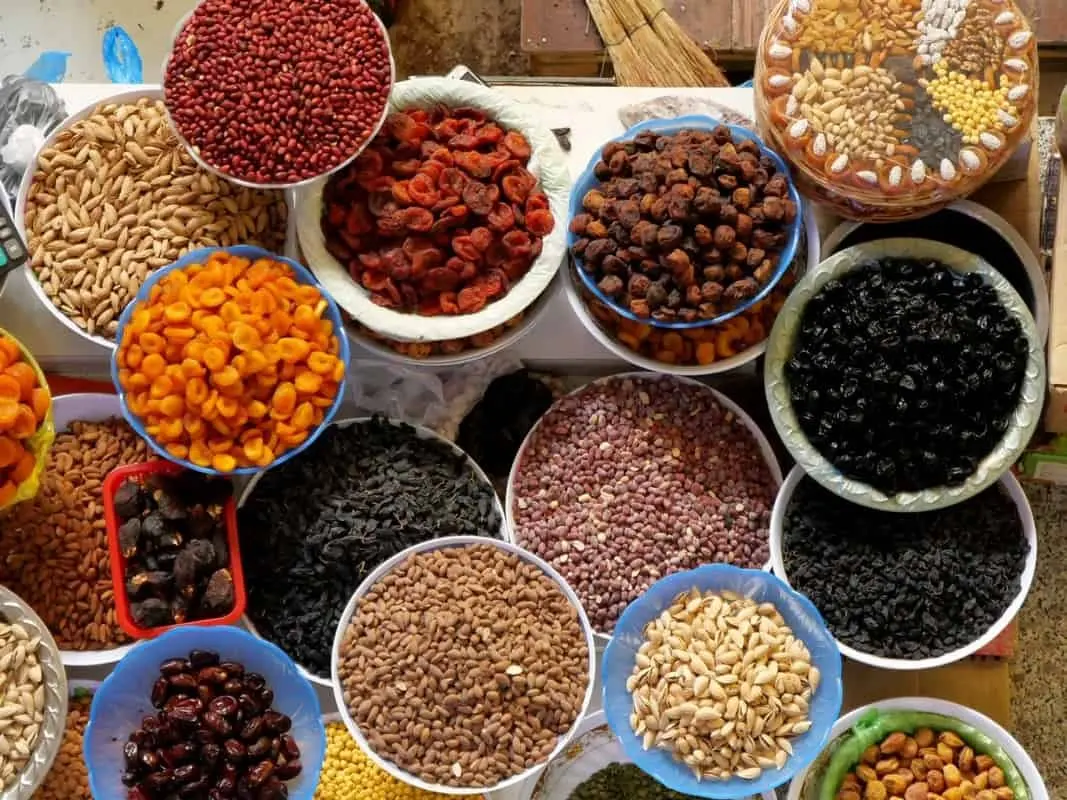
High up in Murghab, in the country's east, look out for yak butter. Yaks graze on untouched alpine meadows at extreme altitude, and the resulting dairy is about as pure and creamy as it gets — often made on the spot at yurt camps. Come in late summer and the fruit is the bonus round: watermelons, pomegranates, grapes, figs, peaches and apricots, frequently served at homestay meals.
A few practical notes. Green tea is the national drink, poured from china teapots into handleless cups called piala — though it's caffeinated enough to keep you awake at altitude. Vodka lingers from Soviet times and appears in many cafes despite the Muslim-majority culture; drink with discretion, especially in conservative regions. Vegetarians will manage, particularly in Dushanbe, but meat is an honour for host families, so consider how you decline it. Vegans will struggle outside the capital — packing protein supplements is smart. Mountain food is often cooked with meat residue, so strict avoidance is near impossible.
One non-negotiable: don't drink tap water anywhere, hotels included. Use sealed bottled water, and carry a filter and purification tablets for treks — even pristine-looking streams can carry animal contamination. Pack anti-diarrhoea medication and mentally brace for the travellers' tummy that catches most visitors, since even washed vegetables and plates at guesthouses can be the culprit. Why care? Because in Tajikistan the food is inseparable from the hospitality — sharing a plate of palav in someone's home will likely be the highlight of your trip.