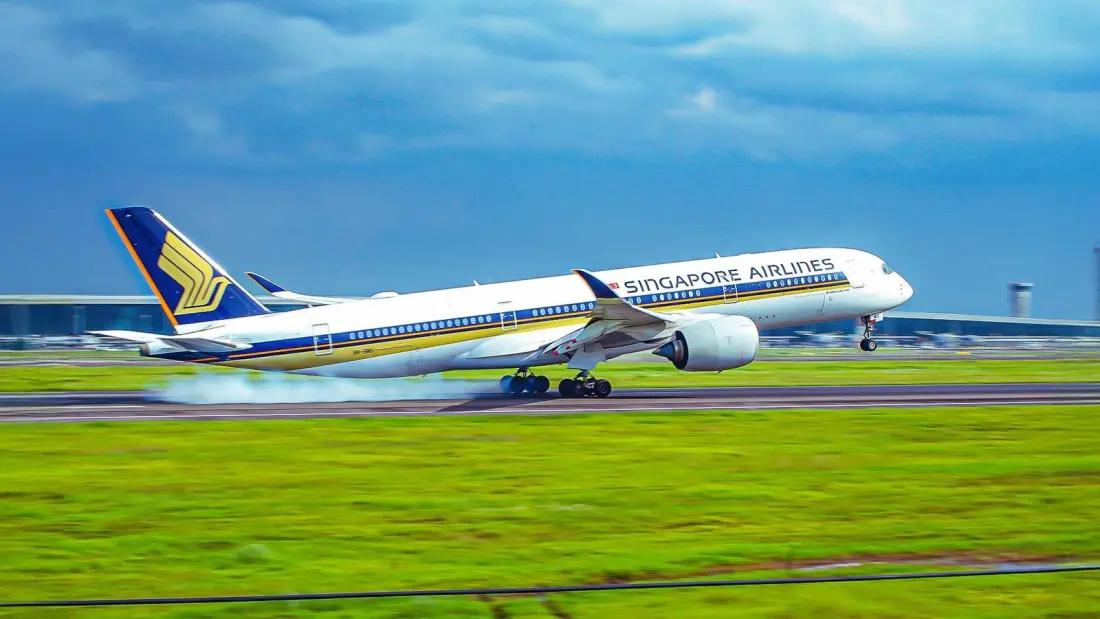
The Airbus A350 is one of the most advanced widebodies flying today, and its carbon fiber fuselage is a big reason airlines like Singapore Airlines, Delta and Qatar Airways love it. Around 53% of the aircraft by weight is composite material, cutting fuel burn by roughly 25% versus the previous generation and stretching range up to 1,500 nautical miles beyond the older A330. But the same material that makes it efficient in the air turns out to be a genuine headache on the ground.
The core problem is something called Barely Visible Impact Damage, or BVID. When an aluminum jet slams down too hard, it dents and cracks in ways mechanics can see with their own eyes. Carbon fiber doesn't behave that way. The composite skin flexes and rebounds, often leaving no outward sign of trouble, while layers underneath separate or the resin cracks internally. After a hard landing, an A350 can look perfectly fine while hiding structural damage.
That's why Airbus mandates ultrasonic inspections following hard-landing events. High-frequency sound waves are passed through the fuselage, and reflections from internal layers reveal hidden defects. It's slow, fiddly work — crews may need to scan large stretches of the lower fuselage and wing attachment points before the aircraft is cleared to fly. Repairs are even harder. Aluminum can be patched in almost any hangar; composite work demands controlled temperature and humidity, layer-by-layer rebuilding, and precise fibre orientation, because even small errors can weaken the structure. A minor fuselage fix can exceed 15 hours of labour.
Airbus has built a three-level repair framework to cope, from cosmetic fixes to major structural repairs supported by pre-packaged repair kits, with Airbus engineers sometimes stepping in directly. The industry got a vivid lesson in the stakes in 2021, when a dispute between Airbus and Qatar Airways over paint cracking and exposed lightning-protection mesh on the composite skin led regulators to ground 13 A350s.
For travellers, the takeaway is simple but reassuring: these jets are designed to absorb serious punishment — the landing gear alone handles descents up to 600 feet per minute at maximum landing weight without triggering inspections, and the wings flex to spread landing loads. Hard landings that feel alarming are usually well within design limits. But when damage does occur, expect the aircraft to stay parked longer than an older aluminum jet would, which can mean rebookings and delays on heavily composite types like the A350 and Boeing 787. It's also a reminder that the efficiency gains airlines pass on as longer routes and lower fares come with behind-the-scenes maintenance trade-offs most passengers never see. Source: Simple Flying.