
This is not a holiday story. We're covering it because click.holiday readers who follow the Middle East region deserve clear reporting on a development that dominated headlines there this week, and because it explains why most of Gaza remains off-limits to any form of travel.
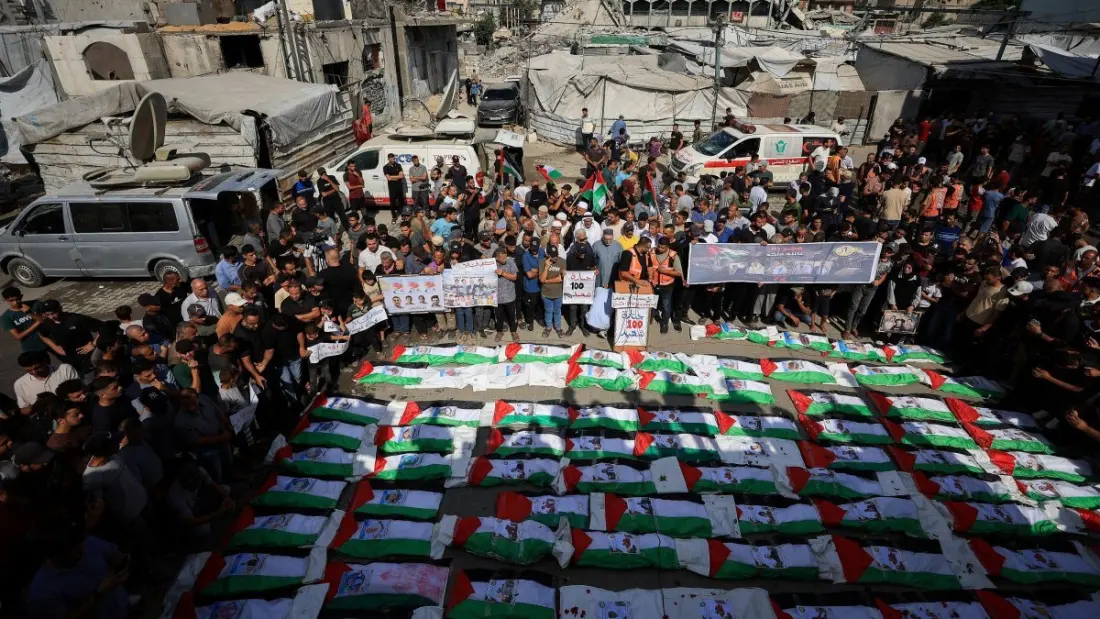
UN human rights chief Volker Türk said on Tuesday that remains of what appear to be entire families are being unearthed from sites flattened by Israeli attacks, and warned that the discoveries revive concerns of war crimes and other atrocity crimes. The remarks build on a 2024 UN report that found Israeli strikes on residential buildings and civilian sites in the war's early weeks may have violated international humanitarian law. Israel rejects the allegations, saying it has acted within international law and blames Hamas for embedding among civilians.
The numbers are stark. The Palestinian Civil Defense says more than 630 bodies have been recovered from under destroyed buildings since November 2025, while Palestinian authorities estimate over 8,000 people remain buried. This month alone, 96 bodies were pulled from a single site in Gaza City's Zeitoun neighbourhood, 58 of them children. Gaza health authorities put the overall death toll from the war, sparked by Hamas's October 2023 incursion into Israel, above 73,000.
Physical and political obstacles remain enormous. The UN estimates the war generated around 61 million tonnes of debris that could take seven years to clear, yet Israel has blocked heavy machinery from entering, according to Türk's statement. A US-brokered ceasefire ended full-scale fighting in October 2025, but strikes continue daily, and Türk accused Israeli bulldozers of operating in areas where forces remain deployed with no regard for bodies under the rubble. He called the recoveries so far potentially 'only the tip of the iceberg' and demanded international investigators be granted full access to gather and preserve evidence, echoing UN expert Francesca Albanese's warning that clearance must not outrun identification and forensic work.
For travellers, the practical takeaway is straightforward: Gaza remains a conflict zone with no civilian tourism access, and the ceasefire's fragility is underlined by ongoing strikes. Anyone tracking the region for future trips should look to adjacent destinations such as Egypt's Sinai coast, Jordan or Cyprus rather than the enclave itself.