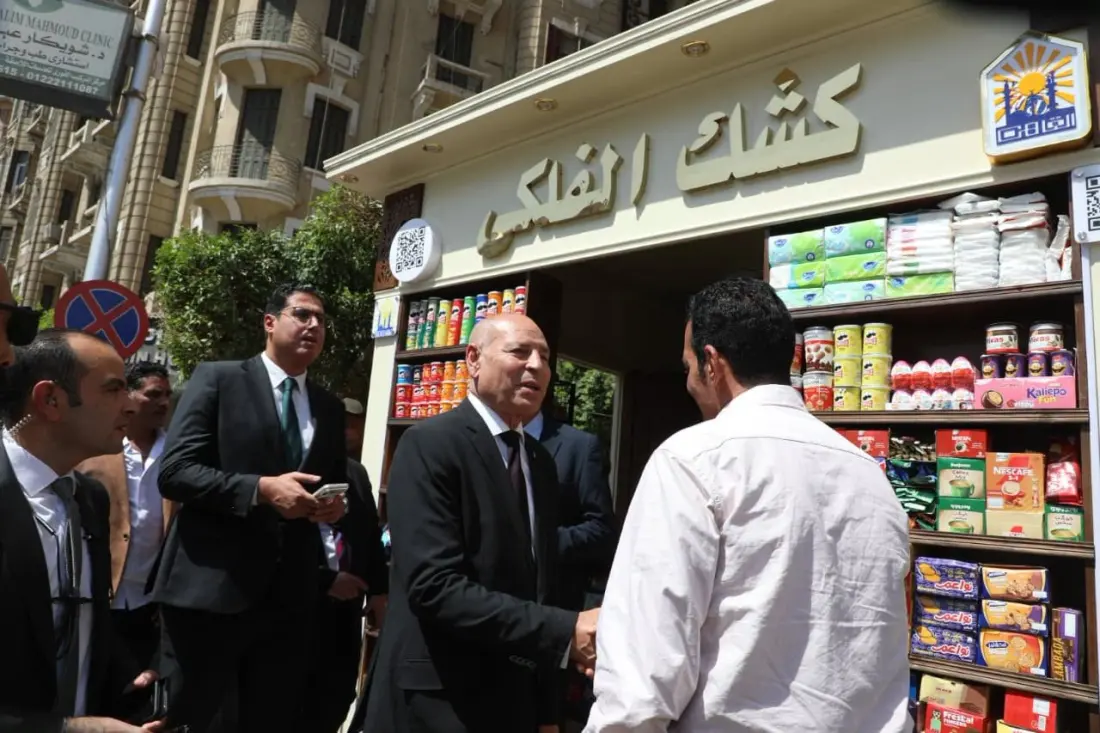
Cairo's thousands of street kiosks — the small corner booths selling drinks, snacks and cigarettes — are about to look a lot more uniform. On 17 September, Cairo Governor Ibrahim Saber unveiled a prototype for a standardized kiosk design in Bab Al-Louq, in the downtown Abdeen district, and it will become the mandatory model for licensed kiosks across the capital.
The rules are fairly strict. Owners get three months to swap their current units for the approved design, which comes in just two sizes: 2x3 metres or 3x3 metres. Inside, there are designated spots for fridges, shelves and stock, with the explicit goal of keeping goods within the kiosk's footprint rather than spilling onto pavements — a long-running complaint in central Cairo. Skipping the swap means no licence renewal, and kiosks that sprawl beyond their allocated space risk losing their licence altogether.
Each new unit will carry the Cairo Governorate logo, the kiosk's name and licence number, and a QR code on the front. Scan it and you'll see who holds the licence, whether it's valid, the kiosk's location and any unpaid fees — a transparency measure aimed at distinguishing legitimate vendors from informal setups. Fire extinguishers and dedicated electricity meters are built into the spec, and the governorate is even weighing up a uniform for vendors.
On the money side, owners can either build the units themselves or order them through workshops run by the Cairo General Authority for Cleaning, Beautification and Lighting. Self-builders who follow the design get a 20 percent discount on their usufruct fee for a year; those using the official workshops pay 25 percent upfront and spread the rest over two years in interest-free instalments. The governorate counts 2,739 kiosks and 1,790 display stands in the capital, so the rollout is a big logistical undertaking.
Why should a visitor care? Cairo's kiosks are part of the city's everyday rhythm — they're where locals grab a cold juice, a coffee or a packet of crisps, and they're often the easiest place for a traveller to buy a bottle of water on a hot afternoon. If you've walked around downtown or Zamalek, you'll know some have sprawled well beyond their footprint; the redesign is meant to tidy that up and give the streets a more consistent look. For visitors, the QR codes add a small layer of confidence that you're buying from a licensed vendor. Expect some construction churn as thousands of old kiosks come down and new ones go up over the coming months.
For now, it's a Cairo-only scheme, but it fits a broader push to formalise and smarten up Egypt's street commerce, and other governorates may watch how it goes. If you're heading to the Egyptian capital soon, the kiosks will still be there — just neater, numbered and easier to scan.