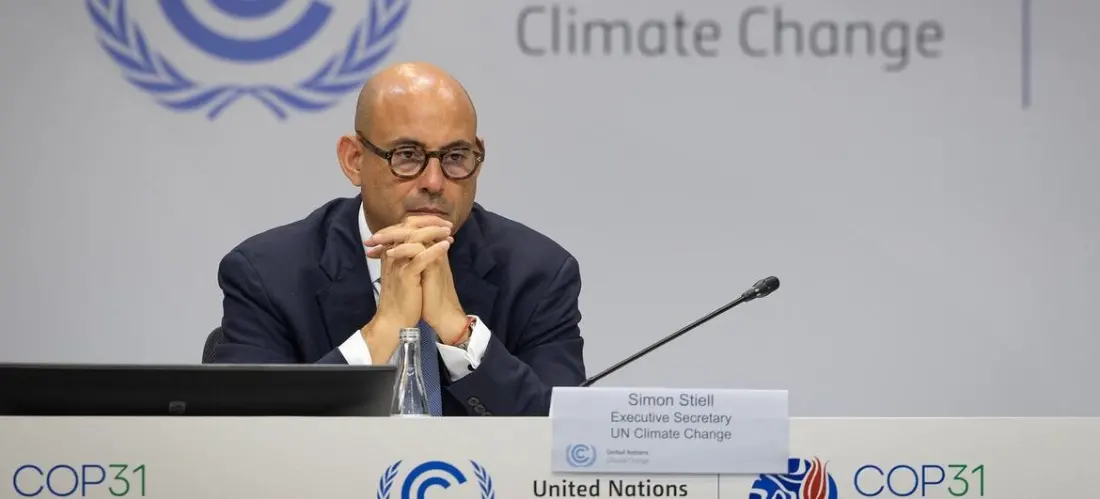
UN climate talks ended on a flat note this year, with COP31 wrapping up in Antalya without agreement on the two key decisions led by the summit's presidency. UN Climate Change Executive Secretary Simon Stiell didn't hide his frustration, saying he shared the deep disappointment of many that the conference had failed to land these outcomes.
The stakes are highest for the Pacific Small Island Developing States, the low-lying nations on the frontline of rising seas and intensifying storms. For them, the deadlock is a stark reminder of how hard it is to move 194 parties in one direction through consensus-based diplomacy. Stiell acknowledged the impasse exposed weaknesses in that system, but defended the inclusive UNFCCC framework, arguing that consensus works best from the ground up and that the process needs to modernise as the agenda shifts from negotiation to implementation.
His warning was blunt: with climate impacts escalating, fossil fuel costs feeding inflation, and the planet edging towards overshooting the 1.5C warming limit, the world cannot afford a repeat of this stalemate.
It wasn't all gridlock. Away from the negotiating table, the COP31 Action Agenda delivered concrete work across six priority areas, including transforming food systems and making cities and infrastructure more resilient. Stiell also pointed to momentum from the Leaders' Summit and the COP31 Electrification Delivery Package, noting that roughly half the global economy is now accelerating the shift to electrification — progress he hopes will spark innovation and investment, and push the world towards positive tipping points.
Attention now turns to COP32 and the second Global Stocktake, the Paris Agreement review that assesses collective progress and is meant to drive stronger national commitments. Stiell urged governments and civil society to carry Antalya's technical momentum into that process, insisting the second stocktake must build on the first rather than step back. His parting message: past cooperation has steered humanity off an unsurvivable heating trajectory, but far more ambition is needed.
Why does this matter to travellers? Because the destinations most exposed to climate change — Pacific islands like Fiji, Vanuatu, Tuvalu and Kiribati — are also some of the most extraordinary places you can visit, and their futures depend on whether these talks eventually deliver. Slower global action means stronger cyclones, coral bleaching and coastal erosion for the very communities that welcome visitors. Even when formal negotiations stall, the Action Agenda work on resilient infrastructure and food systems has direct consequences for how these destinations adapt. And with the next stocktake looming at COP32, the pressure on national governments to sharpen their commitments will only build — a story worth following if you care about the places you travel to remaining liveable and visitable.