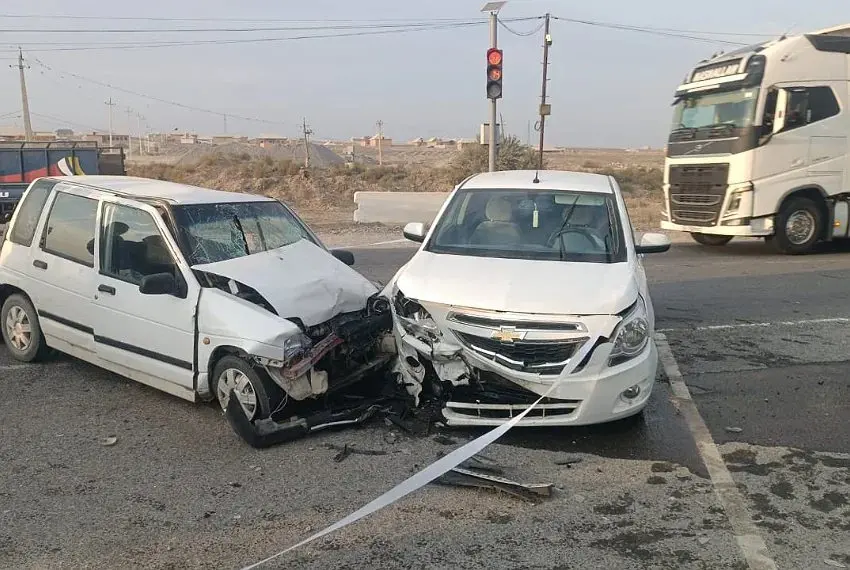
A collision between two cars on a remote stretch of road in southern Kyrgyzstan has left one passenger dead and a driver hospitalised, according to the Batken regional traffic safety department.
The crash happened on the 183rd kilometre of the Osh–Razzakov highway, close to the village of Min-Chynar in Kadamdzhai district, Batken region — an area of far southern Kyrgyzstan that borders Tajikistan and Uzbekistan. A Chevrolet Cobalt driven by a 45-year-old Uzbek national and a Daewoo Tico driven by a 43-year-old local resident collided. A 36-year-old passenger from Kadamdzhai district died at the scene, and the Daewoo's driver was taken to Batken Regional Combined Hospital. Police have registered the incident and an investigation is ongoing.
The accident is one entry in a much grimmer national statistic. In the first nine months of 2026, Kyrgyzstan recorded 3,624 road accidents, killing 572 people — among them 88 children — and injuring 5,519 more. For a country of roughly seven million people, those numbers point to genuinely challenging road conditions: mountain passes, aging vehicles, long-distance routes shared with freight traffic, and variable enforcement outside the bigger cities.
Does this mean travellers should avoid Kyrgyzstan? Not necessarily — it remains one of Central Asia's most rewarding destinations for trekking, horse riding and lakeside stays around Issyk-Kul. But the roads deserve respect. Self-driving or hiring a car in Kyrgyzstan means dealing with unlit mountain roads, stray livestock, aggressive overtaking on two-lane highways and drivers whose vehicles may be decades old. The Osh–Razzakov route itself runs through the Batken enclave region, an area most visitors reach only on overland trips between Osh and the Ferghana Valley fringes.
The practical takeaway: if you're travelling between southern cities, strongly consider flying where possible, use reputable intercity marshrutka or shared taxi operators, avoid night driving on rural highways, and always insist on a seatbelt — the fatality figures above show just how often crashes here turn deadly. Travel insurance that covers road transport is worth checking before you go.