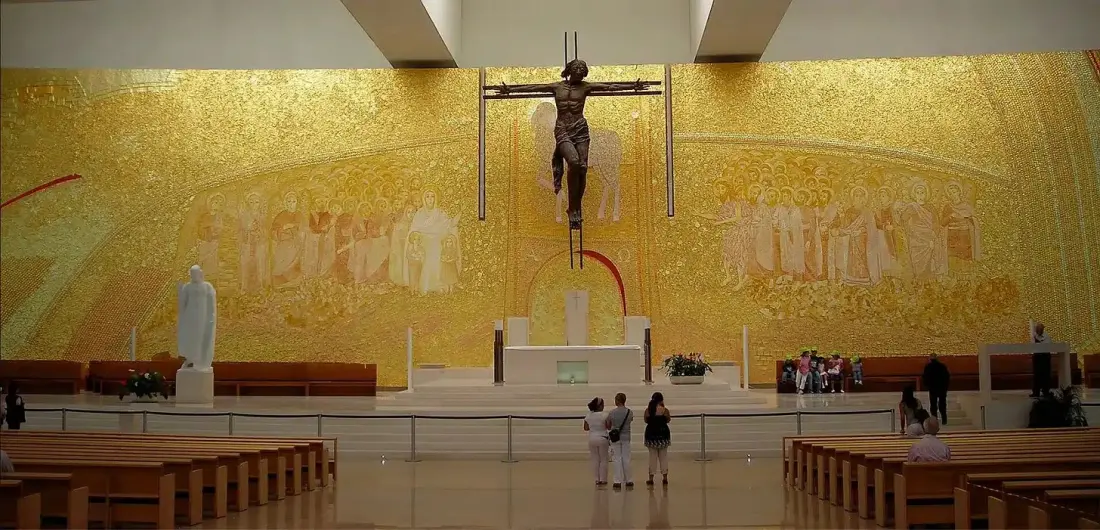
One of Catholicism's most visited pilgrimage sites is under pressure over a piece of art. The Sanctuary of Fátima in Portugal has confirmed it will not remove a mosaic panel in the Basilica of the Holy Trinity created by Slovenian Jesuit priest and artist Marko Rupnik, who is currently on trial at the Vatican accused of sexual, spiritual and psychological abuse of around 30 women. The decision stands in sharp contrast to Lourdes in France, where Bishop Jean-Marc Micas has permanently covered Rupnik's mosaics ahead of a papal visit, reportedly following guidance from Pope Leo XIV himself.
The details are grim. According to Portugal's Expresso weekly, some of the alleged abuse took place during the creation and installation of the artworks themselves, described by victims as "blasphemous" acts supposedly enacted to replicate the Holy Trinity. Rupnik, 71, was briefly excommunicated for absolving a sexual partner in confession, though that penalty was later lifted. He founded the Loyola Community, a female religious order dissolved by the Vatican in 2023, and many of his alleged victims were nuns from it.
One of the loudest voices in the case is Fabrizia Raguso, a former Loyola member who has lived in Braga, Portugal since 2000 and now teaches Psychology at the Portuguese Catholic University. She calls the Fátima shrine's stance a "complicit silence" within the Portuguese Church. She was one of six former members who wrote to Pope Francis in 2023 after a canonical visitation to Rome's Aletti Centre, run by Rupnik, concluded the community had a "healthy" life – a finding the women said ridiculed their pain.
The shrine has not stayed entirely silent. In an April 2025 statement it said it "categorically" repudiated Rupnik's acts and stands with victims, but insisted the mosaic stays put. It has, however, stopped using the artwork's image in its own promotional materials. After the Lourdes cover-up made headlines, the shrine told Expresso its position had not changed.
For travellers and pilgrims, the timing matters. Fátima marks 110 years since the 1917 apparitions next year, and Portuguese Catholics are hoping Pope Leo XIV will visit for the anniversary. It's unknown whether the mosaic's presence will influence that decision – but if Lourdes is any guide, Vatican-linked visits and Rupnik's art no longer mix comfortably. Anyone planning a pilgrimage to Fátima may find the artwork still on display, alongside a widening conversation about how the Church handles artists accused of abuse.