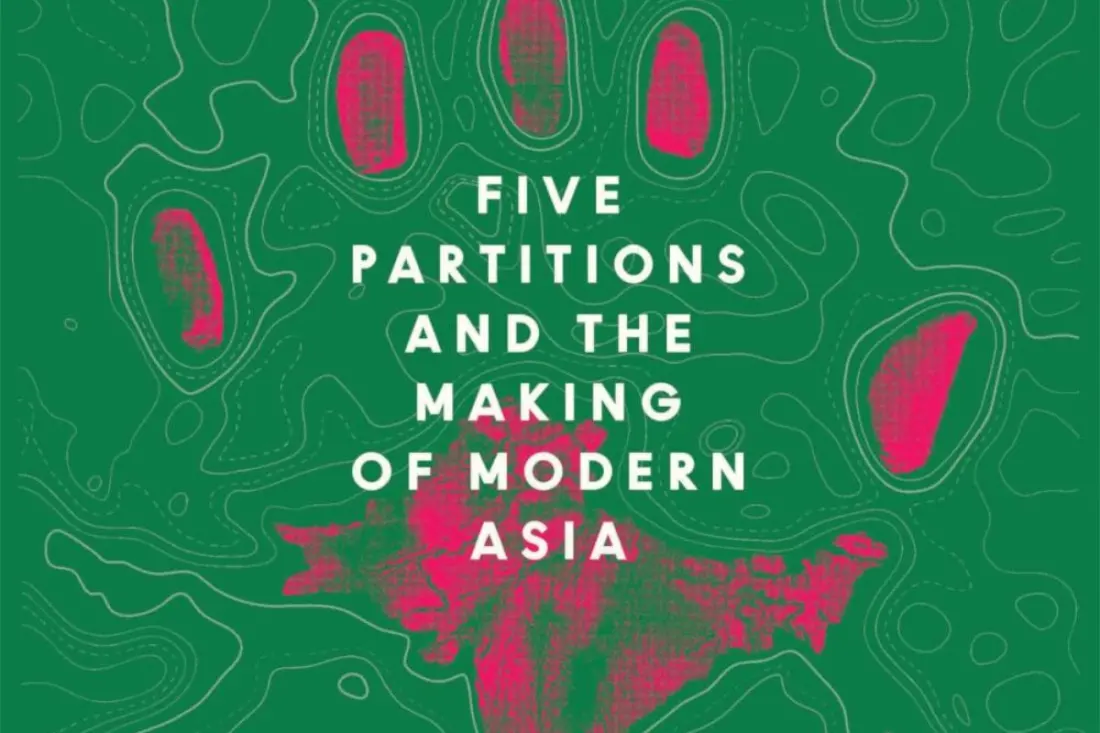
Borders in Asia look fixed on a map, but many were drawn in haste, often by people who had never set foot there. That's the thread running through In Shattered Lands: Five Partitions and the Making of Modern Asia, a well-argued book by historian Sam Dalrymple that traces how five separate splits remade the continent — and why their consequences still matter to anyone travelling through the region.
The first partition is Burma's exit from British India in 1937. Rangoon was once a proudly Indian-Burmese commercial hub, but the separation cut the city off from the politics and economy it had grown up with. Dalrymple follows the brutal Japanese siege of 1942, when half a million Indians fled on foot — including two brothers, Mairappa and Muthasa, who escaped to Prome after walking 160km across the Taungup Pass. Their story, like others in the book, shows the human cost behind a line on a map.
Second comes Aden, today part of Yemen, which Britain ran as a feeder station guarding the sea route to India. When its century-old tie to the Raj was severed, the local economy — once the region's premier currency — collapsed. Independence in 1967 produced the region's only communist state, and Aden's subsequent descent into conflict and eventual reunification with the north in 1990 set the stage for the instability that persists today.
The third is the best known: the 1947 partition of India and the creation of Pakistan. Dalrymple shows how Muhammad Ali Jinnah, once seen as an apostle of India-British unity and even a pioneer of two-nation theory in reverse, was pushed by circumstance — notably the 1937 provincial elections — into embracing the idea outright. The borders, drawn by British lawyer Cyril Radcliffe who had never been to India, triggered up to 18 million refugees and as many as 2 million deaths. The book also covers the fourth partition, the dismantling of over 560 princely states, when Home Minister Sardar Patel corralled them into modern India, and the fifth: the 1971 war that split Pakistan and created Bangladesh, with a crackdown that forced 10-15 million refugees across the border.
Dalrymple argues modern Southeast Asia can be read the same way — the Anglo-Siamese Treaty redrew Thailand, the border between Malaysia and Singapore was redrawn within living memory, and Indian settlers across the region carry the legacy forward. Partitions, he suggests, aren't finished history; they're still breathing.
For travellers, this is context that changes how you see a place. Rangoon's crumbling colonial architecture, Aden's port heritage, Amritsar and Lahore's mirrored histories, the surreal border ceremony at Wagah — all make more sense once you understand the decisions that split them apart. The book, published by William Collins and available in Thailand via Kinokuniya, rewards anyone heading to South or Southeast Asia who wants more than a surface-level itinerary. [Source: Bangkok Post Life]