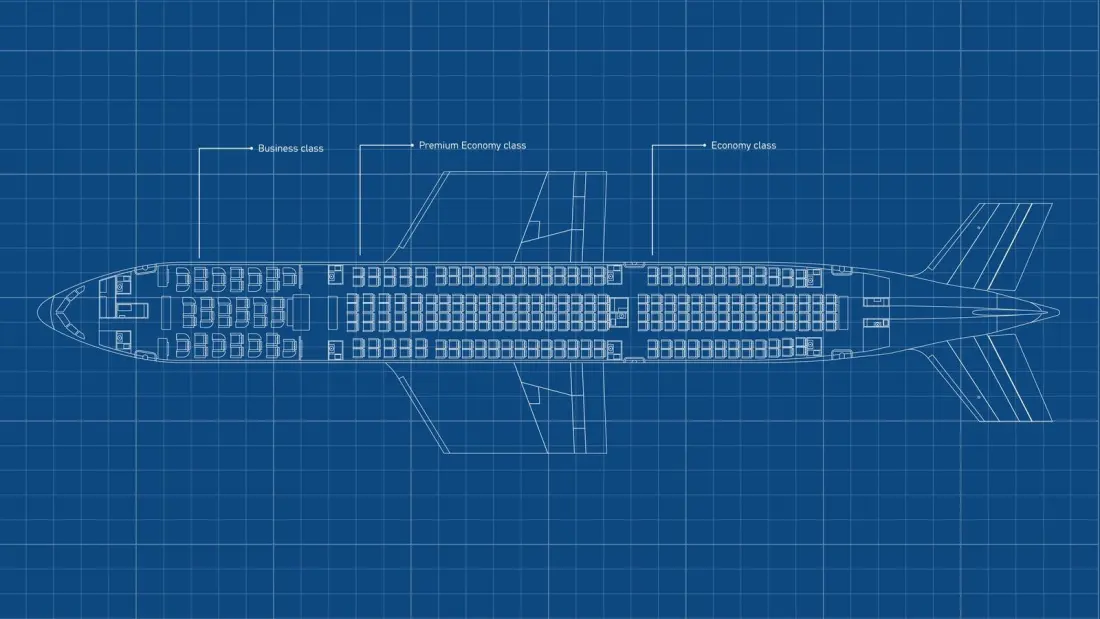
Airline cabins aren't just seats at different prices — they're four distinct products built on a sliding scale of space, sleep and service. Knowing what genuinely changes between economy, premium economy, business and first class can save you money or rescue a long-haul flight.
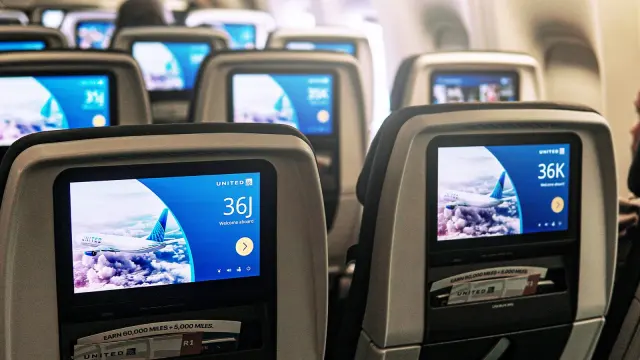
Economy remains the backbone of aviation, and it's all about squeezing people in safely. Seat pitch — the distance to the seat in front — has shrunk from around 34 inches decades ago to 30–31 inches on most major carriers, with some ultra-low-cost airlines going as tight as 28. Slimline seats claw back a bit of knee room, and modern long-haul jets add entertainment screens and USB power. The honest trade-off: you arrive at the same time as everyone up front, with more cash left for the trip itself. Newer planes like the A350 and 787 also pressurise the cabin lower and keep humidity higher, which makes the experience less punishing than it used to be.
Premium economy is the fastest-growing sweet spot. Pioneered by EVA Air and Virgin Atlantic in the early 1990s, it typically adds two inches of seat width, 38 inches of pitch, a footrest, shared-armrest breathing room, priority boarding and proper crockery — usually for close to double the economy fare. Airlines love it because it earns some of the highest margins per square foot on the plane. For travellers whose company won't cover business class, or anyone flying overnight who wants to land functional, it's often the best-value upgrade going.
Business class has quietly become the new first class. The last two decades took us from angled recliners to fully lie-flat beds and now to suites with sliding doors — Qatar Airways' Qsuites and Japan Airlines' new A350-1000 suites are the benchmarks. What airlines are really selling is uninterrupted sleep: land rested, work the same day. That's why it's the most fiercely competitive cabin in the industry and why many carriers have dropped first class entirely.
Speaking of which, true first class is now a rarity kept mainly as a prestige flagship. A business cabin might hold 40–60 seats; a first cabin on a 777 or A380 typically has six to eight suites — sometimes a separate armchair and a standalone bed. Emirates offers onboard showers, Singapore Airlines has double beds, and Etihad's A380 'Residence' includes a sofa, private bathroom with shower and a queen-sized bed. One-way fares rarely dip below $5,000 and can hit $30,000+ return on ultra-long-hauls. Only around 20 airlines still offer it, including Air France, Lufthansa, British Airways, Emirates, Singapore Airlines, Qantas and Cathay Pacific.
So is upgrading worth it? Match the cabin to the flight. On a three-hour hop, stay in economy. On a 12-hour overnight, premium economy or business can be the difference between a wrecked day and a good one. The real decision isn't luxury — it's how you want to feel when you land.