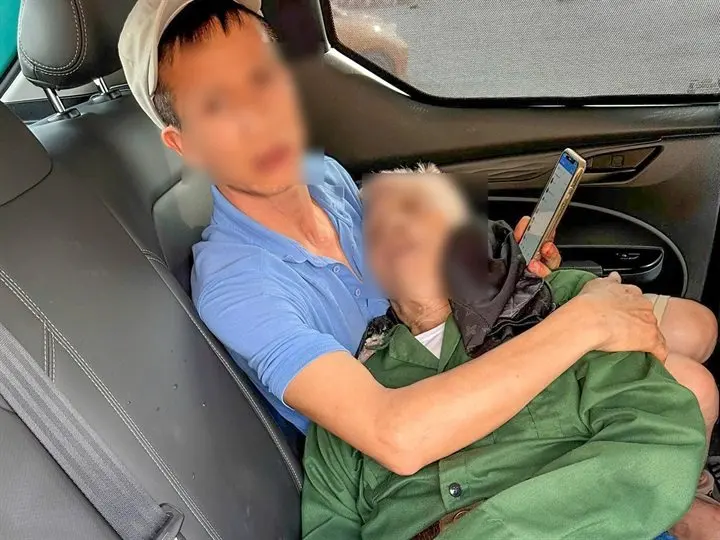
It took a pair of motorcycle escorts and a hand-cleared corridor through one of Hanoi's busiest intersections to get an unconscious man to hospital in time — and the whole operation played out in the middle of the afternoon rush on November 1.
The story, reported by Vietnam Insider, began at around 2:40 PM at the Thach Ban–Co Linh intersection. Ride-hailing driver Ho Van Cuong flagged down two on-duty officers, Captain Giap Thanh Tung and Captain Nguyen Ngoc Son of Road Traffic Police Team No. 5, with an urgent problem in his back seat. His passenger, identified only as D.X.U., had been picked up in the Nhu Quynh area of neighbouring Hung Yen province after a fall. Relatives said he had suffered a head injury, was vomiting, and had since lost consciousness.
With the man's condition deteriorating by the minute, the officers didn't hesitate. They used their patrol motorcycles to carve a path through the congestion, escorting the car all the way to 108 Military Central Hospital. The escort shaved crucial minutes off what could have been a slow crawl through some of the city's densest traffic — often the difference in head-trauma cases.
For anyone who has ridden through Hanoi, the feat will sound familiar and slightly heroic in equal measure. The city's intersections are legendary for their volume: rivers of motorbikes, cars and buses that can reduce a short cross-town trip to a test of patience. A car carrying a medical emergency ordinarily faces long, uncertain delays. Here, the traffic police turned the gridlock into a moving corridor in a matter of moments.
It's also a quiet reminder for travellers: Vietnam's road police do more than hand out fines. If you're in Hanoi or elsewhere in the country and a companion has a medical emergency in transit, flagging down officers at a major junction — or asking your driver to do so — can genuinely speed things up. Ride-hailing apps are widely used in Vietnamese cities, and drivers like Cuong are often the first link in an emergency chain. The universal emergency number in Vietnam is 115 for an ambulance, but when minutes count and traffic stands still, a police escort is sometimes the fastest route to a hospital bed.
The patient made it to 108 Military Central Hospital in time, and the story is a small, good-news counterpoint to the chaos Hanoi's traffic is famous for. Travellers might file it under reassurance rather than alarm: behind the honking and the sea of helmets, there's a system that can move fast when it really matters — and officers willing to ride ahead of a stranger's car to prove it.