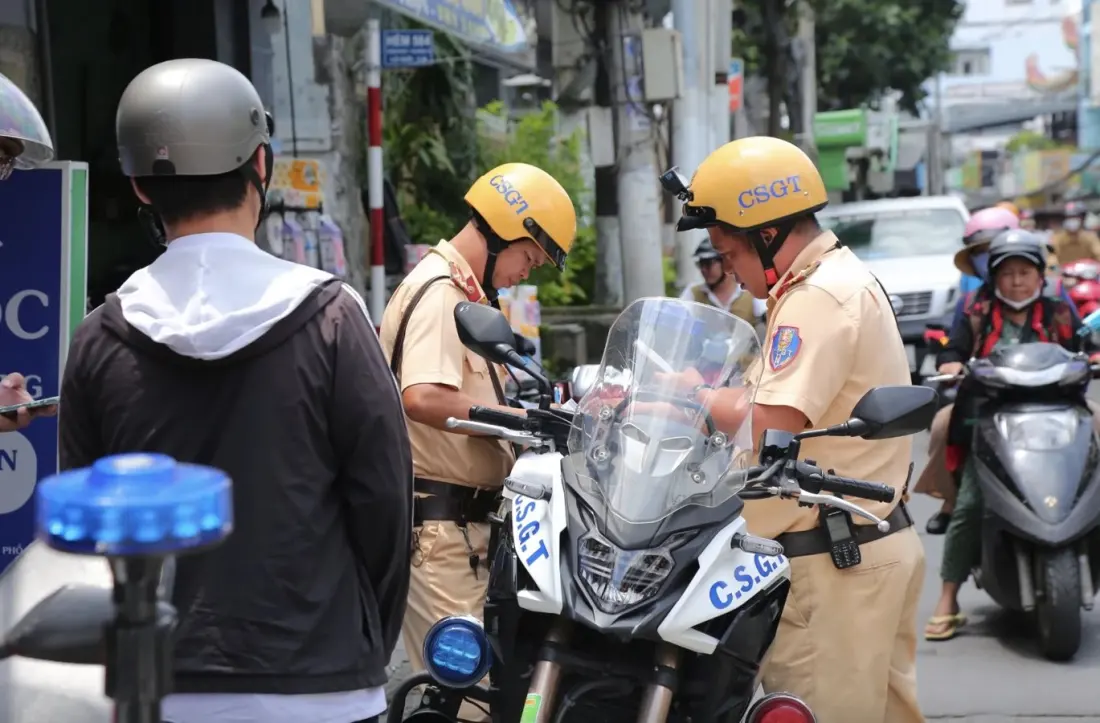
Traffic police in Ho Chi Minh City pulled over more than 7,500 students in the first eight months of 2026, according to a police dispatch sent to the city's education department on 8 September. It's a striking snapshot of how messy two-wheeled life in Vietnam's biggest city has become — and a useful warning for travellers who plan to rent a scooter there.
The numbers are eye-opening. Of the 7,580 students cited, 3,486 were under the legal age to operate a vehicle, 2,022 were riding without helmets, and 452 had no valid licence. Police also logged 151 alcohol-related offences, 54 speeding cases, 63 wrong-way rides, and 73 riders caught using phones while driving. Officers impounded 4,665 motorcycles plus 1,575 other vehicles along the way.
The accident toll, however, is moving in the right direction. The city recorded 39 student-involved crashes in the period — just 3.5% of all traffic accidents — leaving 12 dead and 17 injured, a 79.4% drop in collisions compared with the same stretch of 2025. Police credit heavier patrols and a big education push: 672 road-safety sessions at 672 schools reaching over 474,000 students, plus 1,700 helmets and 410,000 leaflets handed out.
One detail in the official letter stands out, especially for foreigners: police say many parents and young people can't tell electric bicycles apart from electric motorcycles. Under Vietnam's 2024 Law on Road Traffic Order and Safety, the rules for a vehicle depend on its technical design, rated speed and engine output — not whether it runs on a battery or petrol. That confusion leads to unregistered rides, underage riders and parents handing keys to unqualified teenagers. Ten of the 39 accidents were caused directly by students on electric bikes or mopeds.
The education department has responded with a directive for the 2026–27 school year: every student and staff member must sign a traffic compliance pledge, schools can no longer park bikes for students who aren't legally allowed to ride, schools must call police when a student is caught offending, and campuses are being pushed to create proper drop-off zones and "Safe School Gate" schemes with local police.
Why should a traveller care? Because the same classification rules apply to visitors. If you rent an e-bike in Vietnam, check whether it's legally classed as a bicycle or a motorcycle — the latter requires a licence, and riding without the right paperwork is exactly the offence police are now targeting hard. Helmets are non-negotiable, phone use while riding gets fined, and enforcement around schools and busy districts is visibly stepped up. Even if you never touch a scooter, expect extra congestion and careful driving near school gates at drop-off and pick-up times, where parents clogging traffic lanes have become a recognised citywide problem.
For anyone planning a Vietnam trip that includes Ho Chi Minh City, this story is a reminder that traffic rules are tightening, not loosening — ride licensed, ride helmeted, or grab a Grab instead.