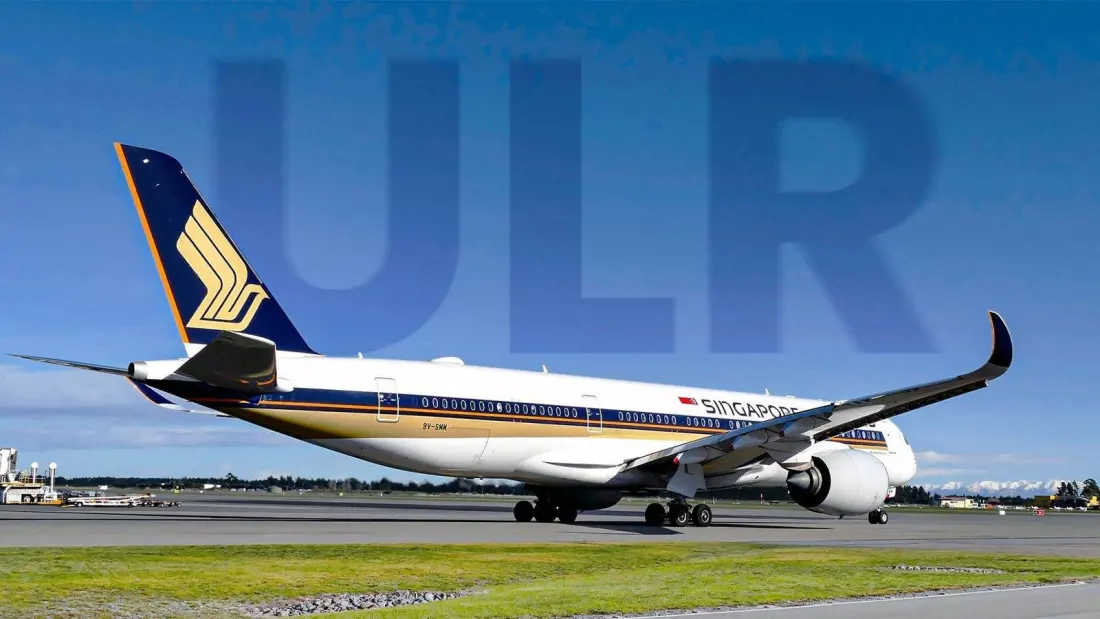
The world's longest flights aren't made possible by bolting extra fuel tanks onto an aeroplane. Airbus took the opposite approach with the A350-900ULR, the jet that lets Singapore Airlines fly non-stop between Singapore and New York, and its trick was clever subtraction and reshuffling of existing space.
The backstory matters. Singapore Airlines first connected Changi with Newark using the four-engine A340-500, but when fuel prices spiked, the economics collapsed and the route was suspended. What was needed was a twin-engine jet that could match the range without the fuel bill. Enter the A350-900ULR with Rolls-Royce Trent XWB engines and a certified range of 9,700 nautical miles (about 18,000 km).
Rather than installing auxiliary tanks, Airbus squeezed 24,000 extra litres of fuel capacity out of the wing's existing internal structure, repurposing vent space and relocating fuel sensors. Total capacity rose from roughly 141,000 to 165,000 litres without touching the wing's exterior, keeping weight and aerodynamic drag down.
But extra fuel means extra weight, and that's where the trade-offs come in. Maximum takeoff weight was raised to 280 tonnes, yet the airframe still needed unloading elsewhere. Singapore Airlines permanently deactivates the forward cargo hold on these jets, giving up 19 tonnes of belly freight revenue. And the cabin goes premium-only: just 161 seats, with no economy class at all — 67 business class and 94 premium economy. Every tray, trolley, litre of water and passenger kilogram saved buys more range. The result is a plane that makes money purely on premium passengers who'll pay to skip a stopover.
Regulation was the other hurdle. Twin-engine jets are limited by ETOPS rules — how far they can fly from a diversion airport. The A350-900ULR holds ETOPS-370 approval, meaning it can operate up to 370 minutes (six hours) from the nearest suitable runway, with duplicated electrical, hydraulic and fire-suppression systems plus fuel cross-feed so a single engine can reach the entire fuel load. That covers direct routings across 99.7% of the Earth's surface.
The concept is now spreading. Qantas's Project Sunrise flights from Australia to London and New York will use the larger A350-1000ULR, which took its maiden flight in June 2026 with a 10,000 nautical mile range and, unlike the -900ULR, adds a dedicated rear centre wing tank.
Why should travellers care? Because these premium-heavy jets are reshaping the very longest routes. If you fly business or premium economy between major financial hubs, you'll increasingly find non-stop options where a stopover was once unavoidable. Economy travellers, though, should note they simply won't find a seat on the longest flights — the low-density layout that makes them possible is exactly what prices them out. Credit: Simple Flying.