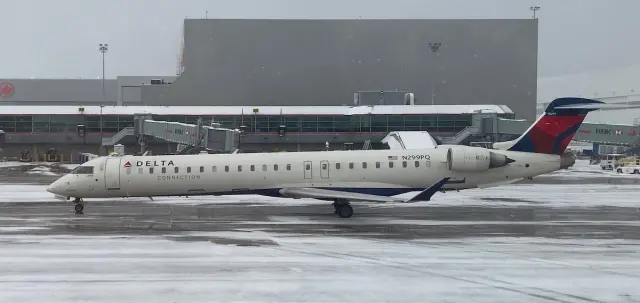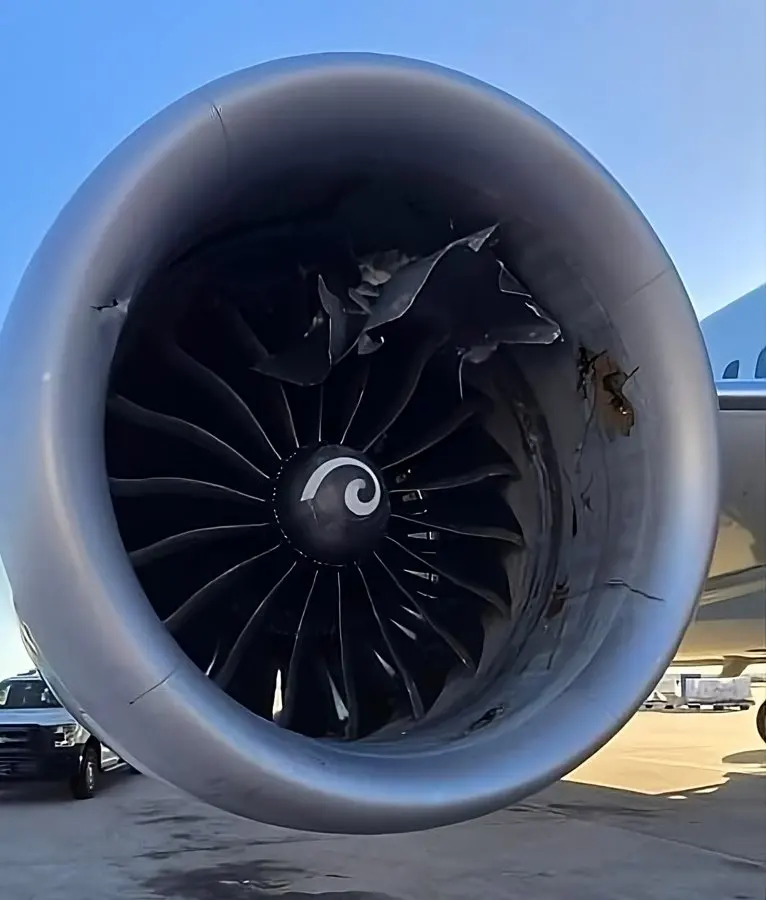
A Utah judge has thrown out, with prejudice, a lawsuit brought by the family of Kyler Efinger — the 30-year-old who died on New Year's Day 2024 after breaching a secure door at Salt Lake City International Airport and climbing into the engine of a Delta Airbus A220-100 bound for San Francisco.
Efinger was ticketed to Denver to visit his seriously ill grandfather. His family said he had bipolar disorder and was in a manic episode. On the night of 1 January 2024, he began acting erratically in the terminal around 9 p.m., repeatedly riding the moving walkways, buying a Utah Jazz jersey, leaving it behind, then returning barefoot and half-unzipped to demand a refund. He tried locked gate doors, hit a window with a shoe, then pushed through an emergency exit near Gate A4 and walked roughly a mile across the airfield. In sub-freezing temperatures he stripped off his pants, keeping the jersey and socks. He was found partly inside the engine of Delta flight 2348, which was carrying 95 passengers and five crew; rescuers could not revive him and the flight was cancelled.
The family sued Salt Lake City, which owns and runs the airport, arguing staff should have spotted his distress, that emergency exits needed better safeguards, and that the response was botched. Notably, dispatchers reportedly sent officers first to Gate A31, then A20 and A22, before the correct location near A4 — about eight minutes lost. The family also claimed controllers and pilots were not warned quickly enough; the pilot said he shut down the engines after seeing Efinger himself.
The airport countered that an alarm sounded when the exit was used, thermal cameras tracked him, and pilots reported sightings. The judge dismissed the case under Utah's public duty doctrine: the government's general duty to provide security and emergency response does not create an individual right to compensation when those efforts fall short, and the city did not create the peril.
Why should travellers care? The ruling matters for anyone who has wondered what airports are — and aren't — responsible for once you're landside. Emergency exits legally must open outward for evacuations, so they cannot be fully locked down, meaning the burden of staying airside rests largely on passengers themselves. The case is part of a broader pattern: similar claims have been filed after perimeter breaches at other US airports, including a Denver case involving a Frontier flight. For airports, the decision signals that courts may not treat a person's own airfield breach as the airport's liability, however tragic the circumstances. And for anyone travelling with or around someone in mental health crisis, the case is a stark reminder that front-line intervention happens — or doesn't — well before any legal question of fault arises.
It's a grim story with no tidy resolution, but the legal takeaway is clear: in Utah at least, an airport's general duty to keep people safe does not automatically translate into a lawsuit when tragedy strikes beyond its doors.
Credit: View from the Wing.