
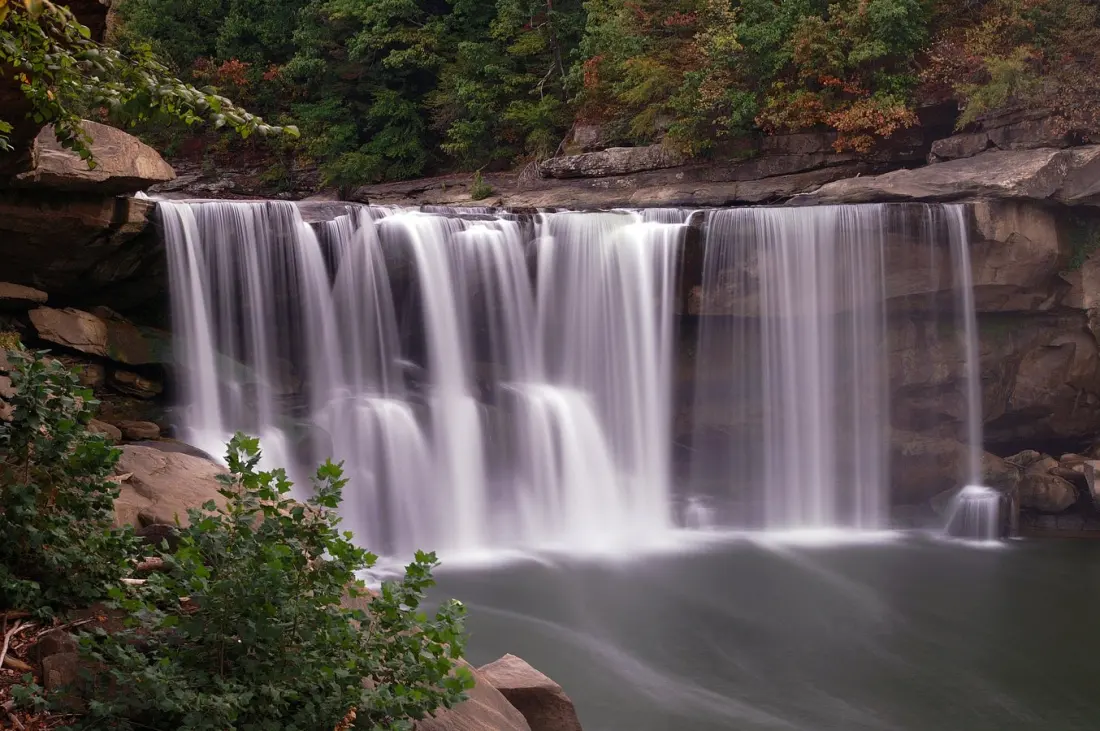
Rainbows at midnight sound like folklore, but at Cumberland Falls in southeastern Kentucky they're a predictable event. On clear nights near a full moon, the spray rising off this 60-foot waterfall catches the moonlight and throws a pale, silvery arc across the gorge — a moonbow, one of the rarest optical phenomena in nature and something only a handful of waterfalls on the planet produce on any kind of regular basis.
The falls themselves, sometimes called the Niagara of the South, are worth the trip even in full daylight. The Cumberland River pours over a curtain of rock 125 feet wide inside Cumberland Falls State Resort Park near Corbin. Several overlooks give easy views, but the more memorable way to experience it is from the water: kayaks, canoes and paddle boards run right up to the base of the falling water, and climbers can try bouldering on the huge rocks scattered around the gorge.
Timing is everything if the moonbow is the goal. Plan around a full moon, or one or two nights either side of it — the brighter the moon, the better the odds. The sweet stretch runs from mid-September through early November. Nights get chilly, but skies tend to be crisp and clear, and if the moonbow shows up against a backdrop of peak autumn colour, you've arguably got the best version of the phenomenon anywhere. The park also publishes moonbow predictions, so you can match your dates to the lunar calendar.
Staying late is easy. The historic DuPont Lodge sits inside the park with views over the Cumberland River and a warm interior of hemlock, pine and stone — and it's close enough to the falls that a midnight walk out to the overlook is a short one, not an expedition. Campers can book sites in the park too, though in the warm months you'll want to reserve at least a month ahead.
Kentucky rarely gets mentioned in the same breath as the national parks of California or Colorado, and that's part of the appeal here. Cumberland Falls delivers a genuinely rare natural spectacle without the crowds that come with better-known wonders. For anyone road-tripping through Appalachia, this is a detour that pays off — especially if you check the moon phase before you go.