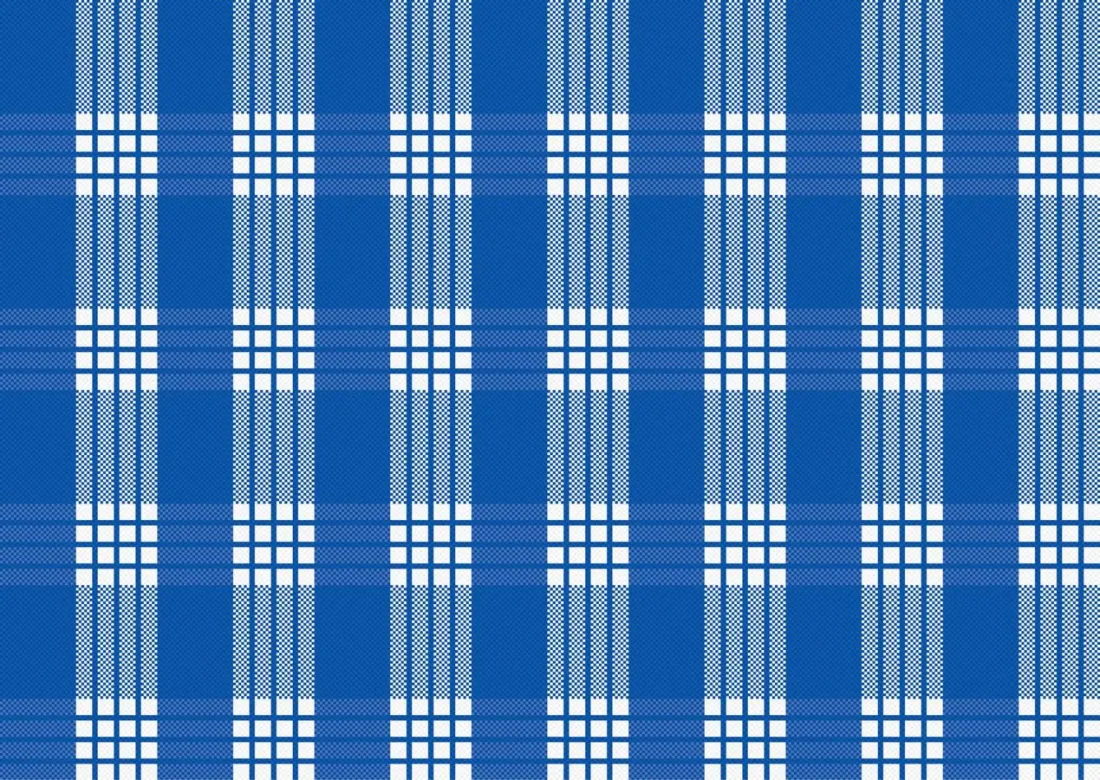
At the Merrie Monarch Festival in Hilo, the famous hula competition may draw the cameras, but the arts fair around it is where local style shows itself. This year, one pattern was everywhere: palaka, the blocky plaid that most outsiders mistake for picnic-table cloth but locals recognise instantly as a piece of Hawaiian history.
The fabric's roots go back to the early 1800s, when English and American sailors wore loose work shirts called frocks. Hawaiians transliterated that into "palaka," and the word eventually came to describe the yarn-dyed woven check itself, usually white with a navy, red or other base colour. The first recorded use appears in an 1873 letter from a Kalaupapa resident to Queen Emma. By the plantation era, the heavy cotton twill was the uniform of immigrant labourers from Japan, China, Portugal and the Philippines — it was cheap, tough and protected skin from scratches during long days in the fields. The blue-and-white check was especially popular with Japanese workers, who saw a resemblance to traditional indigo-dyed cloth back home.
Palaka didn't stop at the cane fields. The paniolo, Hawaii's cowboys — whose tradition traces to Mexican vaqueros invited by King Kamehameha III in 1832 — adopted it for wet, windy upcountry ranch work. Waipahu's Arakawas store, opened in 1909 near the sugar mill, became one of the biggest producers of palaka shirts and even supplied former US Senator Daniel Akaka. Founder Goro Arakawa liked to say palaka is "more aloha than the aloha shirt" — fitting, since the printed aloha shirt only took off in the 1930s, decades after palaka was standard issue.
The fabric also carries political weight. During the 1970s, the "Palaka Power" movement used the cloth as a symbol of local identity and labour pride, and delegates wore it at the 1978 state Constitutional Convention, which enshrined Hawaiian as an official state language and created the Office of Hawaiian Affairs. Since then palaka has crossed every class and occasion line — worn to church, to parties, to Washington — and newer generations have pushed it into greens, pinks and yellows for graduations and family reunions.
Today the renaissance is unmistakable. Brands like Kahui Palaka, founded in 2020 by Max and Dawn Mukai, Western Aloha, which draws on paniolo heritage, and Hilo's Sig Zane Designs are all reworking the check into modern shirts, bags and accessories. Designer Matt Bruening even makes a palaka microfiber beach towel.
For travellers, this is more than a shopping tip. Palaka is a wearable thread through Hawaii's plantation, ranching and Native Hawaiian history — the "denim of the islands," as it's often called. Skip the generic aloha shirt souvenir and look for palaka pieces at local makers, or time a spring trip to Hilo for the Merrie Monarch arts fair, where more than 150 artisans sell everything from Niihau shell jewellery to lauhala hats alongside the new wave of palaka designs.