Premium economy used to mean one thing: a 12-hour flight where a few extra inches of legroom made the difference between misery and survival. Not any more. A growing number of airlines are now selling international-grade premium economy seats on flights of under six hours — and in some cases under four — which changes the maths for anyone flying regional trunk routes.
In Asia, Cathay Pacific regularly puts A350-900s with 28-seat premium economy cabins on the roughly four-hour Hong Kong–Singapore run, with 40 inches of pitch and a 2-4-2 layout. Its refitted 777-300ERs also appear on Hong Kong routes to Tokyo Haneda, Sapporo and Beijing. The catch: aircraft swaps are common, and the regionally configured A330-300s and A350s that sometimes appear on the same routes have no premium economy at all — so check the equipment before you book.
Singapore Airlines plays a similar game. Long-haul A350-900s and 777-300ERs with 38-inch pitch premium economy fly the Singapore–Hong Kong corridor, and during peak seasons the airline has even sent its A380 — the shortest superjumbo route in its network — complete with a main-deck 2-4-2 premium economy, 13.3-inch HD screens and calf rests. Air New Zealand, meanwhile, is arguably the savviest of the lot: its trans-Tasman 787-9 flights between Auckland and Sydney or Melbourne (three to four hours) offer 41 inches of pitch, footrests and proper dining. For a hop that short, skipping a lie-flat bed and buying premium economy instead often delivers most of the comfort at a fraction of business-class fares.
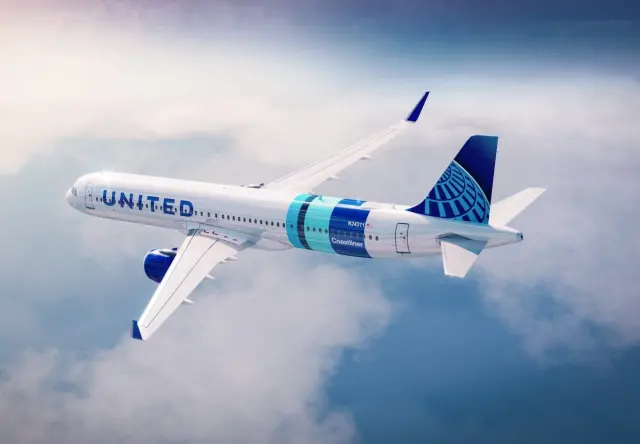
Across the Atlantic, the US carriers are approaching it differently — via widebody repositioning and, increasingly, purpose-built narrowbodies. Delta sells its Premium Select cabin on select JFK–LAX and JFK–SFO rotations using internationally configured 767-400ERs and A330-900s, with 38 inches of pitch, footrests and priority boarding. But only certain daily frequencies get the widebody treatment; the rest are standard narrowbodies. United sells Premium Plus on transcontinental hub routes like Newark–San Francisco and Chicago–Los Angeles aboard 777-200ERs and 787-10s, though analysis pegs the median markup at a hefty $733 over standard economy — largely aimed at corporate travellers whose policies block lie-flat bookings on short sectors. Its incoming A321XLRs, with 12 Premium Plus seats in a 2-2 layout, promise more consistency.
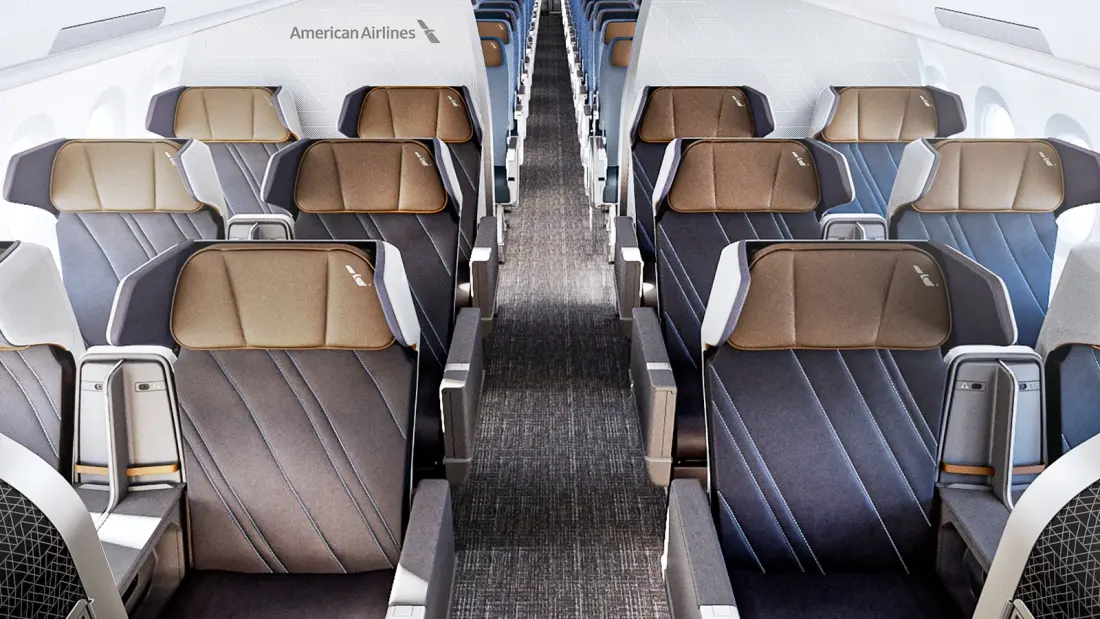
American Airlines is going furthest on single-aisles: its A321XLRs carry a dedicated 12-seat Recaro premium economy cabin with 37 inches of pitch, leg and footrests, and 13.3-inch 4K screens, scheduled on routes such as JFK–SFO and Boston–Los Angeles.
Why does this matter to travellers? Because on three-to-six-hour routes, the old choice of cramped economy or eye-watering short-haul business is breaking down. Premium economy on these sectors gets you wide seats, real recline and better food for sensible money — if you book the right aircraft on the right day. Always verify the equipment type before ticketing, since a last-minute swap can silently delete your legroom.