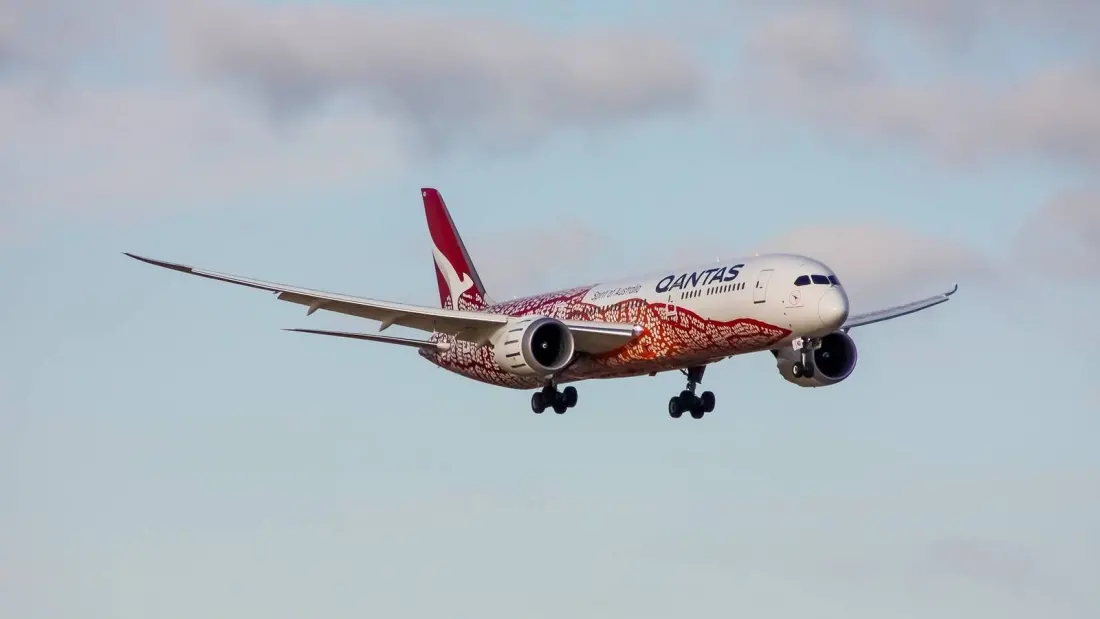
A Saturday flight from Melbourne to Dallas/Fort Worth ended where it began, after a Boeing 787-9 spent more than eight hours in the air only to land back at its origin. The trouble started when an airside safety vehicle at Melbourne Airport found debris on the runway shortly after QF21 departed at midday. CCTV review confirmed the object had fallen from the Qantas jet, and by the time the aircraft was cruising near Fiji at 35,000 feet, the crew had been alerted and an emergency declared.
Rather than push on across the Pacific, the pilot flew the Dreamliner back to Melbourne, touching down at 8:54 PM that evening. The aircraft, a 2019-built 787-9 nicknamed 'Kookaburra' and registered VH-ZNI, has been grounded since, with no confirmed return-to-service date. Qantas described the incident as a mechanical issue and arranged hotel accommodation, transport and meal vouchers for affected passengers, who were rebooked onto a replacement service the following day.
That Sunday replacement flight, QF7021, left Melbourne at 12:47 PM using another 787-9, registration VH-ZNE, and arrived in Texas around 11:45 AM local time. Qantas runs this Dallas route multiple times a week from Melbourne, alongside daily services from Sydney, so affected travellers had a same-weekend option rather than a multi-day delay.
The incident is also a useful window into how airports handle Foreign Object Debris, or FOD. Anything left on a runway can blow tyres, get sucked into an engine or damage an aircraft's structure, so movements are paused until the object is cleared. Airports use runway surveillance radar, optical sensors and plain old visual inspections to spot problems, then dispatch response teams to photograph, collect and remove the debris. Only once the surface is confirmed clean does air traffic control reopen the runway.
For travellers, the takeaway is mostly reassuring: debris sightings trigger immediate, cautious action, and airlines facing an aborted long-haul flight are generally obligated to rebook you and cover accommodation. If you are flying a long route like Melbourne-Dallas, keeping essentials in your cabin bag pays off, since an unplanned overnight can leave checked luggage out of reach. Long-haul itineraries that connect in the US are also worth padding with a buffer day if your onward plans are tight.