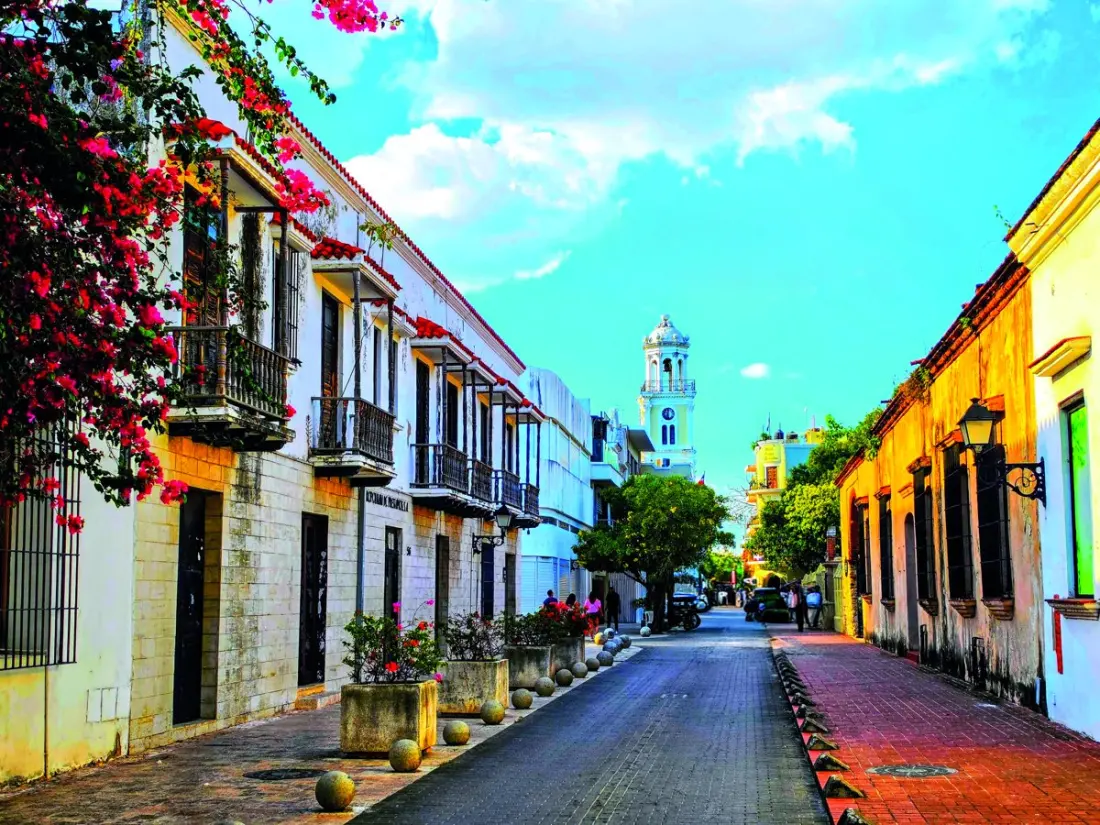
Skip the all-inclusive bubble for a few days and head to Santo Domingo, where the oldest European settlement in the Americas is quietly turning into one of the region's most compelling city breaks.
Founded in 1498 on the mouth of the Ozama River, the Dominican capital went on to run the entire Spanish New World, racking up a string of firsts: the first cathedral, first paved street, first university and first hospital in the Americas. Its old walled quarter, the Zona Colonial (a UNESCO World Heritage site since 1990), spent decades shabby and half-abandoned as residents moved to newer districts and tourists whizzed through on day trips from Punta Cana. Since around 2014, though, renovated plazas, repaved cobbles and restored convents have brought people back, and by 2025 the city formalised its plans with the Santo Domingo Integrated Plan — new public spaces on the Malecón seafront boardwalk plus a marina and port aimed at pulling cruise visitors straight into the old city.
The quarter rewards walking. Calle Las Damas, the first paved street in the Americas, runs from Plaza de España down to the Fortaleza Ozama, the oldest European military structure in the hemisphere — its Tower of Homage now hosts nightly video-mapping shows tracing 500 years of Caribbean history. Parque Colón anchors daily life, with the Catedral Primada de América (begun 1514) on one side and a lively mix of chess players, shoe shiners and street vendors selling mangú on the other.
The museum lineup is stronger than most visitors expect. The Museo de las Atarazanas Reales, a converted 16th-century arsenal, displays shipwreck artefacts from the colonial fleet era, while the Museo de las Casas Reales — currently under renovation and due to reopen in early 2027 — tells the story of how this small city administered an empire from Florida to Patagonia. Quirkier stops include the Amber World Museum (specimens up to 40 million years old, insects included), the Kahkow Experience where you make your own Dominican chocolate bar, and the Centro Cultural Taíno, which gives the island's pre-Columbian heritage long-overdue attention.
When the stones are done, eat. Bandera Dominicana — rice, red beans and stewed meat — dominates lunch tables, mangú with fried cheese rules breakfast, and Brugal or Barceló rum flows everywhere. The food scene has levelled up too: Maraca does creative Dominican cuisine, Maialino brings serious Italian, and Casarré draws candlelit dinner crowds. Yet the neighbourhood hasn't gone sterile — colmados (corner grocery bars) still serve cold Presidente at all hours, and Calle Hostos fills with merengue, bachata and salsa until well past midnight. Need sand? Boca Chica beach, half an hour east, offers shallow reef-protected turquoise water and grilled fish on plastic tables by the shore.
This one's for travellers who like their beach holidays with a real city attached — history, food and nightlife within a walkable colonial grid, and all of it on the brink of getting much more popular.