
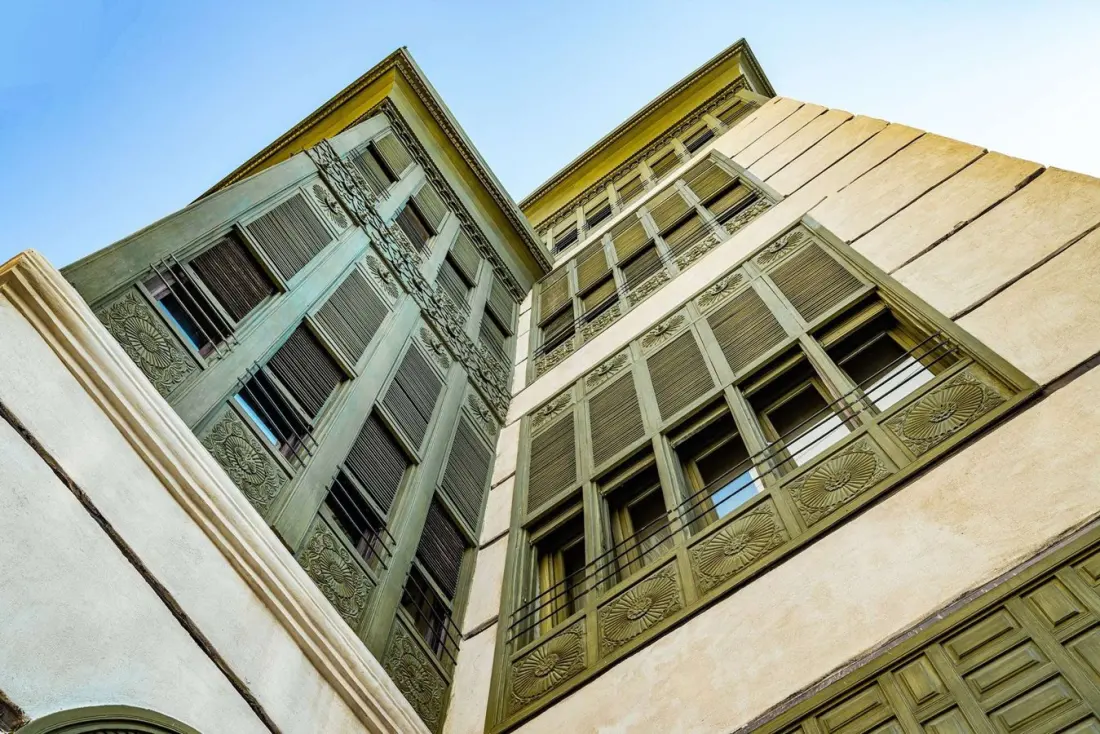
Saudi Arabia's first officially classified heritage hotels have opened their carved wooden doors in Al Balad, the UNESCO-listed old town at the heart of Jeddah. Three restored merchant houses — Beit Jokhdar, Beit Al Rayess and Beit Kedwan — now welcome guests among the coral-stone walls and latticed rawsheen balconies that made this Red Sea port famous.
Each house has a distinct character. Beit Jokhdar, a 19th-century beauty, is the standout: nine rooms and suites, including a two-bedroom Royal Suite with its own private hammam, plus gloriously wonky floors and original green woodwork. Beit Al Rayess leans into creams and browns, keeping a ceramic ablution bowl outside the bedrooms as a nod to its past. Beit Kedwan is the smallest, with just two bedrooms and generous living space — a smart buy-out option for a family or two couples. All three come with private roof terraces overlooking the old town.
The restorations are careful rather than showy: original tiles and features kept, plumbing and wiring added discreetly, and furniture and artworks sourced largely from local artisans — some of whose nearby studios you can visit. Rates start from SAR 2,200 (roughly £473/$586) including airport transfers; there's no meal plan, though Jokhdar's restaurant is worth a look, and the breakfast is a serious spread of fresh breads, foul mudamas simmered overnight, warm halloumi with honey and exotic fruit.
Part of the appeal is what's outside the door. Al Balad covers just one square kilometre and is pedestrianised, so the souks, gold shops and perfume stalls are all walkable. The Zawiya 97 arts collective has taken over one flower-filled quarter with open artist studios, while museums include the Tariq Abdulhakim Centre, dedicated to Saudi Arabia's best-known composer with interactive music exhibits, and teamLab Borderless, the Japanese collective's immersive art space that opened in 2024.
There's more to come. Another 34 historic houses are slated to become heritage hotels over the next three years, and the Ministry of Culture plans to convert part of Al-Falah School — the city's oldest, dating from 1905 — into a museum, cultural space and café.
For travellers, this is the easiest way yet to experience Al Balad up close, staying inside the very architecture that earned the district its UNESCO status rather than viewing it from a downtown high-rise. It also fits neatly into a wider Saudi trip: Jeddah is the traditional gateway to Mecca, and the country's heritage pushes in AlUla and Diriyah have made it an increasingly practical multi-stop destination.