Swan Hellenic's Cruising4Oceans programme has been accepted as a pilot site in the GlobalCoast Network, a project run under the UN Ocean Decade. What makes this one notable is that it's the network's first ship-based site and its southernmost — centred on Deception Island in Antarctica.
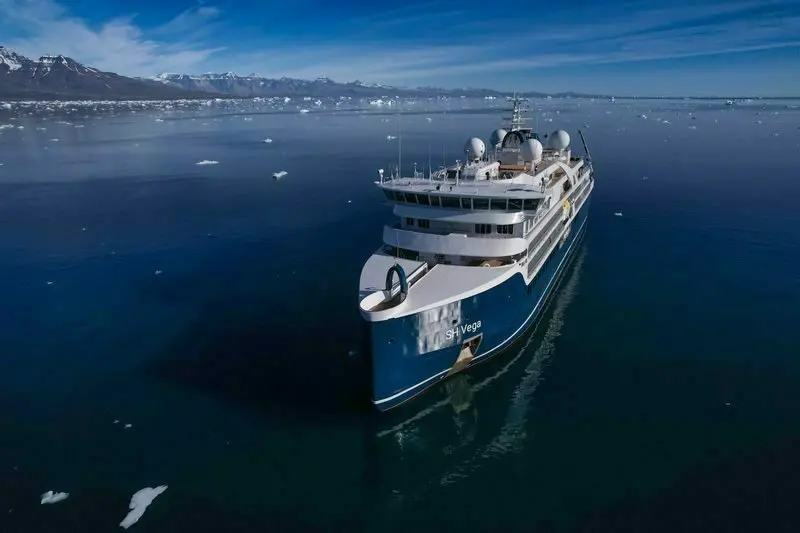
The idea is refreshingly simple. Rather than building fixed monitoring stations in places that are brutal to reach, the line uses ships that are already sailing there. Swan Hellenic's three expedition vessels — Vega, Diana and Minerva — spend the Antarctic summer cruising these waters, and along the way they collect environmental observations that get validated and shared openly through EMODnet, the European marine data platform. Think of it as a moving ocean observatory: the same route a guest pays to sail is also generating data from some of the most poorly monitored seas on the planet.
"We are not creating a new scientific approach; we are simply making scientific use of ships that are already there," said Mario Dogliani, president of maritime sustainability foundation SDG4MED, which coordinates the initiative. Swan Hellenic CEO Andrea Zito framed it as a responsibility: expedition ships get to visit the world's most remote places, so their presence should contribute something back — understanding and protection, not just footprints.
For passengers, this isn't background logistics. Cruising4Oceans actively involves guests in citizen science and ocean-awareness activities during the voyage, and when conditions allow, the crew and travellers also take part in marine litter and plastic removal. So an Antarctic cruise booking now comes with the option of doing genuine fieldwork — logging observations that end up in an internationally recognised scientific dataset.
The company is already applying the same approach elsewhere. Its ships also operate in Svalbard and Greenland, both remote, data-sparse coastal regions where similar data collection is under way. And the model is designed to scale: any commercial vessel travelling through poorly monitored waters could, in theory, replicate it.
Why should a traveller care? Partly because it signals a shift in what expedition cruising can offer. If you're choosing between polar operators, a line whose voyages feed data into UN-endorsed science programmes — and lets you help collect it — is a meaningfully different proposition from one that just drops you at a penguin colony. It also matters practically: the Antarctic summer season aboard Vega, Diana and Minerva is when most of this data gets gathered, so travellers on those sailings are directly contributing to how we understand a rapidly changing ocean.
Expedition cruising has always traded on access to places few people see. Initiatives like this one argue that access should come with a purpose attached — and Deception Island, a flooded volcanic caldera with a whaling history and active research stations, is a fitting place to prove the point.
Story via Cruise Industry News.