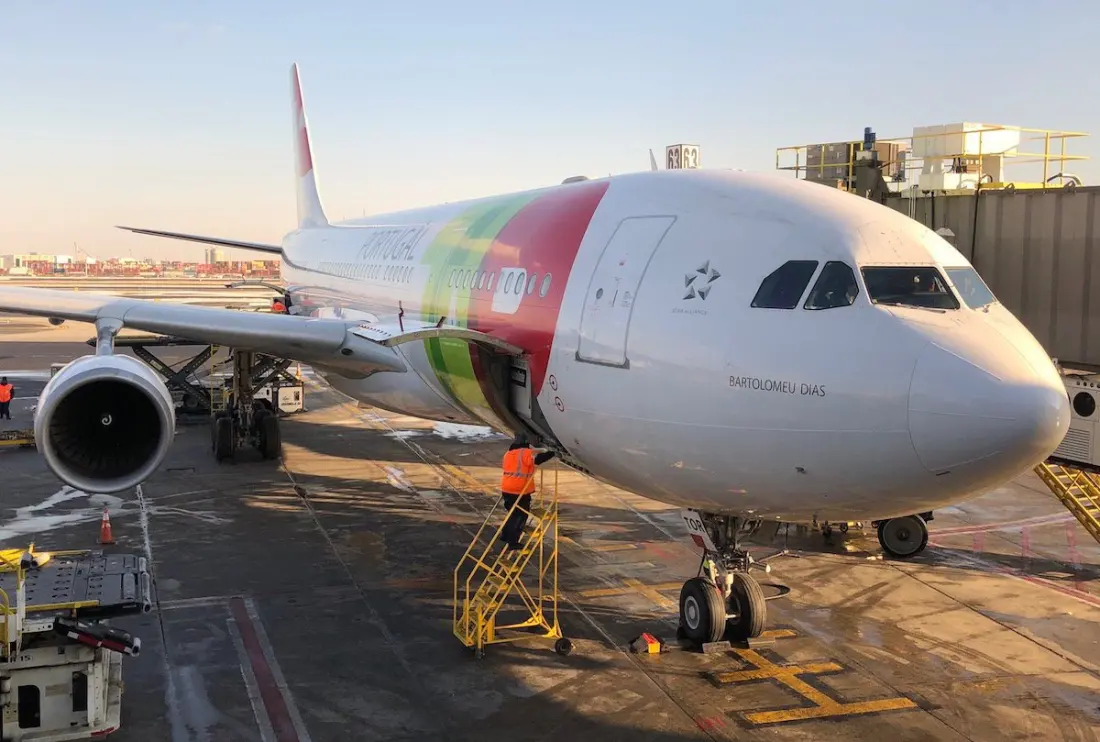
A routine evening departure from Los Angeles turned awkward for the crew of a TAP Air Portugal Airbus A330-900neo, after they botched two instructions in quick succession — and got noticeably testy when quizzed about it.
The incident unfolded on a departure from LAX bound for Lisbon. The aircraft was cleared for takeoff on runway 24L and told to fly initially to the DLREY waypoint. Instead, shortly after leaving the ground, the plane swung sharply south, well off its assigned path. On a runway setup like LAX's, where multiple aircraft launch in quick succession on closely spaced routes, an early unplanned turn is more than a paperwork problem — it can put traffic in close proximity.
The departure controller intervened, ordering an immediate right turn to a heading of 250, then asked the crew directly whether everything was okay. The pilot's explanation was that they were flying the ORCKA FIVE departure — a standard instrument procedure out of LAX. The controller's reply: "that's not even close." The likely culprit, as aviation watchers pieced together afterward, is that the crew punched in the procedure for runway 25R rather than 24L. Both runways use the same ORCKA FIVE departure, but the first fix differs — DLREY off 24L, DOCKR off 25R. The crew had also failed to read back the DLREY instruction with their takeoff clearance, which fits that theory neatly.
Then came round two. Flying westbound, the crew was told to turn left to a heading of 090. They read it back correctly — left and all — and promptly turned right. The controller had to halt the turn mid-stream and spell out, again, which way left is. His second "are you okay?" drew a response for the ages: "I've already replied to that message, we are okay." Confidence, it turns out, was not the problem here.
The flight eventually settled onto its proper course and continued to Lisbon without further incident, though the crew was handed a phone number to call on arrival — the standard prelude to a possible pilot deviation investigation. Credit where it's due: the controller stayed measured throughout and even spelled out the next waypoint letter by letter, presumably to remove any remaining ambiguity.
Why should a traveller care? Not because A330s out of LAX are suddenly unsafe — commercial aviation is layered with exactly these kinds of safety nets, and a controller catching a wrong turn within seconds is the system working. But it's a useful reminder that most flights come with an invisible support cast: controllers quietly cleaning up human error before passengers ever notice. It also explains why you might occasionally feel a sharp turn just after takeoff — someone on the frequency is keeping the traffic flow untangled.
For TAP, the episode is a minor reputational bruise rather than a safety crisis, though the crew's prickly radio manner won't have helped. An investigation into the deviation will sort out what went wrong in the cockpit. For everyone else, it's a rare, audible peek behind the curtain of a very normal night at one of the world's busiest airports.
Story via One Mile at a Time.